

Two water filters sit on my garage shelf, and I reach for different ones depending on the trip. The LifeStraw Personal is the one I grab when I want zero decisions. It is a single piece of gear that does one thing, filters water, with nothing to assemble, backwash, or lose. The Sawyer Mini is the one I grab when I know I will be filtering more than one bottle at a time. After a season of carrying both through the Cascades and the high desert, I have a clear answer for which belongs in your kit, and it depends on how you actually use water, not on which filter has the better spec sheet.
The short answer: if you want a filter to tuck into a vehicle kit, a garage kit, or a day pack, and you want to forget about it until you need it, carry the LifeStraw Personal. If you are planning multi-day trips, filtering for more than one person, or storing clean water to carry with you, the Sawyer Mini does more of the work. Both remove the bacteria and protozoa that make stream water risky, and both are light enough to disappear into a pack. But they are built for different jobs, and the difference shows up in the field, not on the package. Here is what I learned carrying both for a season, including where each one let me down.
| LifeStraw Personal | Sawyer Mini | |
|---|---|---|
| Filtration rating | 0.2 micron. Removes bacteria and protozoa | 0.1 micron absolute. Same targets, plus microplastics |
| Filter lifespan | Rated to 1,000 gallons, then replace | Rated to 100,000 gallons with backwashing |
| Ways to use it | One way: drink straight from the source | Straw, squeeze pouch, inline on a pack, or a bottle cap |
| Maintenance | None. When flow slows, it is done | Backwash after trips to keep the flow up |
| Weight of a full setup | About 2 ounces, one item in the kit | Filter plus pouch and adapters add up |
| Clean water to go | No. You drink at the source or not at all | Yes. Fill a bottle and carry clean water with you |
| Emergency kit fit | One sealed piece, nothing to backwash, nothing to lose | More pieces and more steps when the power is out |
| Best for | Simple, grab-and-go water safety | Long hauls and group trips |
How I Tested These Filters
I tested both filters the way most people actually use them, not the way a lab would. Over the spring and summer, I carried the LifeStraw Personal in the 4Runner kit and on day hikes in the Cascades, drinking straight from streams, snowmelt creeks, and a few questionable cattle ponds I would not name in print. I carried the Sawyer Mini on overnight and multi-day trips, running it inline on a hydration bladder, using the squeeze pouch to filter water for the group, and filling bottles for the hike out. In total, I filtered somewhere north of sixty gallons between the two of them.
I also tested the failure modes, because that is what matters in an emergency. I froze a filter overnight to see how it recovered. I dropped both on granite. I let the Sawyer Mini sit unbackwashed for three weeks to see how much the flow dropped. And I used both with water that was moving fast, silty, and full of pine needles. The LifeStraw never needed maintenance, and the Sawyer Mini reminded me why it needs its backwash syringe. Those findings show up throughout this comparison.
One note on honesty: I did not test either filter against viruses, chemicals, or heavy metals, and neither filter claims to remove those. If a water source is near mining, agriculture, or anything that looks like runoff, I carry a different system entirely. Filters like these solve the biological risk from streams and springs. They are not a license to drink anything.
Where LifeStraw Wins
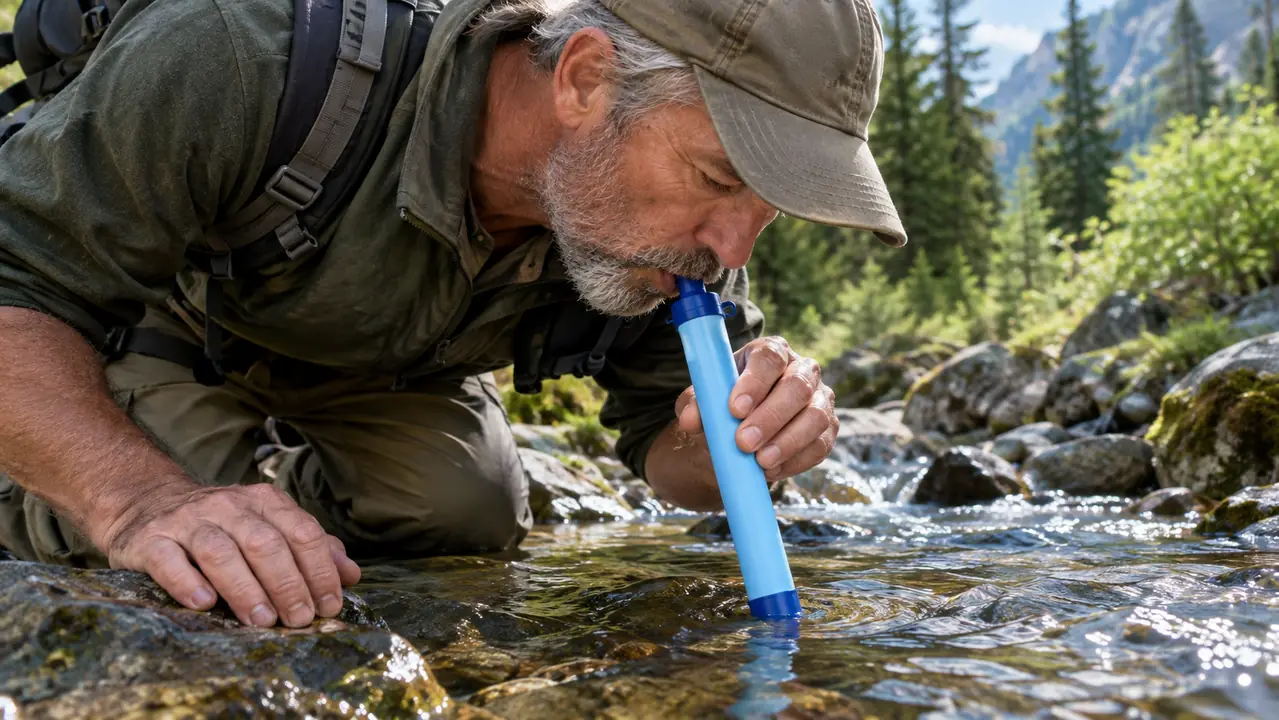
The LifeStraw Personal wins every time the situation is simple. When I keep one in the 4Runner for a drive into the high desert, I never think about it again. There is no pouch to pack, no adapter to match, no backwash syringe to remember. You put the intake end in the water and drink. That is the whole procedure. In an emergency, when your hands are cold and your judgment is tired, a filter with a one-step procedure is worth more than a filter with more capability that you have to remember how to use.
It also wins on maintenance, because there is none. The Sawyer Mini needs regular backwashing to keep its flow rate up, and if you skip it, the filter slows down over time. The LifeStraw Personal is rated to 1,000 gallons, and when it slows down, you replace it. For a home emergency kit that sits in the garage from one wildfire season to the next, that is the right trade. I would rather replace a sealed filter every few years than trust a filter that needs a cleaning routine to work when the power is out. Joanne rolls her eyes when I say this, but the best emergency gear is the gear you never have to practice with.
The LifeStraw Personal also wins on simplicity of carry. In a day pack, it takes up less room than a deck of cards and adds almost nothing to the weight. I keep one in the 4Runner, one in the garage kit for winter storms, and one in my day pack. Because it is a single sealed piece, I do not worry about the pouch splitting in the bottom of a bag or the adapter unscrewing somewhere in the dark. For a kit that has to work without inspection, that matters.
There is no pouch to pack, no adapter to match, no backwash syringe to remember.
Where Sawyer Mini Wins
The Sawyer Mini wins on raw capability, and the gap is wider than the numbers suggest. The 0.1 micron absolute rating filters to a smaller pore size than the LifeStraw's 0.2 micron, and the 100,000 gallon rating means one Sawyer Mini can outlast a stack of LifeStraws. More important for real trips, the Mini works in more configurations. I have run it inline on a hydration bladder, screwed it onto a standard water bottle, used the squeeze pouch to filter a pot of water for coffee, and, in a pinch, drunk straight from a spring the same way I would with the LifeStraw.
The other big difference is clean water storage. With the LifeStraw Personal, you drink at the source or you do not drink. That is fine at a stream, but it means every drink is a stop. With the Sawyer Mini, I fill a bottle, cap it, and carry clean water for hours. On a long ridge traverse above the timberline, where water sources are far apart, that changes how you plan the day. For multi-day trips, filtering for two or more people, or any situation where you want water on hand rather than at your feet, the Sawyer Mini is the better tool. I say that as someone who keeps a LifeStraw in every kit I own.
The Sawyer Mini also wins on lifespan, and that matters if you filter a lot. A hundred thousand gallons is not a number you will reach as a weekend camper, but it means you never have to think about replacing the filter. I know people who have carried the same Sawyer Mini for years of thru-hiking. The LifeStraw Personal is a replaceable item by design. For someone who filters every weekend, the Sawyer Mini is the last water filter you would need to buy for a long time, which makes its higher upfront cost a different kind of deal.
The simplest filter for your emergency kit
If your plan is water safety you can set and forget, the LifeStraw Personal is the one I keep in the truck and the garage. One piece, no backwashing, rated to 1,000 gallons. Check today's price on Amazon before you build your kit.
Amazon Check Today's Price on Amazon →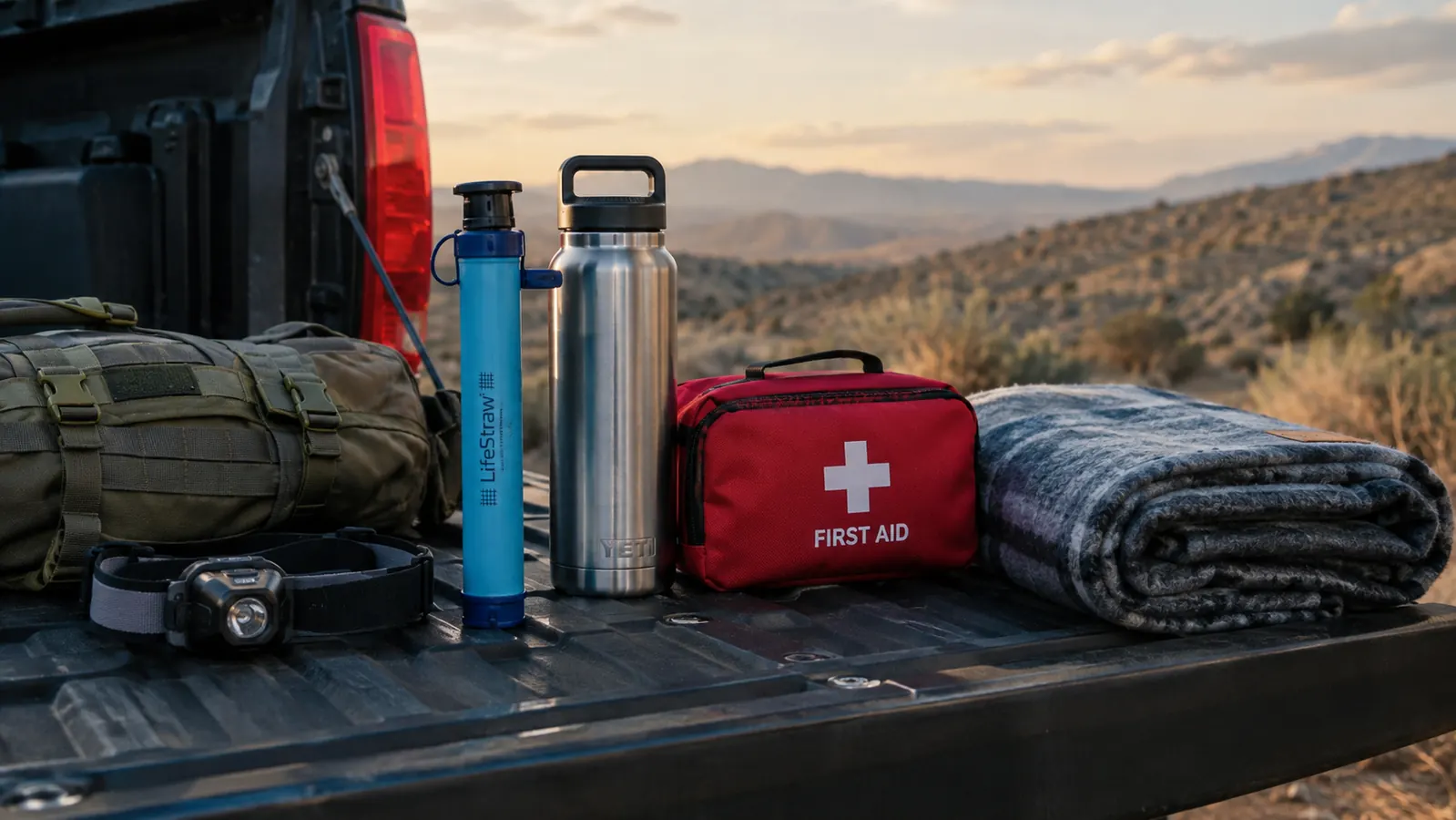
What Neither Filter Will Do
Both filters remove bacteria and protozoa, which is what makes most backcountry water risky. Neither removes viruses, and neither removes dissolved chemicals, heavy metals, or salt. That is not a flaw in either product. It is the boundary of what this class of filter does. If you are filtering from a source near mining country, agricultural runoff, or anything that smells wrong, neither of these is the right tool, and I would not tell you otherwise.
I also want to be direct about the cold weather limit. Filters like these can crack if water freezes inside them, and a cracked filter is no filter at all. I keep the LifeStraw Personal inside the 4Runner's cab in deep winter instead of leaving it in the glove box, and I bring the Sawyer Mini inside the tent at night on winter overnights. On frozen streams, I melt snow and treat the water instead. These are good tools within their limits, and the limits are part of the deal.
If you need protection from viruses, look at a purifier instead of a filter. If you need to remove heavy metals, look at a bottle with an activated carbon stage. I keep that distinction in mind every time I pack for a trip, and it has saved me from making a bad call on sketchy water more than once. Know what your filter does, and know what it does not do.
Who Should Buy Which
Buy the LifeStraw Personal if you want a filter you can put in a kit and forget. That covers a lot of people. Anyone building a vehicle emergency kit, a home kit for winter storms and wildfire-season outages, or a day pack for the Cascades. It is also the right call if you know you will not backwash a filter on a schedule, because the LifeStraw Personal has no schedule. The trade is real: no clean water storage and a shorter lifespan. For most kit builders, that trade is worth it, because the filter you actually carry is the one that helps you when things go sideways.
Buy the Sawyer Mini if you are heading out for multiple days, filtering for a group, or hiking where water is scarce and you need to carry it. The extra pieces are worth it when you use them every day. And buy the Sawyer Mini if you want one filter to cover every job for the next decade, because its lifespan is in a different class than anything in this comparison.
Me, I carry both. That sounds like a cop-out until you do the math on weight. The LifeStraw Personal lives in the 4Runner kit year round, and the Sawyer Mini rides in my pack on overnight trips. Between them, I have water covered for a roadside breakdown, a power outage at home, and a week in the backcountry. If you only want to buy one, match it to the trip you actually take most often, not the trip you imagine. That is the honest answer, and it is the one I give everyone who asks.
One more thing worth saying: both of these filters are better than the alternative, which is treating stream water on the fly. I spent years in search and rescue watching people gamble on mountain water, and I have seen what giardia does to a trip. A filter you actually carry, whichever one that is, beats a purifier you left at home. So pick the one that matches your routine, put it in the kit, and stop thinking about it.
Keep one in every kit
The LifeStraw Personal is the filter I set and forget. Grab one for the truck, one for the garage, and one for the day pack. See today's price on Amazon before you finish your kit.
Amazon Check Today's Price on Amazon →