
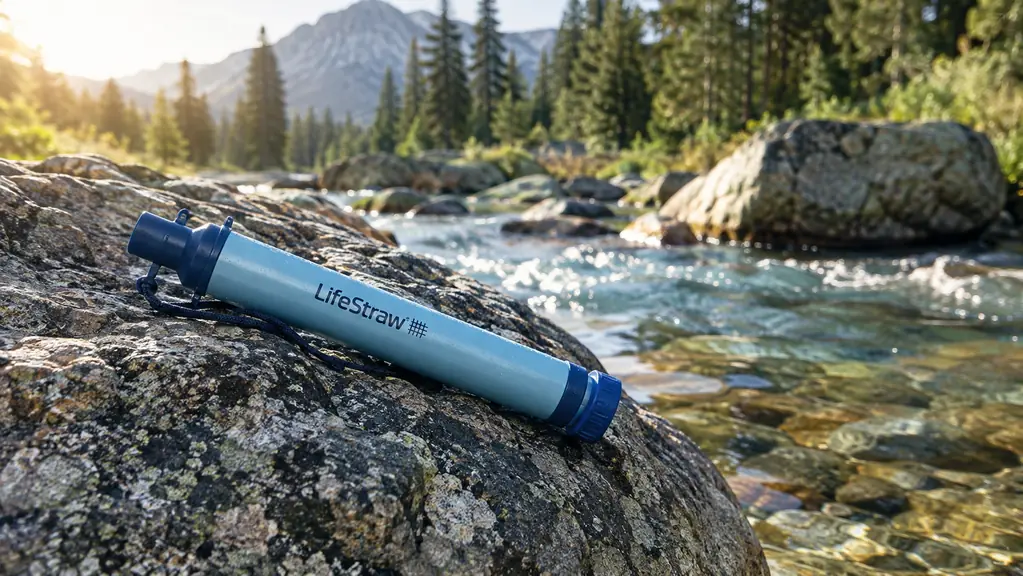
I have carried a LifeStraw in my pack for about two years now, and I still remember the first time I actually needed it. We were on a late-spring training exercise up in the Cascades, the kind where the planned water source had gone dry and the backup was a seep that looked like tea. One of the younger volunteers asked me what we should do. I pulled out the LifeStraw, knelt down, and drank straight from the seep. Nobody argued after that. That is the moment this review has been building toward: not the lab tests, not the marketing claims, but what a water filter does when you are tired, thirsty, and a long way from the truck.
I am Cal Hendricks, a retired county search-and-rescue volunteer coordinator, and I have spent the last two seasons testing the LifeStraw Personal Water Filter in the Cascades and the high desert outside Bend, Oregon. This is the long-term review I wish someone had handed me before I bought my first one. It covers flow rate, taste, durability, maintenance, and the honest limits of a filter that cannot remove viruses. If you are looking for a straightforward answer about whether the LifeStraw belongs in your kit, here it is.
The Quick Verdict
The LifeStraw is the most dependable emergency water filter I have tested in 30 years of outdoor work. It is not the fastest, not the most versatile, and it will not remove viruses, but it has never failed me in two seasons of real use.
Amazon Check Today's Price →The filter I trust when the water source is questionable
After two seasons of field use, the LifeStraw Personal Water Filter is still the first thing I pack for any trip where I might need to drink from an unknown source. It is lightweight, simple, and it has never let me down.
Amazon Check Today's Price on Amazon →How I've Used It
My testing has not been controlled or clinical. It has been the messy, real-world kind. I have used the LifeStraw on day hikes in the high desert, on multi-day backpacking trips in the Three Sisters Wilderness, on winter overnights where I had to break ice to reach water, and in my garage during wildfire-season power outages when the municipal supply was under a boil notice. I have loaned it to volunteers, dropped it on rocks, frozen it overnight by accident, and once left it in the truck for a full week in July.
Most of that use happened in the first year, when I was still skeptical enough to keep notes. In late June of 2021, I carried the LifeStraw on a four-day loop in the Three Sisters Wilderness and used it for every drink except the coffee I made with boiled water. That trip alone pushed maybe six liters through it. In October of the same year, I ran a training scenario where I had new volunteers filter from a beaver pond I knew carried Giardia risk, and I drank from the same pond afterward to make a point. I do not recommend performing for an audience, but I did it, and I was fine.
The two-pack has been more useful than I expected. At a search in April of 2022, a volunteer showed up without any water because he had packed in a hurry. I handed him the spare LifeStraw and pointed him at the creek. He came back twenty minutes later with a full stomach and a lot fewer doubts about whether this gear was worth carrying. I have kept one in my vehicle emergency kit year round since then, which is where the LifeStraw earns its keep in a way that no pump filter can match. The pump filters I used early in my career had hoses, gaskets, and valves, all of which could fail at the worst moment. The LifeStraw has no moving parts.
I have used it on streams, snowmelt pools, livestock troughs, and one questionable pond that I would not have touched without a filter. I have never gotten sick. I have never had one clog. I have never had one crack, even after the winter overnight when I forgot it was in my jacket pocket. That is the record I am judging it on.
What the LifeStraw Actually Filters
The LifeStraw uses a hollow fiber membrane with a pore size of 0.2 microns. That means it removes bacteria like E. coli and Salmonella, parasites like Giardia and Cryptosporidium, and particulate matter like silt and sediment. That pore size is the same one used by several other filters in this class, and it is the size that catches the cysts responsible for giardiasis, the most common backcountry water illness in the Cascades. It is certified to meet the US EPA drinking water standards for bacteria and parasites, and it removes 99.999999% of bacteria and 99.999% of parasites.
Here is what it does not do: it does not remove viruses, it does not remove chemicals, and it does not remove heavy metals. Viruses are smaller than 0.2 microns, so they pass right through. If you are filtering water from a source that might be contaminated with human or animal waste, a virus-rated filter or chemical treatment is a better choice. I want to be blunt about this because a lot of people buy a LifeStraw thinking it makes any water safe. It makes most surface water much safer. It does not make sewage safe.
The certification matters because it is the difference between a filter that claims to work and one that has been tested. LifeStraw publishes its test results against EPA standards for bacteria and parasites, and those results are specific: 99.999999% of bacteria removed and 99.999% of parasites removed. Those are not numbers a company would risk putting in print if the filter could not back them up.
For the water sources I encounter in the Cascades and the high desert, that is an acceptable trade. Fast-moving streams, snowmelt, and springs are rarely virus risks. The bigger risks are Giardia from beaver activity and bacteria from livestock upstream, and the LifeStraw handles both. I have pulled water from streams that ran through cattle country east of Bend, where the bacterial risk is real, and I have never had a problem. My rule, which I gave volunteers for years, is simple. If the water is running and clear, filter it. If it is stagnant or shows signs of animal activity, boil it or carry it out. If I were traveling somewhere with poor sanitation, I would pair the LifeStraw with a chemical treatment or choose a filter rated for viruses.
Flow Rate and the Drinking Experience
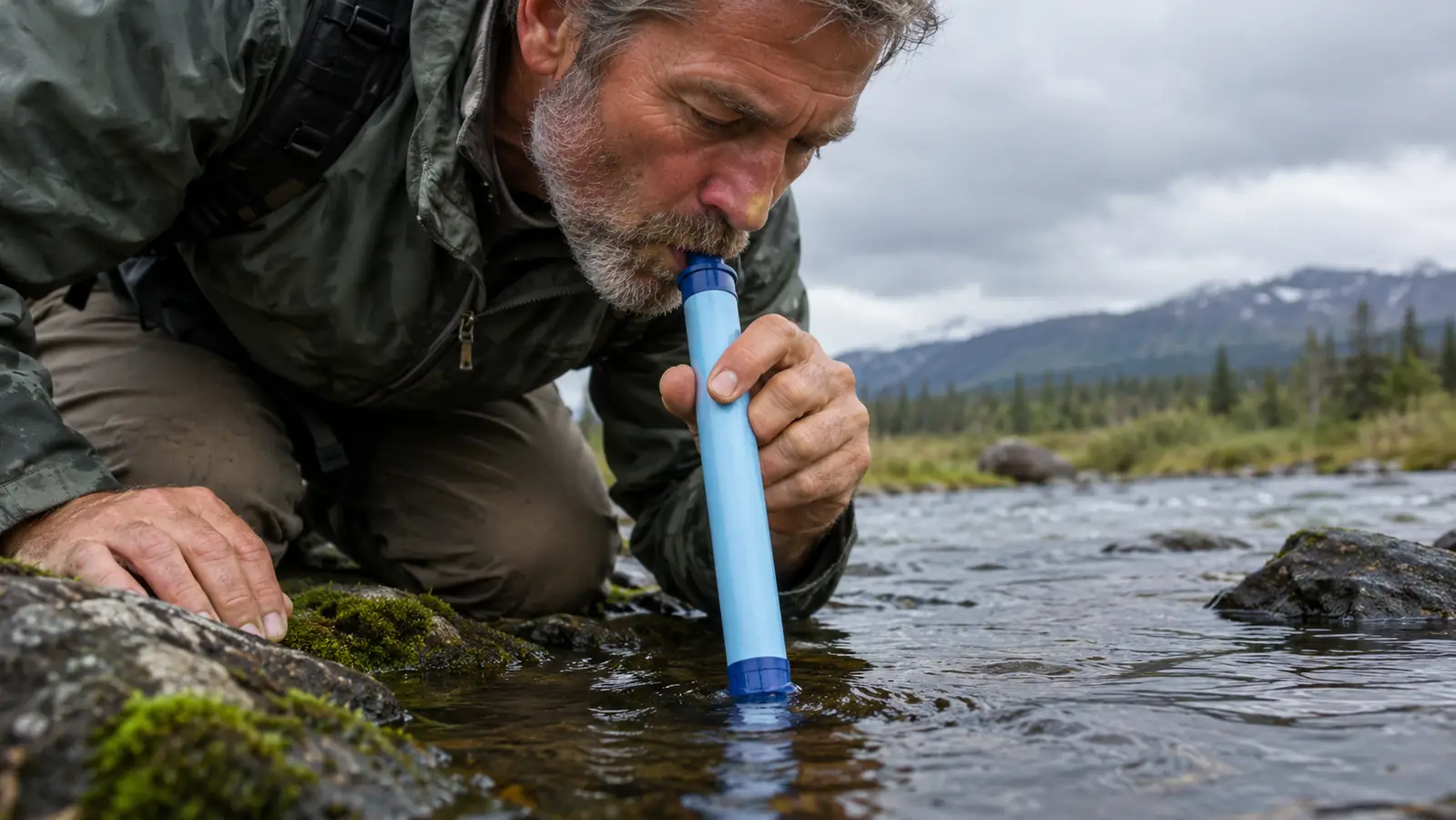
The honest truth about the LifeStraw is that drinking from it takes some getting used to. You do not squeeze a bottle or pump a handle. You put the bottom end in the water, put the mouthpiece in your mouth, and suck. It is like drinking through a very long straw, which is exactly what it is. The flow rate is roughly one liter in about two to three minutes of steady sucking, depending on how hard you pull.
I timed it once out of curiosity on a warm afternoon in July. Kneeling at a spring in the high desert, I measured about a liter in two and a half minutes of steady suction. That is fine when you want a drink. It is less fine when you are trying to fill a two-liter bottle for camp. For that job, you are better off with a gravity filter or a squeeze filter. The LifeStraw is a personal drinking device, not a water collection system. I have learned to carry a separate container for cooking water and to use the LifeStraw only for drinking.
The taste is another thing people ask about. Filtered water from the LifeStraw tastes like the water it came from, minus the silt. I have drunk from streams that tasted like dirt without a filter and the same water through the LifeStraw tasted clean and cold. There is no plastic taste, no chemical aftertaste, and no iodine flavor. That is a big deal for me because I carried iodine tablets for years and I hate the taste. Switching to the LifeStraw changed how I pack. I no longer carry the tablets at all, which means one less bottle of chemicals in my kit and no more counting the days until a half-used bottle expires.
Durability and Maintenance Over Two Seasons
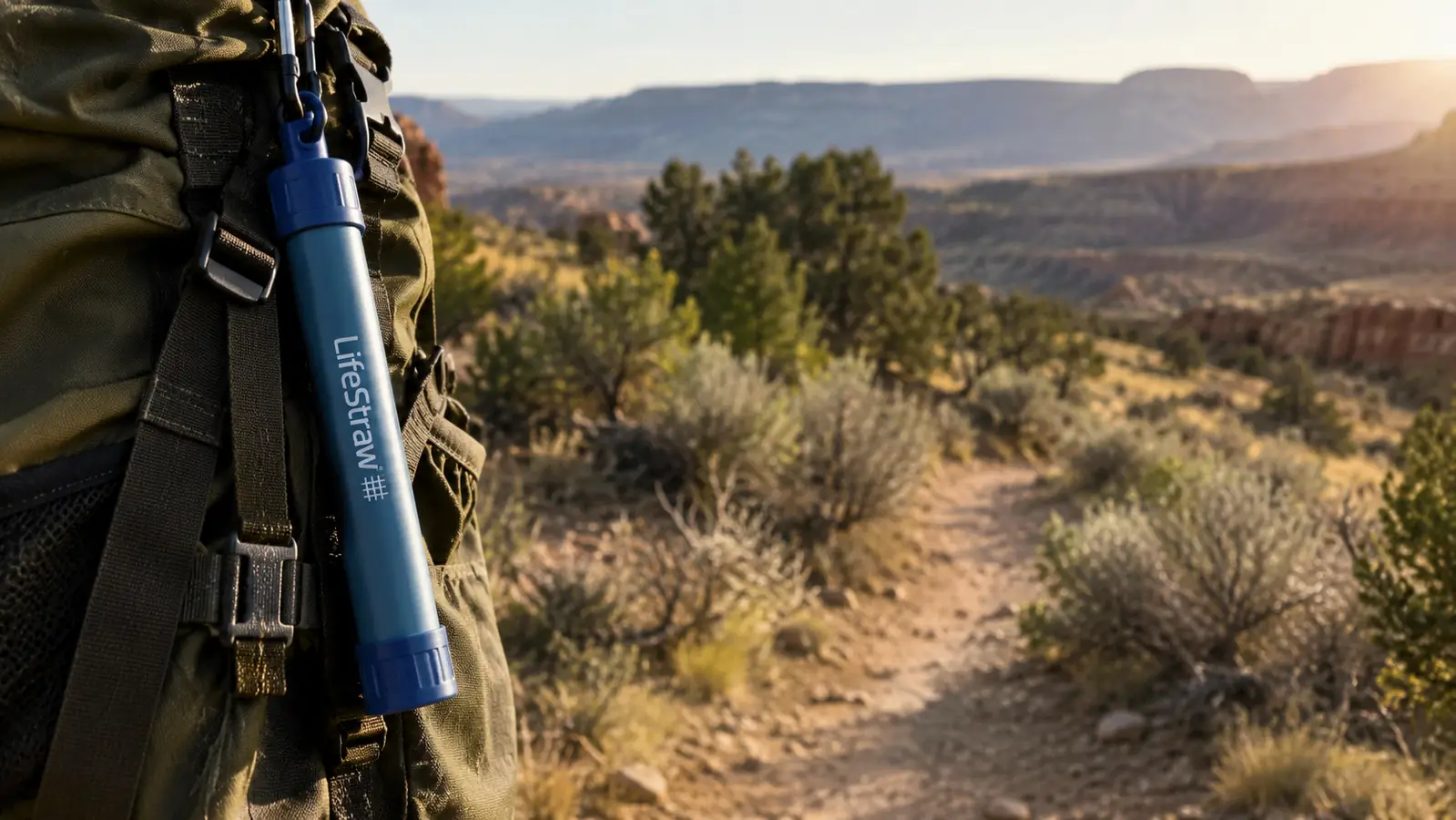
The LifeStraw is built to be abused. The outer shell is a tough plastic tube with a cap on each end. I dropped it on granite in the first month and expected to find a crack. There was not even a scuff. In the summer of 2022, I left it on the roof of my 4Runner and drove off down a gravel road. I found it the next morning in the dust, ran a few ounces of water through it, and it worked fine. That is the kind of abuse I would not have trusted with the pump filters I used early in my career, which had hoses, gaskets, and valves that all seemed to fail at the worst moment. The mouthpiece cap keeps the drinking end clean when it is in your pack, and the bottom cap keeps the intake end from dragging through mud.
Maintenance is almost nonexistent. When the flow slows down, you blow air back through the mouthpiece to clear the membrane. That is the entire maintenance routine. I have done it maybe a dozen times in two seasons, always at a stream, and the flow comes back immediately. The only time it did not fully recover on the first blow was after I filtered from a silty pond, and even then it cleared after a second backflush. The filter does not need to be replaced until you have pushed 1,000 gallons through it, which for most people is a lifetime of personal drinking water. I have not come close to that number.
The one thing I will warn you about is freezing. If water freezes inside the hollow fibers, the ice can damage the membrane and the filter will no longer be reliable. I learned this the hard way in February of 2023 on an overnight in the high desert, when the temperature dropped to around 10 degrees Fahrenheit and I had left the LifeStraw in an outer jacket pocket while I slept. When I reached for it in the morning, it was stiff with cold. I warmed it in my hands, and it still worked, but I could not be sure the ice had not damaged the fibers. I replaced it rather than trust it. A filter you cannot trust is not a filter. That night is also why the two-pack earns its place in a winter kit. If one filter freezes, you have a second one that has been riding in an inside pocket the whole time. Keep your filter in an inside pocket or sleep with it in your bag.
What I Liked
- Filters bacteria and parasites to 0.2 microns, certified to EPA standards
- Weighs almost nothing and takes up less space than a water bottle
- No pumping, no squeezing, no chemical taste
- Backflush by blowing into the mouthpiece clears most clogs
- Rated for 1,000 gallons, which is years of personal use
- Two-pack means a spare for your vehicle kit or a partner
Where It Falls Short
- Does not remove viruses, chemicals, or heavy metals
- Drinking requires sucking, which is slow for filling bottles
- Cannot filter water into a container, only directly into your mouth
- If it freezes with water inside, the membrane may be damaged
- No way to know when the filter is exhausted without tracking your own usage
I have never gotten sick, never had one clog, and never had one crack. That is the record I am judging it on.
Who This Is For
The LifeStraw is for anyone who wants a reliable backup water filter that fits in a pocket. It is ideal for hikers, hunters, anglers, and campers who drink from streams and springs. It is also the best emergency filter I know for a vehicle kit, a home emergency kit, or a bug-out bag, because it does not depend on batteries, pumps, or replaceable cartridges. If you are a SAR volunteer like I was, it is the filter you hand to someone who forgot theirs. I keep one in the center console of my 4Runner, one in my pack, and the spare from the two-pack in the garage kit. That is three places a pump filter would never fit.
Who Should Skip It
Skip the LifeStraw if you need to filter water for a group, because drinking one liter at a time through a straw is impractical for more than one or two people. Skip it if you are traveling somewhere with poor sanitation where viruses are a real risk, because it does not remove them. And skip it if you want to fill water bottles for cooking, because a squeeze filter or gravity filter will do that job faster. The LifeStraw is a personal drinking filter, not a water system. These days I carry a squeeze filter for camp chores and the LifeStraw for drinking, and between the two of them I have not carried a pump in years.
Two seasons of field use, and it has never let me down
If you want a water filter that is simple, dependable, and small enough to keep one in every kit, the LifeStraw Personal Water Filter is the one I recommend. It has earned its place in my pack, my truck, and my garage.
Amazon Check Today's Price on Amazon →