

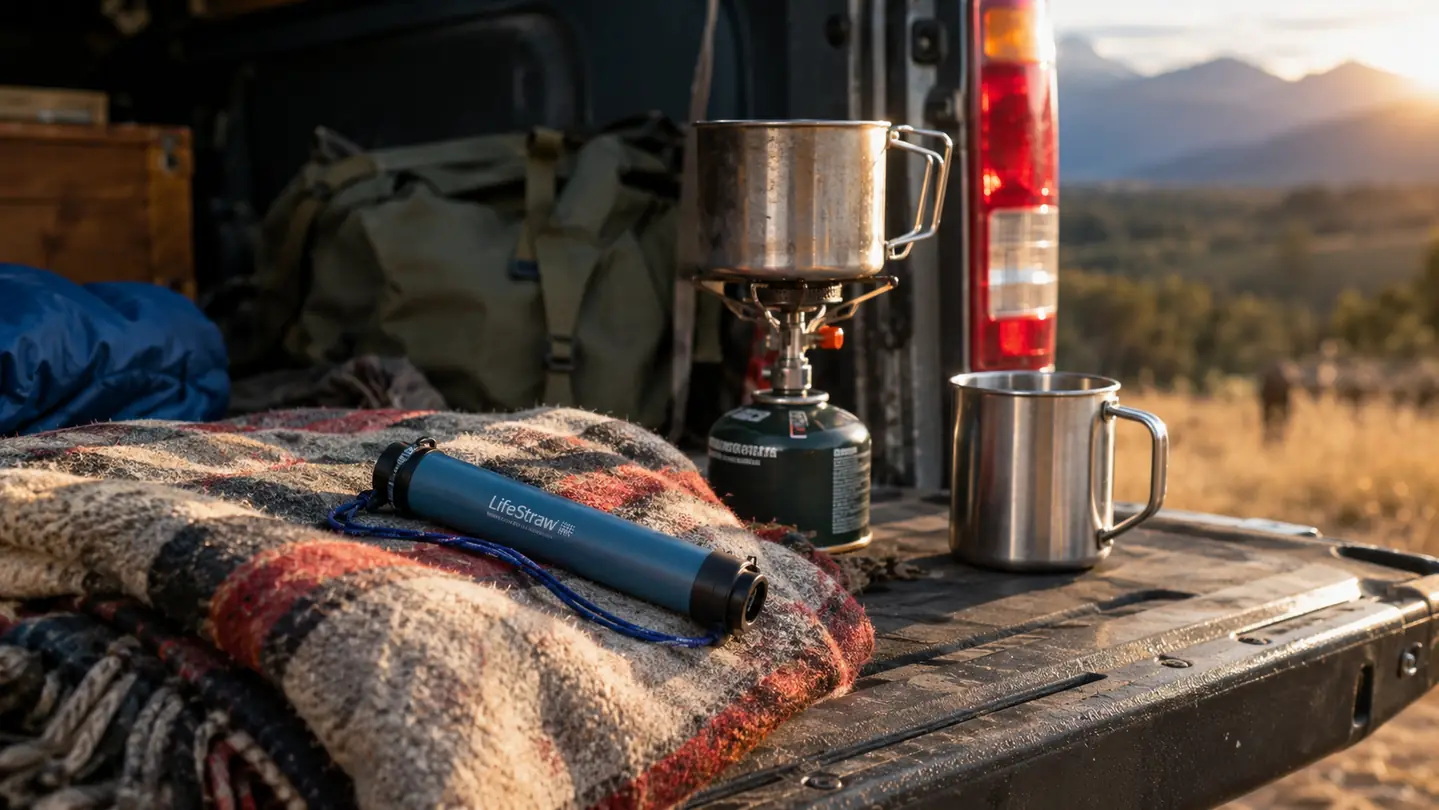
I keep a vehicle emergency kit in my 4Runner year round. It has the usual stuff: jumper cables, a first aid pouch, a headlamp, a space blanket, and a small tube that weighs almost nothing. That tube is the LifeStraw Personal Water Filter, and it earned its spot the hard way, not because a catalog told me to buy it. I put the kit together last November, after a freak snowstorm knocked out power on our road for three days. That week taught me that water is the first thing you run out of and the hardest to improvise. The kit has been through one full winter since, and the only item I have reached for in a real pinch is the filter.
I am Cal Hendricks. I spent years coordinating search and rescue in Deschutes County, and I have learned one thing about water: you do not know you need it until you need it badly. A creek that looks clean can still lay you up for three days. The LifeStraw is not a magic wand, but it is a practical tool that turns a questionable water source into something you can drink without a second thought.
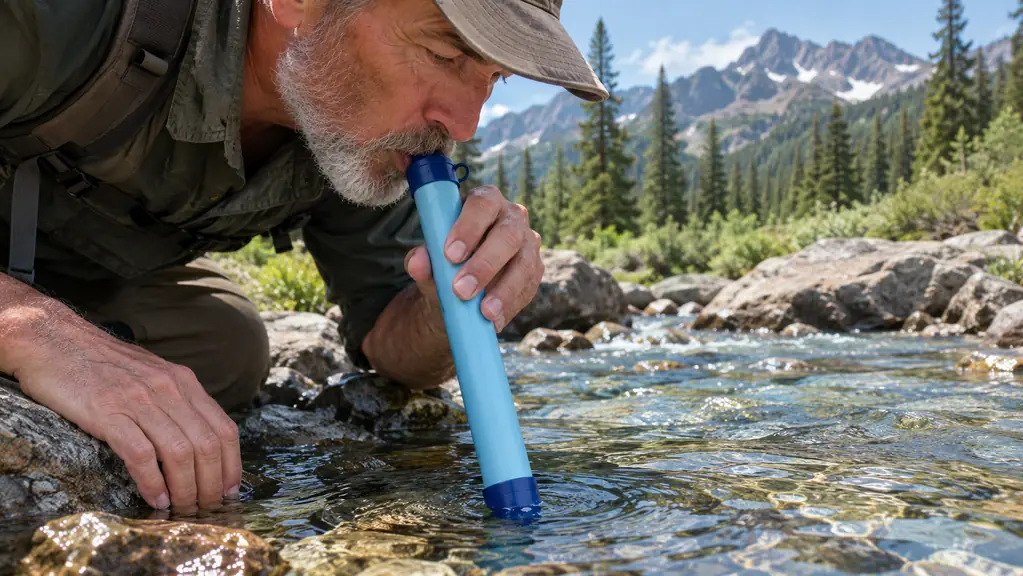
The first time I used it for real was on the third Saturday in October, up in the Cascades. My buddy and I had planned a short loop, but a washed-out bridge added six miles to the day. By the time we hit the creek, my bottle was empty and my mouth felt like sandpaper. It was a Metolius tributary that the trail crossed twice because the switchbacks doubled back on themselves. I dropped to my knees, put the LifeStraw in the water, and drank. My buddy used his own filter, and we sat on a log for ten minutes, refilled our bottles, and kept going. Neither of us got sick on the drive home or in the days after.
Since then, the LifeStraw has lived in my door pocket, and I have used it on at least a dozen trips. It filters down to 0.2 microns, which means it removes bacteria and parasites like giardia and cryptosporidium. It does not remove viruses, and it does not remove dissolved chemicals, so I still carry a small bottle of purification tablets for the rare case where I suspect industrial runoff. That is not a knock on the LifeStraw. It is just knowing what the tool does. The filter is rated for 1,000 gallons, which sounds like a lot until you do the math: that is roughly a hundred days of drinking water for one person, and I have not put a dent in it. I also keep a second LifeStraw in the home emergency kit in the garage, because the 2-pack let me split them up. Winter storms and wildfire-season power outages are the two reasons that kit exists.
I dropped to my knees, put the LifeStraw in the water, and drank. It was cold, clean, and I did not get sick. That is the whole review, right there.
The filter that has never let me down in the field
The LifeStraw Personal is the first thing I reach for when a trip runs longer than planned. It is light, simple, and it works on water I would not trust otherwise.
Amazon Check Today's Price on Amazon →What I like most is that there is nothing to break. No pump, no hose, no batteries, no cartridges to swap. You screw off the cap, put the bottom end in the water, and drink through the top. When you are done, you blow a little air through it and put the cap back on. My wife Joanne rolls her eyes when I say this, but the LifeStraw is the closest thing to a tool that just works that I own. In the mid-1990s I carried a pump filter on search and rescue callouts, and it was the weak link in the kit. The seals dried out, the O-rings cracked, and one October I spent twenty minutes in the rain rebuilding it while my partner stood there with his arms crossed. That memory is why the LifeStraw appeals to me. There is no rebuild. There is no maintenance schedule.
It is not perfect. The flow rate is slow, so you will not fill a Nalgene bottle in a hurry. The first time I tried, I timed it: about a minute for a long, slow drink. That is fine when you are kneeling at the source, but it rules out filling containers for camp. You also drink directly from the water, which means kneeling in the mud on a bad day. On a December overnight near Smith Rock, I had to break a thin skin of ice at the edge of a pool to get the intake in. It still worked on the first try. And a single straw only serves one person, which is fine for me but not for a family outing.
I have also learned where it does not belong. If the water might carry viruses, which can happen downstream of a town or a busy campground, the LifeStraw will not catch them, and I reach for purification tablets instead. If I suspect agricultural runoff or industrial chemicals, no filter in this size class will help, and I find another source. The LifeStraw is a mechanical filter, not a chemist. Respect that, and it will serve you for years.
My grown kids sometimes camp with us, and both of them have their own LifeStraw in their packs. I did not push it on them. They saw me use mine on a dry ridge in the high desert two summers ago, when the spring we planned on had gone dry and the nearest tap was twelve miles back down the road. That was enough. Gear does not get a better endorsement than that.
What I'd Tell You If We Were Sitting at My Kitchen Table
If you were sitting at my kitchen table in Bend, I would tell you this: buy the LifeStraw before you need it, not after. It takes up less space than a water bottle, it weighs next to nothing, and it does not expire on a shelf. Keep one in your vehicle kit, one in your go bag, and one in the kitchen drawer you always forget to check. You will probably never need it. If you do, you will be glad it is there.
Put one in your kit before you need it
The LifeStraw Personal is the best insurance I carry. Light, simple, and ready when the plan falls apart.
Amazon Check Today's Price on Amazon →