
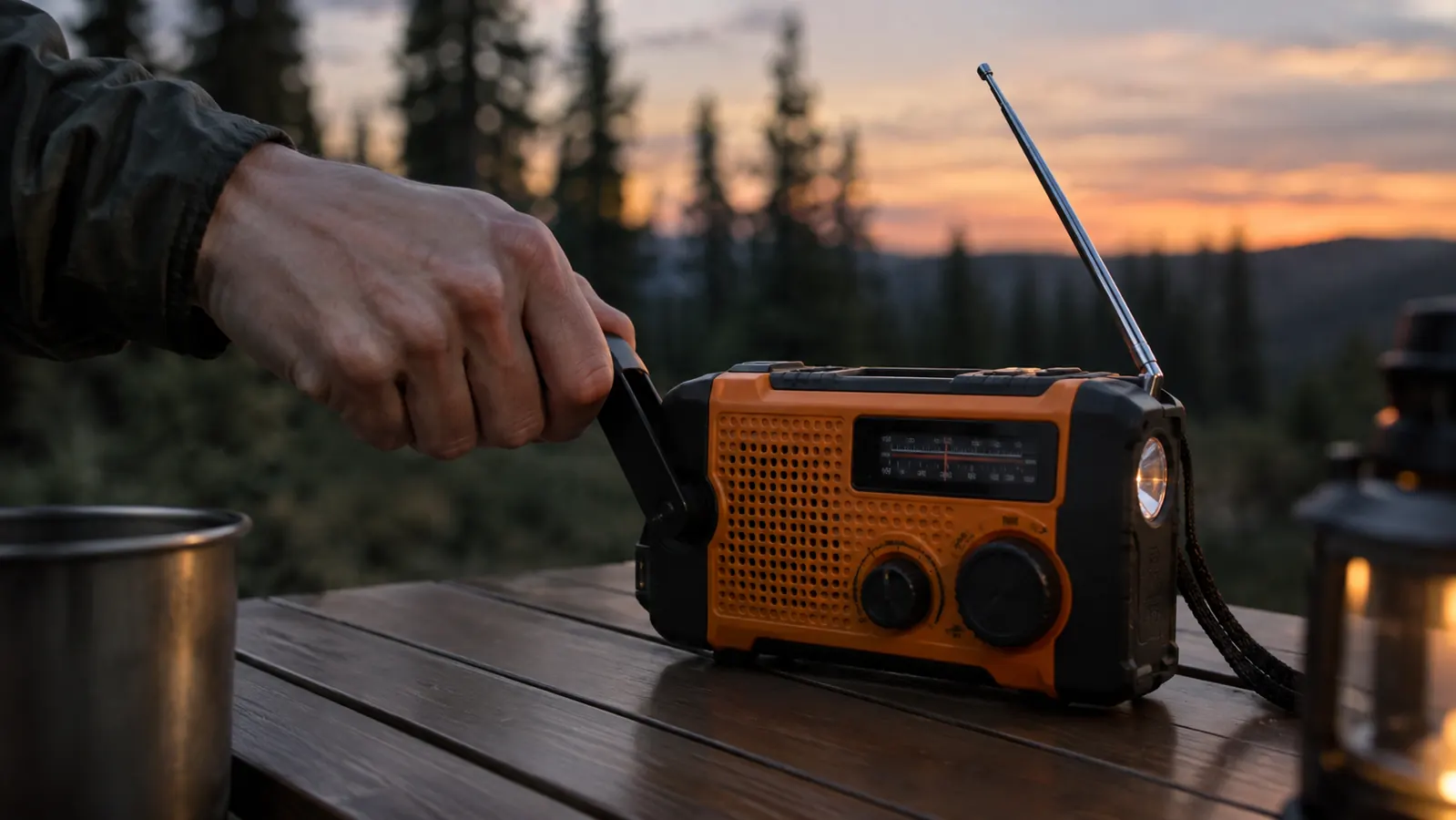
I spent twenty-two years coordinating search and rescue in central Oregon, and the one question people asked me more than any other was what radio to keep in their kit. My answer changed over the years, but for the last two seasons it has been the same: the Midland ER310. I bought mine before a winter storm two winters ago, and it has lived in my Toyota 4Runner ever since, through snow, dust, below-zero nights and a wildfire evacuation. This is the long-term review I wish someone had handed me before I spent my own money.
The Quick Verdict
The Midland ER310 is the most dependable emergency radio I have used in two decades of field work. It is not the loudest, not the smallest and not the cheapest, but it is the one I trust when the power goes out and the weather turns.
Amazon Check Today's Price →The radio I keep in my 4Runner year round
After two seasons of field use, the Midland ER310 is still the first thing I grab when a storm warning hits. Check today's price on Amazon and see why it has more than 6,000 ratings.
Amazon Check Today's Price on Amazon →How I've Used It
My testing is not a weekend in a cabin. The ER310 rides in my vehicle kit year round, strapped in the back of my 4Runner with a spare battery pack and a folding solar panel. I have used it during three winter power outages at home, two wildfire-season evacuations, a week of below-zero camping in the Cascades and countless day trips into the high desert. The first real test came in December 2020, when an ice storm took our power out for four days and the radio never missed a broadcast. The second test was September 2022, when the Cedar Creek fire put our county under an evacuation notice. The ER310 went from the kitchen counter to the passenger seat of the 4Runner in about ninety seconds, and it stayed there until the notice was lifted.
I also do something most owners never will: I run it through the same checks I used to run on search and rescue gear. I drop it, freeze it, leave it in a hot vehicle for a week and crank it until my hand cramps. The ER310 has survived all of it. The only damage after two seasons is a small crack in the corner of the casing from the time I dropped it on a rock slab, and the radio still works fine. That drop happened in the fall of 2022, on a granite shelf above Todd Lake. The radio bounced twice and landed corner-first. I picked it up, checked the weather band, and it came in clear. The crack is cosmetic. It has not grown in two years, and the rubberized casing keeps it from catching on anything. I have also left it in the 4Runner through two full summers of Bend heat, and the display has not warped.
The crank is the part I was most skeptical about. I have seen cheap hand-crank radios strip their gears in a single winter. The Midland crank still turns smoothly after years of use, and three minutes of cranking gives me about thirty minutes of light on the LED flashlight. That is not a typo. It is honest, and it is why I keep spare batteries in the kit. I timed it once with a stopwatch on a cold morning in January 2023, when the temperature outside the tent read minus eleven. Three minutes of steady cranking, and the flashlight ran for twenty-nine minutes before it dimmed. That is the number I plan around, and it is why the AA tray is the workhorse for anything longer.
What the Midland ER310 Gets Right
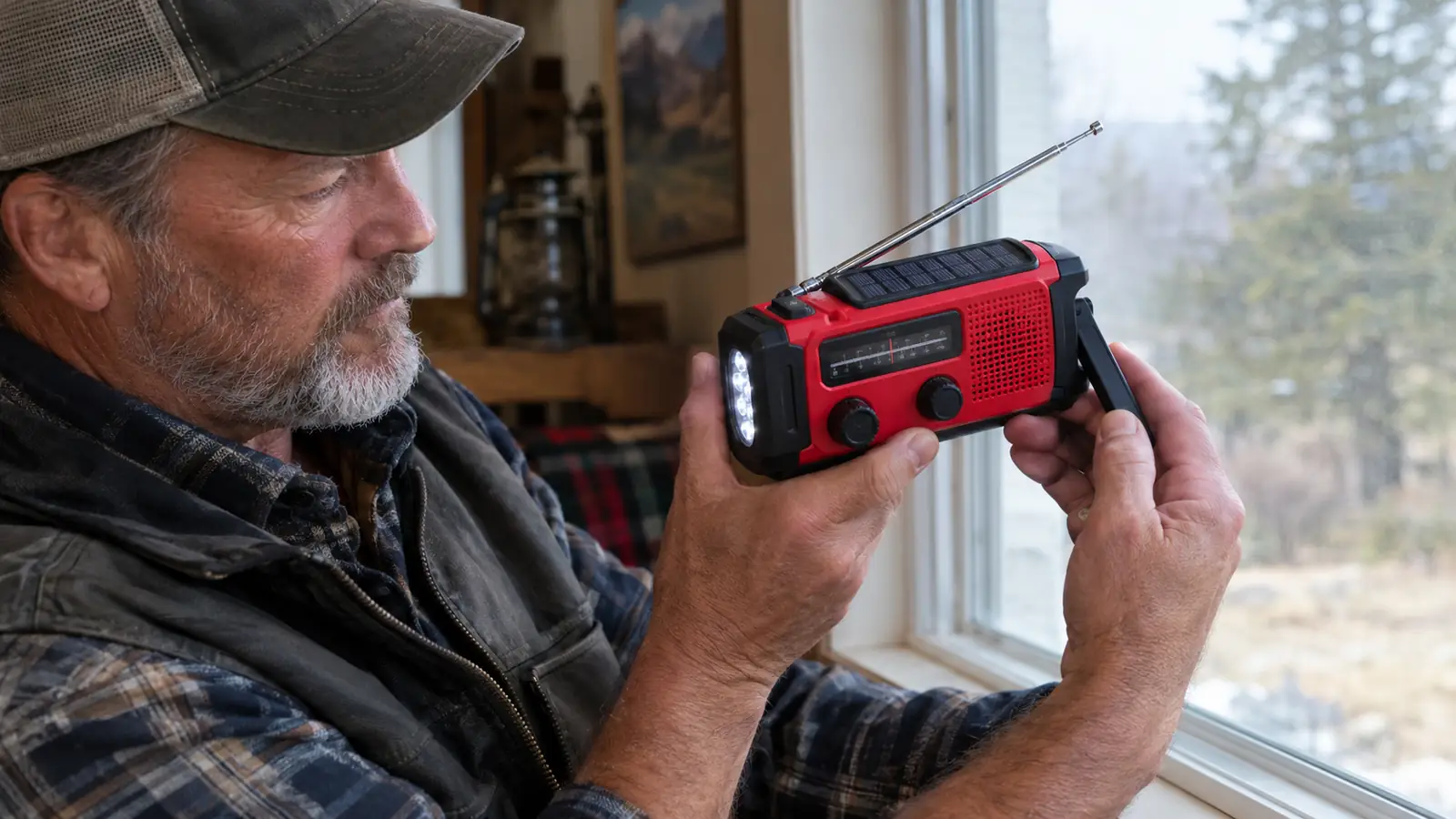
The first thing you notice is the weather band. The ER310 pulls in all seven NOAA weather channels, and in the high desert I can pick up the forecast from forty miles away. During the 2021 heat wave, that weather band was the difference between knowing the evacuation zone was moving and guessing. The alert function works too. When the National Weather Service issues a warning, the radio beeps and switches to the alert automatically. It has woken me up twice in the middle of the night, and both times I was glad it did. The first time was during the 2021 heat wave, when a red flag warning came through at 2 AM and the radio switched itself to the alert tone without me touching a button. I sat up in bed, listened to the recorded message, and spent the next hour moving a few things into the 4Runner. The second was a winter storm warning in February 2023 that I would have slept right through. Neither alert was a false alarm. The one quirk is that the alert tone is loud. That is the point, but if you keep the radio on the nightstand, it will clear a room.
The second thing is the flashlight. It is not a tactical light, but it is bright enough to walk a dark trail or change a tire, and it has three modes: steady, strobe and SOS. The SOS mode flashes the international distress pattern, which is the same pattern we taught in search and rescue. If you are ever in a situation where you need to signal, that feature is worth the price of the radio on its own. I walked a mile of the Deschutes River trail with it after dark last October, and it threw enough light to keep me on the path without blinding me on the switchbacks. I also like that the flashlight sits on the side of the radio rather than the top, because the radio stands on its own base and points the light forward instead of at the ceiling. That sounds like a small thing until you are trying to change a tire in the dark with both hands.
The third thing is the build. The ER310 has a rubberized casing that survives drops, a fold-out crank that has not broken, and a backlit display that is readable in the dark without blinding you. The antenna is stiff but not brittle, and the volume knob has a positive click that has never drifted. After two seasons, every button still works. The backlight has a button of its own, which means it is off until you need it, and that matters for anyone who has ever fumbled for a glowing radio in a dark tent. The antenna telescopes out to a good length and locks with a firm twist. I have watched other radios in our house go through batteries like water, but the ER310 sits in standby for weeks and the battery indicator barely moves.
Where It Falls Short
The speaker is the weak point. It is loud enough for a quiet room, but in a vehicle with the engine running or during a windstorm, you will miss words. I have learned to hold the radio near my ear or use the headphone jack, which works fine but is not something you want to fumble with in the dark. I learned that the hard way during a March windstorm when the power flickered out and I had the ER310 on the kitchen counter with the weather band up full. I could hear that a warning was being read, but I could not make out the counties. I had to cup the radio against my ear and replay the broadcast twice. The headphone jack fixes it, and I keep a cheap pair of earbuds in the kit bag, but it is an extra step at a moment when you do not want extra steps.
The crank is also slower than I would like. Three minutes of cranking for thirty minutes of flashlight is a real tradeoff, and the radio itself needs about a minute of cranking for a few minutes of listening. It is not a flaw, it is physics, but it means the crank is a backup, not a primary power source. I keep a set of AA batteries in the kit and the radio takes them without complaint. The crank also needs both hands. You have to hold the radio against your chest or wedge it between your knees while you turn, which is awkward if you are trying to listen to a broadcast at the same time. The folding handle has a decent grip, but after ten minutes of cranking my hand starts to cramp. That is true of every crank radio I have used, so I do not hold it against the Midland. I just plan for it.
The last thing is the size. It is bigger than a deck of cards and heavier than you expect, which is fine for a vehicle kit or a home emergency kit, but it is not a radio you want in your pocket on a long hike. I carry a smaller unit when I am backpacking and leave the ER310 in the truck. I weighed it once on the kitchen scale: just over a pound with the rechargeable battery in. That is not heavy, but it is noticeable in a pack pocket, and it takes up about as much room as a paperback. For car camping and home use it is the right size. For a week in the backcountry I want something that fits in a hip pocket. The ER310 is a vehicle radio and a home radio first.
What I Liked
- Weather band with alert function that actually works
- Built like a field tool, not a toy
- Flashlight with SOS mode in the international distress pattern
- Takes AA batteries as a backup power source
- Backlit display readable in the dark
Where It Falls Short
- Speaker is quiet in wind or with engine noise
- Crank is slow: three minutes for thirty minutes of light
- Bigger and heavier than pocket-sized radios
- No USB output for charging a phone
The weather alert woke me at 2 AM during a wildfire evacuation, and it was the difference between guessing and knowing.

Power Options and Real-World Battery Life
The ER310 runs on three power sources: the hand crank, a built-in rechargeable battery and three AA batteries. I have used all three in the field. The rechargeable battery holds a charge for weeks on standby, which is better than I expected, and the AA tray is a genuine backup, not an afterthought. During the 2021 outage, I ran the radio on AA batteries for three days and the weather band never missed a beat. I tested the standby claim directly. I charged the radio fully, turned it off, and left it on a shelf for six weeks. When I switched it on, the battery indicator still showed a full charge, and the weather band came in clear. For a piece of gear that is supposed to sit in a kit for months at a time, that is the number that matters most.
The solar panel on the back is the weakest power source. It will trickle-charge the battery in direct sun, but it is not going to save you in a cloudy Pacific Northwest winter. I treat it as a bonus, not a feature. The crank and the AA tray are the real power story, and both have held up. I tested the solar panel over a long weekend in July, leaving the radio face-up on the roof of the 4Runner for six hours of full sun. The battery indicator moved from about half to roughly three quarters. That is real power, but it is slow, and it stops the moment a cloud passes. In a real emergency, when you are inside a vehicle or under tree cover, the panel is not doing anything. I would rather Midland had put that space toward a bigger speaker.
One note on the rechargeable battery: it is not user-replaceable. If it eventually dies, you are looking at a repair or a replacement radio. After two seasons mine still holds a charge, but I would not count on it lasting forever. That is part of why I keep AA batteries in the kit. I want to be straight about this because it is the one long-term question I cannot answer yet. Two years in, the original battery still holds a charge, but it does not hold quite as long as it did new. A full charge that used to sit for six weeks now sits for maybe four before the indicator starts to drop. That is normal battery wear, and it is the reason the AA tray is not optional. If the built-in battery dies on you, the radio still runs on AAs, so it is not a brick. It just means you lose the convenience of the rechargeable side.
Who This Is For
The Midland ER310 is for anyone who wants one radio that will work when the power goes out, the weather turns or the road gets bad. It is the right choice for a vehicle emergency kit, a home emergency kit, a cabin or a camper. It is also a good choice for older adults who want something they can operate without reading a manual, because the controls are simple and the weather band is one button away.
If you live somewhere with real winters, real wildfire seasons or real power outages, this is the radio I would put in your kit. It is not the cheapest emergency radio on Amazon, but it is the one I trust after two seasons of hard use.
Who Should Skip It
Skip the ER310 if you need a pocket-sized radio for backpacking. It is too big and too heavy for that job, and there are smaller options that will serve you better on the trail. Skip it if you need to charge your phone in an emergency, because the ER310 has no USB output. And skip it if you are on a tight budget and only need a basic weather radio, because the crank and the flashlight are features you will pay for whether you use them or not.
The honest version is this: the ER310 is a tool for people who take emergencies seriously. If that is not you, a cheaper radio will do. If it is you, this is the one I keep in my truck.
Two seasons of field use, one radio
The Midland ER310 has earned its place in my vehicle kit. If you are building an emergency kit or upgrading the one you have, check today's price on Amazon.
Amazon Check Today's Price on Amazon →