
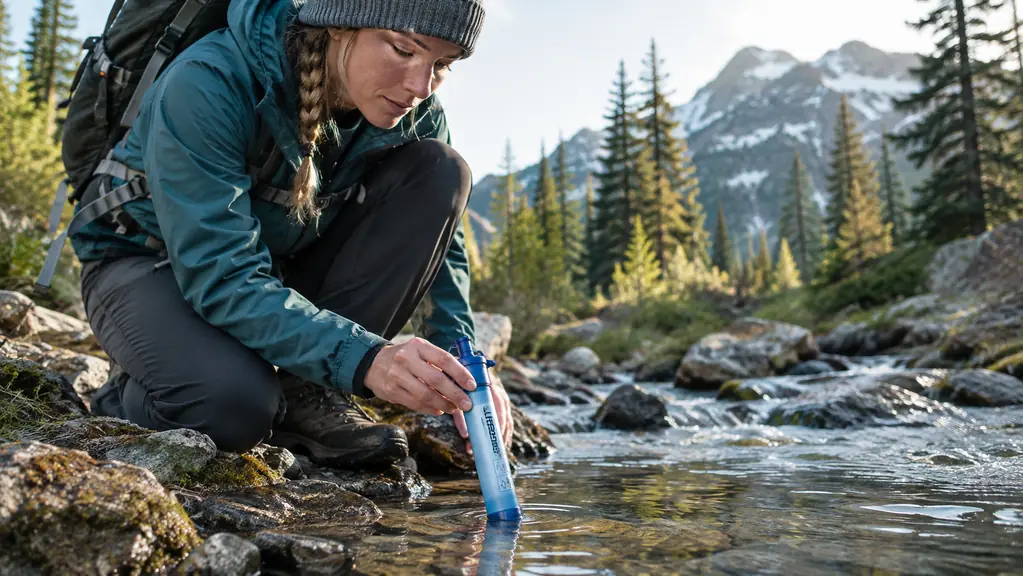
I have carried a LifeStraw in my pack for about two years, and I have handed one to more hikers than I can count. If you spend any time in the Cascades or the high desert east of Bend, you already know the drill: the water looks clear, the map shows a creek, and your bottle is empty. A filter straw is the difference between stopping for twenty minutes to boil water and being back on the trail in under a minute. Here are the ten reasons I keep one in every kit I own, plus the honest limits you should know before you trust it.
The filter I reach for first
After years of testing filters in real weather, the LifeStraw Personal Water Filter is the one I keep in my vehicle kit, my pack, and my home emergency kit. It is light, simple, and ready when you need it.
Amazon Check Today's Price on Amazon →It turns any creek into a water source
The first reason is the simplest: a LifeStraw lets you drink from water you would otherwise have to treat or skip. I have used mine on snowmelt streams in the Cascades, on slow-moving desert springs, and on more than one questionable puddle after a long day. It removes bacteria and parasites, which is what most backcountry water problems actually are. That does not make every water source safe, and I will get to that, but it turns a surprising number of them into something you can use.
It weighs almost nothing
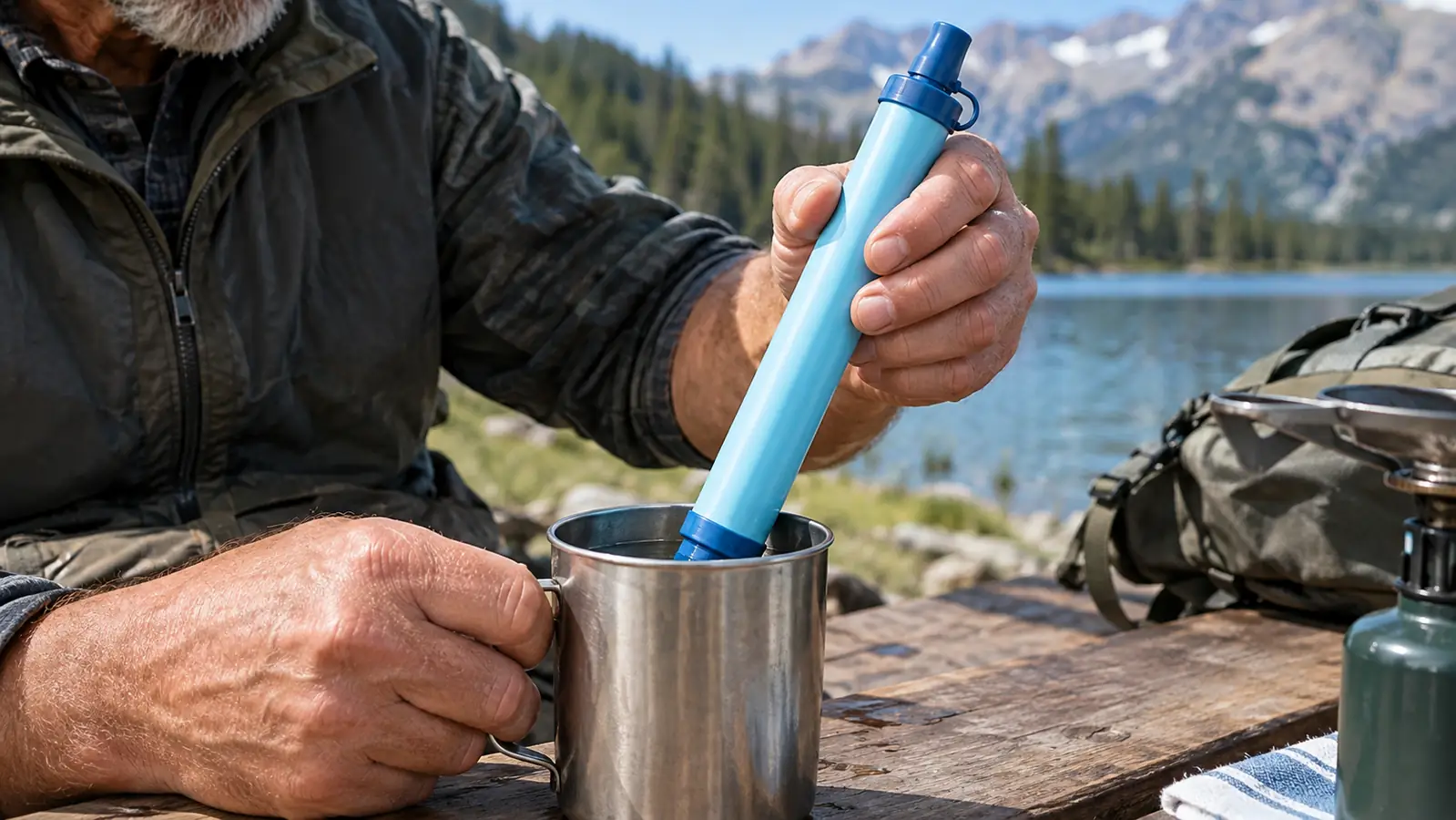
My LifeStraw weighs about as much as a granola bar, and it takes up less space in my pack than a spare pair of socks. When I am putting together a day pack for a ridge hike, the difference between a filter that weighs a pound and a filter that weighs two ounces is the difference between carrying it and leaving it at home. The LifeStraw is the one I actually carry, and a filter you carry is worth more than a filter you leave behind.
It needs no batteries, no pump, and no waiting
A pump filter is a fine tool, but it is a tool with moving parts. The LifeStraw has no pump, no batteries, no chemical tablets to count, and no waiting period. You put the straw in the water and drink. On a cold morning in the high desert, when my hands are stiff and I just want water, that simplicity is the whole point. Fewer parts means fewer things to break, and in twenty years of search and rescue, I have learned to respect gear that cannot break.
It filters to 0.2 microns, which covers the real risks
The LifeStraw filters to 0.2 microns, which is small enough to remove the bacteria and parasites that cause most waterborne illness in the backcountry. Giardia, cryptosporidium, E. coli, salmonella: those are the things that ruin a trip, and the LifeStraw is rated for them. It does not remove viruses, and it does not remove chemical contaminants, so it is not a universal solution. But for the water you actually find on a trail, it covers the risks that matter most.
It is rated for 1,000 gallons, which is years of trips
LifeStraw rates each filter for 1,000 gallons, which sounds like a lot because it is. For context, a heavy backpacking season might put a hundred gallons through a filter. At that rate, one LifeStraw covers a decade of normal use. I replace mine on a schedule rather than waiting for it to fail, but the rated capacity means I never have to think about it running out mid-trip. That is the kind of margin I want in a piece of emergency gear.
It is cheap enough to keep in every kit
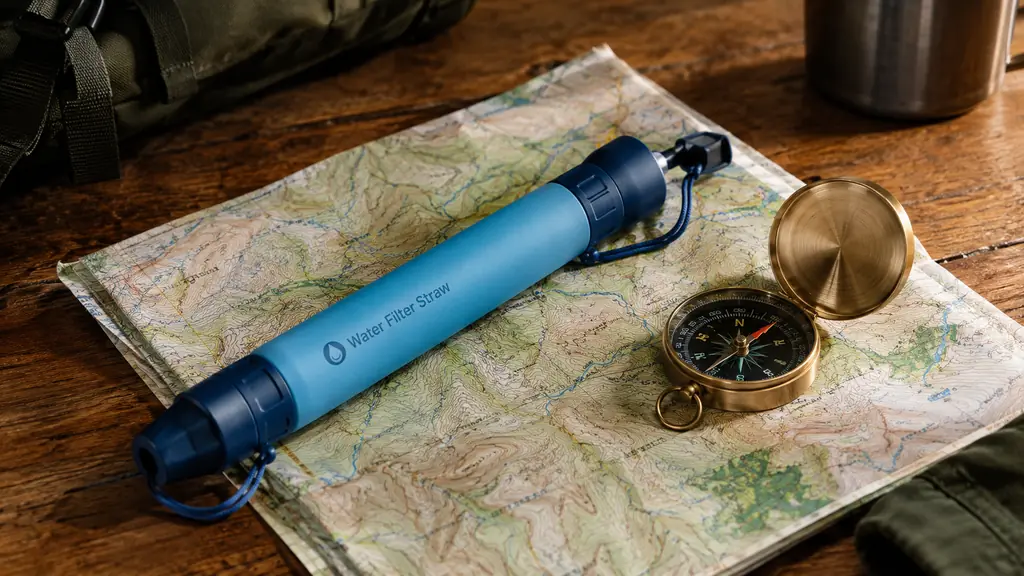
The LifeStraw is inexpensive enough that I keep one in my vehicle kit, one in my pack, one in my home emergency kit, and a spare in the glovebox of my 4Runner. When a filter costs less than a tank of gas, there is no reason to have only one. I have given away more LifeStraws than I own, and I have never once regretted the cost. For the price of a couple of meals on the road, you can have clean water in a situation where it matters.
It works in a vehicle emergency kit, not just a backpack
Most people think of a filter straw as hiking gear, but I keep one in my 4Runner year round. If a winter storm closes the pass and you are stuck overnight, the water in your radiator is not drinkable and the snow outside is not either, not without melting and treating it. A LifeStraw in the glovebox means a creek or a snowmelt pool becomes a water source. It is one of the few pieces of emergency gear that costs almost nothing and could actually matter.
It is simple enough to hand to someone else
In my search and rescue years, I learned that the best gear is gear you can hand to a stranger and have them use correctly. The LifeStraw is exactly that. There is no priming, no assembly, no instruction manual. You put the dirty end in the water and the clean end in your mouth. I have handed mine to hikers, hunters, and a couple of kids on a school trip, and every one of them figured it out in seconds. In an emergency, that simplicity matters more than any spec sheet.
It is a backup to your backup
I carry a filter, but I also carry a stove and a pot, and I know how to boil water. The LifeStraw is not a replacement for a proper water treatment plan. It is the backup to the backup, the thing that still works when the stove runs out of fuel, when the chemical tablets are in the other pack, or when you are too tired to wait for a boil. In twenty years of rescue work, the people who got into trouble were rarely the ones with too many backups.
It is the one piece of gear I replace without thinking
The last reason is the one I tell people who ask me what to buy first: the LifeStraw is the piece of gear I replace on a schedule without a second thought. I have owned several over the years, and I have never had one fail in the field. That is the standard I hold gear to, and it is the reason the LifeStraw is the filter I recommend to anyone building their first kit. It is not the only tool you need, but it is the one you will actually use.
What I'd Skip
The LifeStraw is not for everyone, and I would skip it if you need to filter water for a group. It is a personal filter, which means you drink directly from the source, and that is awkward when you are trying to fill bottles for a family of four. If you are camping with a group, a gravity filter or a pump with a reservoir is the better tool. I would also skip it if you are traveling somewhere with viral contamination in the water, because the LifeStraw does not remove viruses. And if you need to carry water away from the source, a filter bottle is a better fit. The LifeStraw is a tool with a specific job, and it does that job well, but it is not a replacement for a full water treatment system.
In twenty years of rescue work, the people who got into trouble were rarely the ones with too many backups.
The one filter I keep in every kit
The LifeStraw Personal Water Filter is the first piece of gear I recommend to anyone building a kit. It is light, simple, and ready when you need it. Check today's price and see if it fits your setup.
Amazon Check Today's Price on Amazon →