
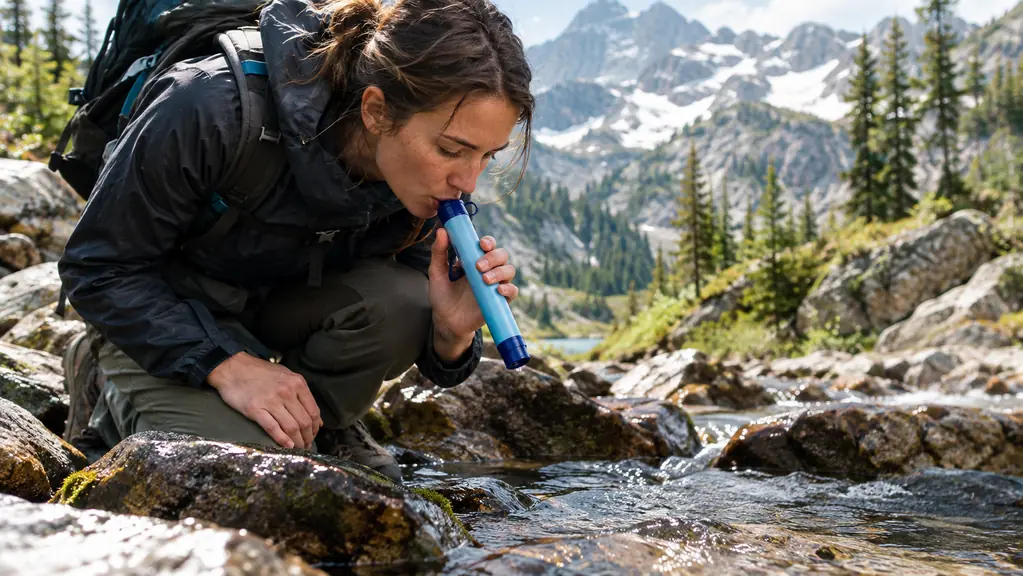
I have carried a lot of water filters over the years, and I will tell you straight: the LifeStraw Personal is the one people ask me about most. It is also the one I have the most mixed feelings about. That is not a bad thing. It means it has a real job, a real limit, and a real place in your pack. After a full season of using it in the Cascades and the high desert east of Bend, I have a clear picture of what it does well, what it does not, and who should buy something else.
The LifeStraw Personal is a straw-style filter that removes bacteria and parasites from water you drink directly from the source. It is not a gravity filter, not a pump, and not a bottle you squeeze. It is a tube with a filter inside, and you put your mouth on it and drink. That sounds simple, because it is. But simple does not mean perfect, and the things nobody tells you about it are exactly the things that matter on a long trip.
The Quick Verdict
A genuinely effective emergency filter that is light, cheap and dead simple, but it only works at the source, it slows down as it clogs, and it is not a group solution. Buy it for your emergency kit and your solo day hikes, not as your only backcountry water plan.
Amazon Check Today's Price →The filter that belongs in every emergency kit
The LifeStraw Personal is the cheapest insurance you can carry for a bad water day. It filters bacteria and parasites, weighs almost nothing, and works with zero setup. If you do not have one in your pack yet, this is the one to start with.
Amazon Check Today's Price on Amazon →How I Tested It
I used the LifeStraw Personal on eleven trips between late spring and early fall. That included three overnight backpacking trips in the Three Sisters area, two day hikes along the Deschutes, a long weekend car camping at a high desert lake, and a couple of shorter scouting trips where I was checking trail conditions for the county search and rescue team I used to coordinate for. I drank from streams, snowmelt pools, a stock pond, and one very questionable puddle that I would not have touched without a filter. The first real outing was the first weekend of June, when the trail to Green Lakes still had patches of snow in the shade. The last was a mid-October morning along the Deschutes when the water was cold enough to ache my teeth.
I also did something most reviews do not do. I kept the same filter for the whole season instead of swapping in a fresh one. I wanted to see how it held up after real use, real silt, and real neglect. I did not baby it. It rode in my pack pocket, got dropped on rocks, and spent a night in the back of my 4Runner when I forgot to bring it inside. The worst hit came in late July on a Deschutes day hike, when I fumbled it on a rocky crossing and it landed mouthpiece-first in the gravel. I rinsed it in the creek, gave the mouthpiece a sharp blow, and kept going. It never missed a beat. On the Green Lakes trip I drank from a snowmelt pool with a film of pine pollen on top, and the filter handled it fine, though the flow was slower than from the running creek. I also timed myself once, just to have a number. Drinking a full liter straight from a cold, clear stream took me about four minutes of steady sucking. That is not fast, but it is not bad for a filter that weighs two ounces. That is how most people actually treat gear, and that is the test that matters.
For reference, I am Cal Hendricks. I am 52, I live outside Bend, Oregon, and I spent years coordinating search and rescue volunteers in this county. I have seen what happens when people run out of clean water in the backcountry, and I have seen what happens when they trust a filter that was never meant for the job. This review is the honest version of what I learned.
What Nobody Tells You About the LifeStraw Personal
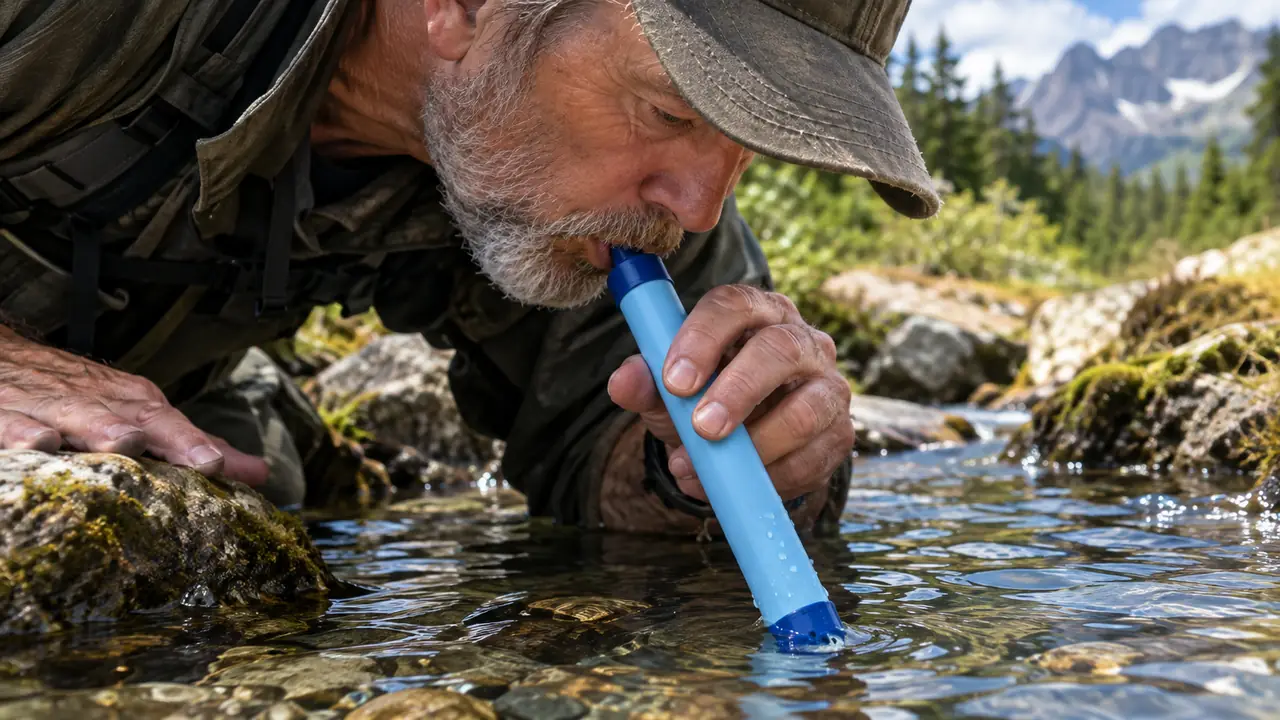
The first thing nobody tells you is that the LifeStraw Personal only works at the water source. You cannot fill a bottle with it, you cannot filter a pot of water for cooking, and you cannot hand it to your partner and have them drink from the same straw without passing it back and forth. You have to kneel at the water, put your mouth on the straw, and drink. That is fine for a quick sip on a hot trail. It is a different story when you are trying to make dinner for two people at the end of a long day. The first time it really hit me was on the second overnight trip. I had hiked eight miles, made camp, and realized the water I needed for dinner was twenty yards down a steep bank. I scrambled down, knelt on a gravel bar with my pack still on, and drank straight from the current until I had my fill. Then I climbed back up and ate a cold dinner, because there was no way to bring water up with me. It worked, but it was not the evening I had planned.
The second thing nobody tells you is that the flow rate drops. A brand new LifeStraw Personal flows fast enough that you barely notice you are filtering. After a few trips, especially if you are drinking from silty streams or ponds, the flow slows to a trickle. The day it really showed up was on my sixth trip, the last weekend of August, at the end of a dry stretch. The creek I was drinking from had dropped to a foot wide, and the water was running over clay, so every sip pulled brown water through the straw. The flow dropped to barely a dribble that took real effort to suck through. Backflushing helps, and I did it the day I got home, blowing hard through the mouthpiece for about twenty seconds, then sucking clean water through, then repeating it twice. The flow came back to maybe seventy percent of what it was when new. That is fine for a drink, but it is worth knowing before you plan a trip around this filter. The filter works, but it never flows like new again.
The third thing nobody tells you is that it is a personal filter in the most literal sense. It filters about 4,000 liters before you need to replace it, which sounds like a lot, but that number assumes one person using it. If you are sharing it with a partner or using it for a group, you will burn through that capacity faster than you expect. And because it is a straw, sharing it means putting your mouth on the same mouthpiece as someone else. That is a small thing on a long trip, but it is a real thing. On the car camping weekend, my wife Joanne tried it once out of curiosity, and we both laughed at how awkward it was to pass back and forth. She carries her own bottle filter now, and that is the honest answer to the sharing problem.
The LifeStraw Personal is the best emergency filter I have tested, and the worst primary filter I have tested. The difference is how you plan to use it.
What It Does Well
The LifeStraw Personal is genuinely excellent at the job it was designed for. It removes 99.9999% of bacteria and 99.9% of protozoan parasites, which covers the things that actually make you sick in the backcountry. It does not remove viruses, and it does not remove chemicals or heavy metals, but for most North American wilderness water, bacteria and parasites are the real risk. That is the honest math, and it is a good one.
It is also absurdly light. The LifeStraw Personal weighs about two ounces, which means you will not notice it in your pack. I have carried it on day hikes where I did not need it, just because it was already in my pocket. That is the kind of weight that actually gets carried, and the kind of filter that actually gets used when you need it.
And it is simple in a way that matters in an emergency. There are no parts to assemble, no cartridges to prime, no instructions to remember. You put the straw in the water and you drink. I have handed it to people who have never used one, and they figured it out in about three seconds. In a real emergency, that simplicity is worth more than any spec sheet.
Where It Falls Short
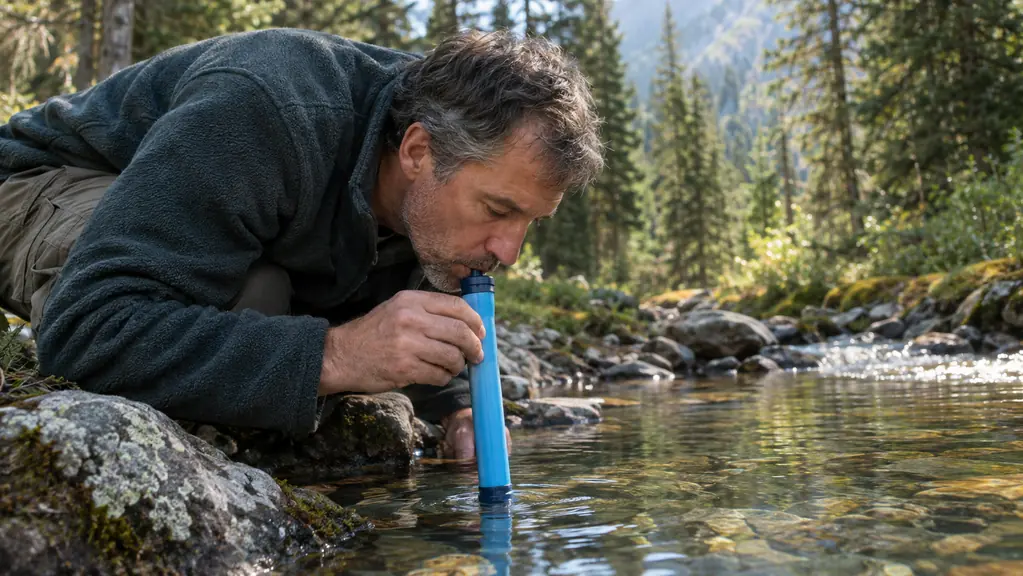
The biggest limitation is the one I already mentioned: it only works at the source. If you are hiking in terrain where water is scarce, or if you want to filter water for camp, the LifeStraw Personal is not the tool. I learned this the hard way on a late September overnighter near the southern edge of the high desert, where the only water was a stock pond a quarter mile from camp. By the time I made camp the sun was already behind the ridge, and the pond sat at the bottom of a shallow draw with cattle tracks pressed into the mud all around it. I walked down in the fading light, crouched at the bank, and drank until my stomach was full. The filter did its job and I never got sick. But I walked back in the dark with a headlamp, and the liter bottle I carried was still not something I could cook with. I ate another cold dinner and thought about how much easier a squeeze filter would have made that evening. That is the honest difference between an emergency tool and a camp tool.
The second limitation is the flow rate. When the filter is fresh, it flows well. When it is clogged, it flows like a slow sip. Backflushing helps, and I recommend doing it after every trip, but it is not a permanent fix. On the last overnight, I stopped timing my drinks and just accepted that a full liter took close to five minutes. That is fine when you are resting by a stream. It is not fine when you are thirsty after a long climb and the sun is going down. If you are relying on this as your only water source for a multi-day trip, you need to be prepared for the flow to slow down.
The third limitation is that it is not a group filter. If you are camping with your partner or your kids, you will each need your own, or you will need a different system. I have a gravity filter for group trips, and it is a much better tool for that job. The LifeStraw Personal is a personal tool, and it is best used that way.
The Pros and Cons
What I Liked
- Removes 99.9999% of bacteria and 99.9% of protozoan parasites
- Weighs about two ounces, easy to carry every day
- Zero setup, works in seconds, no instructions needed
- Long filter life, about 4,000 liters per unit
- Backflushable, so you can restore some flow after clogging
- Cheap enough to keep one in every pack and every vehicle
Where It Falls Short
- Only works at the water source, cannot fill a bottle or pot
- Flow rate drops noticeably as the filter clogs
- Not a group solution, sharing a mouthpiece is awkward
- Does not remove viruses, chemicals, or heavy metals
- No way to know when the filter is nearing the end of its life
Who This Is For
The LifeStraw Personal is for the person who wants a cheap, light, reliable backup that they will actually carry. It is for the day hiker who wants insurance against a long, hot trail. It is for the person building a home emergency kit for winter storms and wildfire-season power outages, which is exactly why I keep one in the garage kit and one in the 4Runner. It is for the hunter, the angler, and the scout who wants a filter that fits in a pocket and does not need a manual.
It is also for the person who understands what it is. It is a straw, not a water system. If you go into it knowing that, you will be happy with it. If you go into it expecting to filter a liter of water for dinner, you will be frustrated. The LifeStraw Personal is a tool with a specific job, and it does that job very well.
Who Should Skip It
Skip the LifeStraw Personal if you are a backpacker who needs to filter water for cooking. Skip it if you are camping with a group and do not want to buy four of them. Skip it if you are traveling somewhere with questionable tap water and want to filter a bottle of water at a hotel sink. And skip it if you are in a place where viruses are a real risk, because this filter does not remove them.
For those jobs, a squeeze filter or a gravity filter is a better tool. I use a squeeze filter for solo backpacking trips where I need to fill bottles, and a gravity filter for group trips. The LifeStraw Personal is not a replacement for either of those. It is a backup, a day-hike companion, and an emergency tool. That is a real job, and it is worth doing well.
How It Compares to the Alternatives
I have tested the LifeStraw Personal alongside squeeze filters and gravity filters, and the honest comparison is that they are different tools. The squeeze filter I keep for solo overnights weighs about six ounces with its bottle, more than three times what the LifeStraw Personal weighs. It filters the same bacteria and parasites, but it runs faster, roughly a liter and a half a minute when clean, and it fills a bottle without me kneeling at the water. The gravity filter I use for group trips holds two liters, hangs from a tree, and does the whole job hands free, but it takes up a real corner of my pack and the hoses need care around brush. The LifeStraw Personal is the lightest, the simplest, and the cheapest of the three, and it gives up the ability to filter water away from the source. On the stock pond trip, the squeeze filter would have let me fill a bottle, make coffee, and cook dinner back at camp. The LifeStraw Personal could not do that. That is the trade, plain and simple, and it is why I carry the LifeStraw as a backup rather than a primary.
If you already own a squeeze filter, the LifeStraw Personal is still worth having as a backup. If you are buying your first filter and you only do day hikes, the LifeStraw Personal is a great place to start. If you are buying your first filter and you plan to backpack overnight, I would buy a squeeze filter instead, and add a LifeStraw Personal to your emergency kit later.
The honest bottom line
The LifeStraw Personal is not the only water filter you will ever need, but it is the one you should never leave home without. It is light, cheap, and simple enough that you will actually carry it. That is the whole point of an emergency filter.
Amazon Check Today's Price on Amazon →