
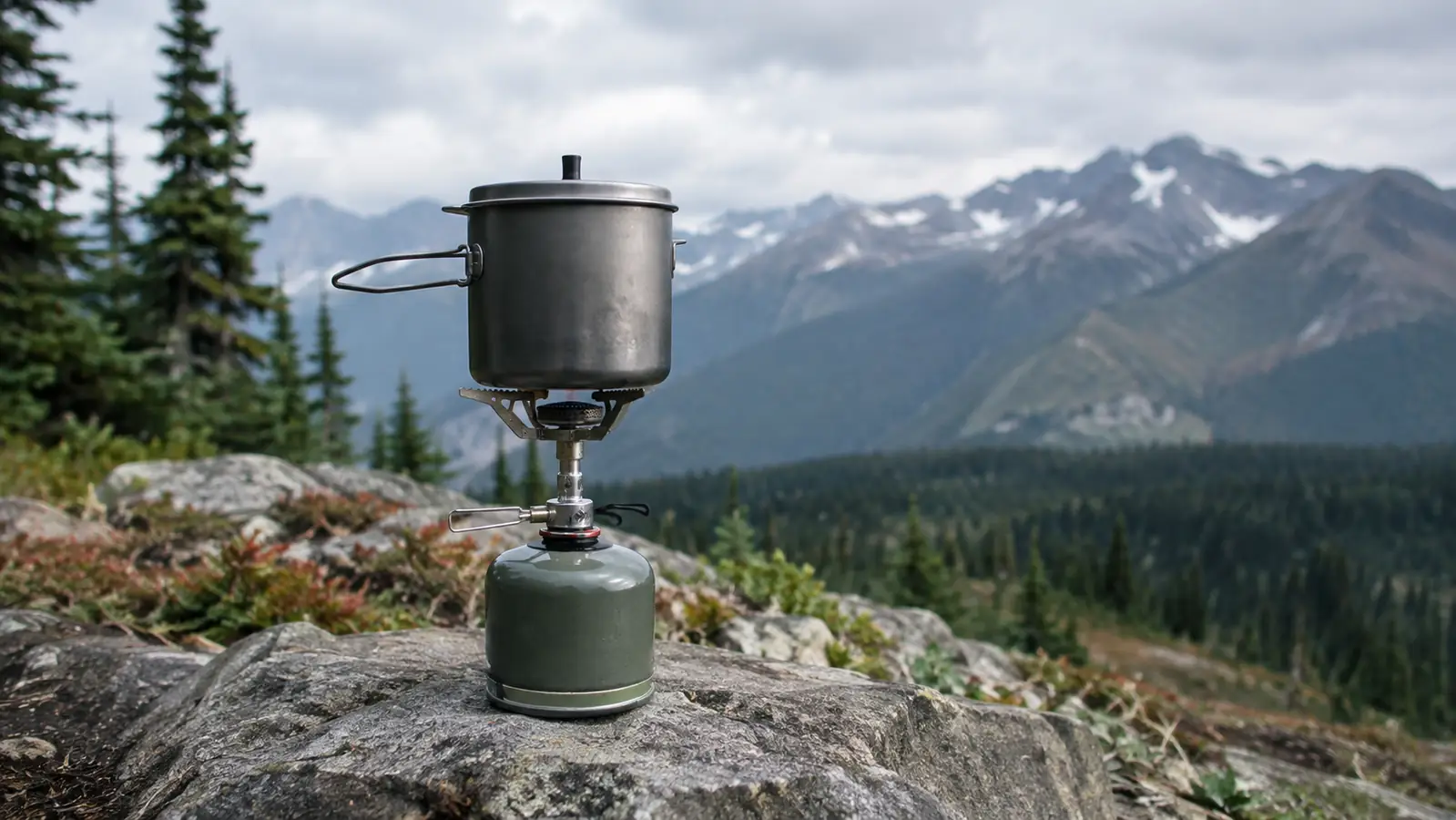
I have carried the MSR PocketRocket 2 on more trips than I can count, and I have also left it at home on purpose. That second part is the one most reviews skip. This is the honest version, the one I would give a friend over coffee before they spent their own money.
The PocketRocket 2 is a tiny isobutane stove that screws onto a small gas canister. It weighs about 2.6 ounces, folds down to almost nothing, and boils a liter of water in a few minutes. It is also one of the most popular backpacking stoves on the market, with thousands of ratings behind it. Popularity is not the same as being right for you, and that is what this review is about.
The Quick Verdict
A superb ultralight stove for solo and two-person trips when you understand its limits. It is not a winter stove, not a group stove, and not a simmer tool. Buy it for what it is and you will love it.
Amazon Check Today's Price →The stove I reach for on most three-season trips
If you want one dependable ultralight stove for solo and duo backpacking, the MSR PocketRocket 2 is the one I keep coming back to. Check today's price on Amazon and see if it fits your kit.
Amazon Check Today's Price on Amazon →How I Have Used It
I am Cal Hendricks, 52, retired county search-and-rescue volunteer coordinator, and I live outside Bend, Oregon. I car camp and backpack in the Cascades and the high desert a few times a month from spring to fall, plus a couple of winter overnights. My wife Joanne and I have used the PocketRocket 2 for about two years. It has boiled water for coffee at 7,000 feet, cooked dinner in a windstorm, and sat unused in my garage for months at a time.
My testing is not laboratory testing. I do not measure boil times with a stopwatch on a calm countertop. I use the stove the way most people actually use it: on a picnic table, on a patch of dirt, on a snowbank in late spring, and once on the tailgate of my old Toyota 4Runner when I did not want to bend down. That is the testing that matters for a piece of gear like this.
The stove has been through rain, wind, and one memorable trip where the temperature dropped below freezing overnight. I have run it on name-brand isobutane canisters and on a couple of off-brand ones. I have also loaned it to my grown kids, which is the real durability test, because neither of them reads instructions first.
One trip stands out from last September. Joanne and I were camped at about 6,400 feet near Todd Lake, and a cold front came through around dusk. The wind picked up to a steady 15 miles an hour, gusting harder, and the temperature dropped into the mid-40s. I set the stove on the lee side of a downed log, got the flame going, and it still took close to nine minutes to bring two cups of water to a boil. The water got there, but I stood over it the whole time, shielding the flame with my body. That evening is when I started carrying a windscreen as a permanent part of the kit.
What Nobody Tells You Before You Buy
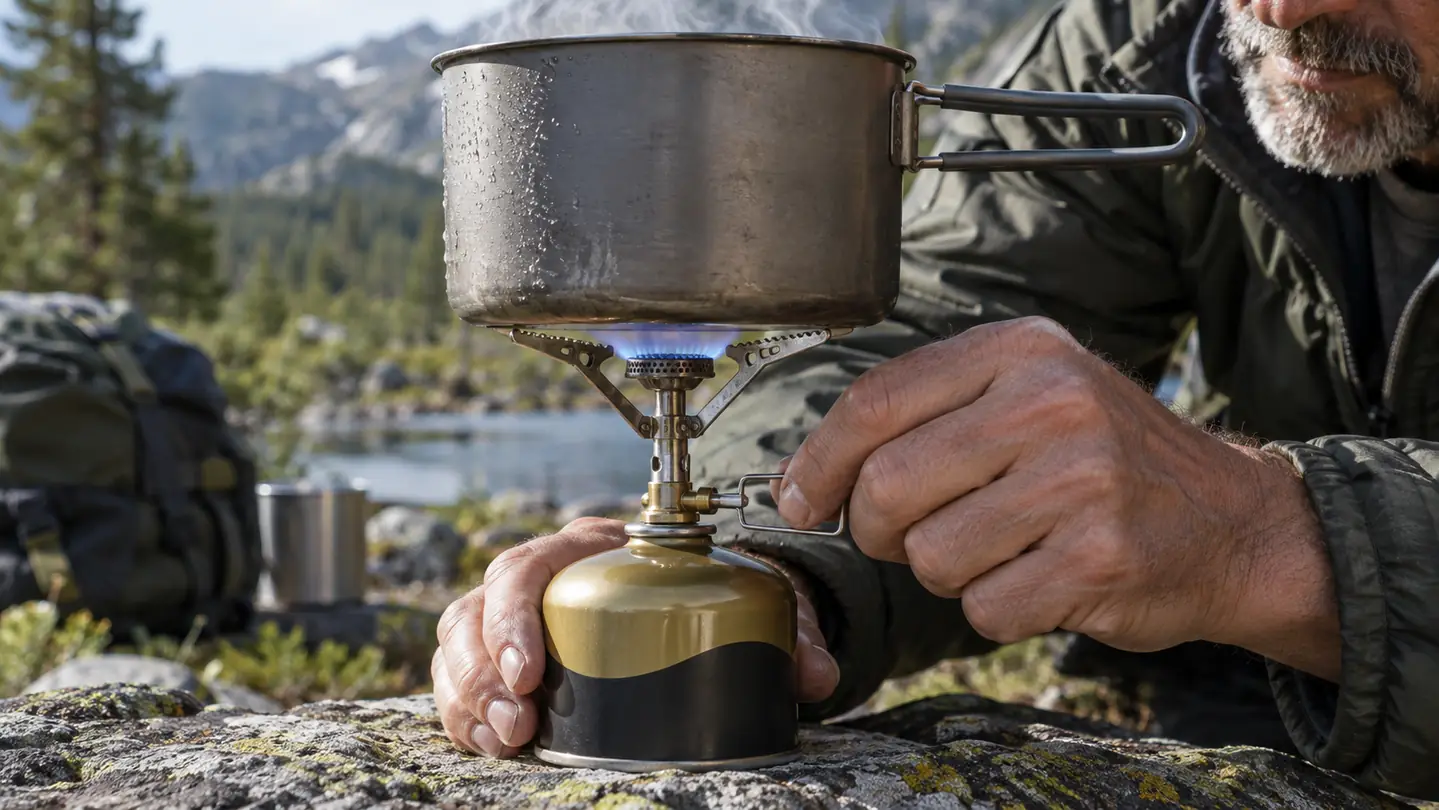
The first thing nobody tells you is that the PocketRocket 2 is not a standalone stove. It is the head of a system. You need a canister, a pot, a windscreen you make yourself or buy separately, and a lighter or ferro rod, because the stove has no igniter of its own. The stove itself is cheap. The system around it is where the cost and the fiddling live.
The second thing nobody tells you is that the flame is narrow and aggressive. It is designed to boil water fast, and it does that very well. It is not designed to simmer. If you want to cook rice without scorching the bottom, or keep a pot of chili at a low bubble, you will be fighting the valve the whole time. The lowest setting is still a strong flame, and the fine adjustment is not fine enough.
I learned that the hard way on a trip to the high desert in May. I tried to simmer a small pot of beans while I set up the tent, and by the time the tent was up, the bottom of the pot had a layer of scorched beans and the rest were still hard. The valve has maybe a quarter turn of useful range between too low to hold a flame and too high to call a simmer. You can work around it by lifting the pot off the burner and adjusting the flame in the air, but that is a two-handed dance you will not enjoy at the end of a long day.
The third thing is wind. The PocketRocket 2 has no built-in wind protection. A light breeze will push the flame sideways, and a steady wind will make a liter of water take twice as long. I have learned to carry a folding windscreen, but that adds weight and another piece to keep track of. In exposed alpine sites, this stove will frustrate you.
The PocketRocket 2 is not a winter stove, not a group stove, and not a simmer tool. It is a fast, light, three-season boiler, and it is excellent at that one job.
The Cold Weather Problem
Here is the honest part that the marketing photos do not show. The PocketRocket 2 runs on isobutane canisters, and isobutane loses pressure in the cold. Below about 30 degrees Fahrenheit, the flame gets weak and sputtery. Below 20, it can stop working entirely. I have had it happen once, on a late-season trip in the Cascades when the temperature dropped harder than the forecast said.
That trip was in late October, two years ago. The forecast called for a low around 28, and we got 14. I woke up to frost on the tent fly and a canister that felt cold to the touch. When I opened the valve, the flame came up weak and orange, then died. I tried again with the canister sitting in a shallow pan of water, which helped a little, but the flame never got strong enough to boil a full pot. I drank my coffee lukewarm that morning and hiked out by noon.
I was not in danger. I had a warm layer, a thermos, and the knowledge that I could pack up and hike out. But I did not have hot dinner, and that was a long, cold evening. The fix is to keep the canister warm, inside your jacket or in a sleeping bag, and to use a winter-grade fuel blend. The MSR PocketRocket 2 does not come with any of that. You have to know it going in.
If you camp mostly in summer and shoulder seasons, this will never matter to you. If you go out in winter, buy a stove designed for winter, or plan around the cold. I do both now. The PocketRocket 2 stays home from December through February, and I take a liquid-fuel stove instead. On the couple of winter overnights I do each year, that heavier stove earns its weight every single time.
What Works Well
When the conditions match its design, the MSR PocketRocket 2 is genuinely excellent. It boils 16 ounces of water in about two and a half minutes in calm conditions. That is fast enough that I stop timing it and just enjoy my coffee. The flame is strong and consistent, and the stove feels solid despite being so light.
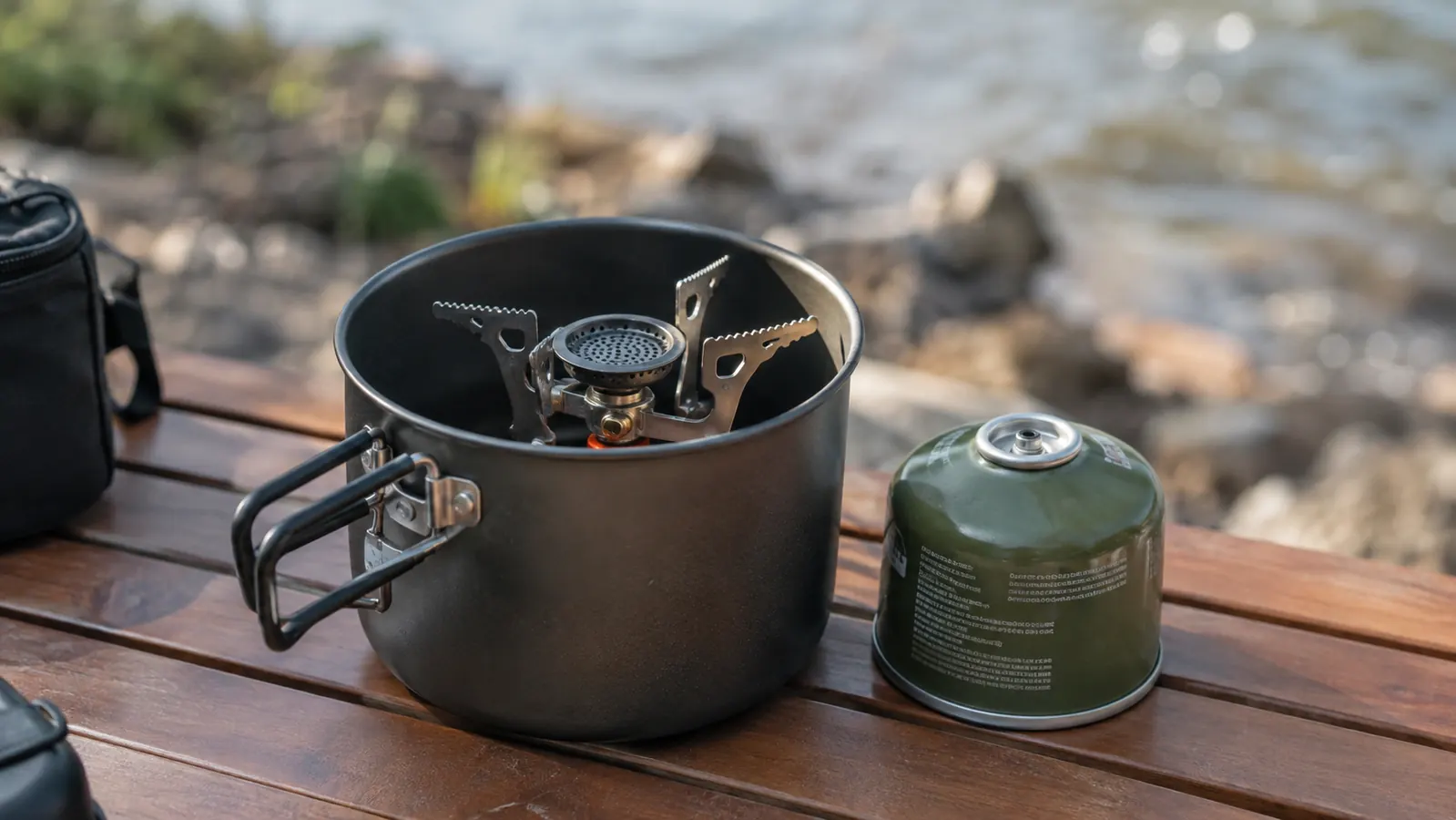
The folding design is the part I appreciate most. The stove folds into a tiny bundle that fits inside my pot with the canister. It takes up almost no space in my pack, and it adds almost no weight. For solo trips and overnighters, that is the whole game. I have carried it on my belt on short hikes, which sounds silly but works.
Here is the thing I have to be straight about: there is no built-in igniter. You light it with a lighter, a match or a ferro rod held to the burner while the gas is barely open. Some people hate that. I have come around to it, because igniters are usually the first part to fail on a stove, and a part that is not there cannot break. I keep a mini lighter in the pot with the stove and a ferro rod on my pack strap, so I have never been stuck. In the wind, I crouch low, block the burner with my body and open the valve just a crack before the flame catches, then turn it up.
I also appreciate how little fuel it wastes. On a three-day solo trip, one small 110-gram canister covers two cups of coffee each morning, a hot dinner each night, and a cup of tea before bed, with fuel left over. I have stretched a single canister across four days when I was careful, which matters when you are packing out every ounce of trash and every empty canister.
One more practical habit: I mark the canister with the date I first opened it and weigh it on the kitchen scale before a trip. A full small canister weighs about 7.2 ounces and an empty one about 3.5. If the scale reads anything under five ounces, I bring a second canister, because guessing at fuel on day two of a trip is not a game I want to play.
The Pros and Cons
What I Liked
- Weighs about 2.6 ounces, light enough to forget it is in your pack
- Boils water fast in calm conditions, about two and a half minutes for a pint
- Folds down small enough to nest inside a pot with a canister
- Simple to set up and use, no priming or pumping
- No igniter to fail, it lights with any lighter, match or ferro rod
- Reasonably priced for the quality
Where It Falls Short
- No built-in wind protection, a breeze ruins the flame
- Poor cold weather performance below freezing
- Narrow flame makes simmering difficult
- Requires a separate canister, windscreen, and pot to be useful
- No built-in igniter, so a lighter or ferro rod is mandatory
- Not stable with large pots, the small burner base tips easily
Who This Is For
The MSR PocketRocket 2 is for the solo backpacker and the two-person team who want hot water fast and do not want to carry a pound of stove. It is for the person who boils water for coffee, oatmeal, and dehydrated dinners, and who does not need to cook a gourmet meal at 9,000 feet. It is for the three-season camper who understands that isobutane has limits and plans around them.
It is also for the person who wants a simple, reliable stove that does not require a degree in camp cooking. There is no priming, no pumping, no maintenance beyond keeping the burner clean. Screw it onto a canister, open the valve, light it, and you are cooking. That simplicity is worth a lot in the dark after a long day on the trail.
I would also point it at the weekend car camper who wants a backup stove that takes up no room. I keep mine in the door pocket of my 4Runner from spring through fall, next to the vehicle emergency kit. When I stop for lunch on a long drive, I can have hot water for soup in the time it takes to find a good pullout. That kind of convenience is easy to overlook when you are only thinking about backpacking.
Who Should Skip It
Skip the PocketRocket 2 if you camp in winter. The cold performance is a real limitation, and there are better options for snow camping. Skip it if you cook for more than two people, because the small burner and narrow flame make group cooking slow and frustrating. Skip it if you like to simmer sauces or bake on the trail, because this stove will not do it well.
Skip it if you want a stove that works in wind without extra gear. The PocketRocket 2 needs a windscreen in exposed sites, and if you do not want to carry one, you will be annoyed every time the breeze picks up. And skip it if you want an all-in-one system with a pot and canister included. This is a stove head, not a complete cooking kit.
I would also tell a family of four to skip it. I tried cooking for four people on it once, during a car camp at Paulina Lake, and it took over an hour to get through breakfast for everyone. The burner simply does not put out enough heat to run a large pot efficiently. For group cooking, a two-burner stove or a larger remote-canister stove is the better tool, and the PocketRocket 2 should stay in the pack.
Alternatives I Have Considered
I have used the MSR PocketRocket 2 alongside a few other stoves over the years. The Jetboil systems are faster and more wind-resistant, but they are heavier and bulkier, and they lock you into their own pots. The MSR WhisperLite is a liquid-fuel stove that handles cold and altitude much better, but it weighs more and requires priming and maintenance. The cheap knockoff stoves are lighter on the wallet but noticeably worse in build quality and flame control.
For my own use, the PocketRocket 2 is the right balance for most of my trips. It is not the best at any single thing, but it is very good at the combination of weight, speed, simplicity, and price. That combination is why it has stayed in my kit for two seasons while other stoves have come and gone.
One more honest note about the alternatives. I have never found a stove in this weight class that handles wind well, because wind protection costs weight and bulk. The Jetboil is the closest, with its integrated pot and heat exchanger, but it weighs more than twice as much and does not pack flat. If wind is your main problem, the answer is not a different ultralight stove. It is a different style of stove entirely, or a good campsite with trees.
Still the one I pack for most three-season trips
The MSR PocketRocket 2 has limits, but for fast, light, simple boiling in good weather, it is hard to beat. Check today's price on Amazon and decide if it belongs in your pack.
Amazon Check Today's Price on Amazon →