
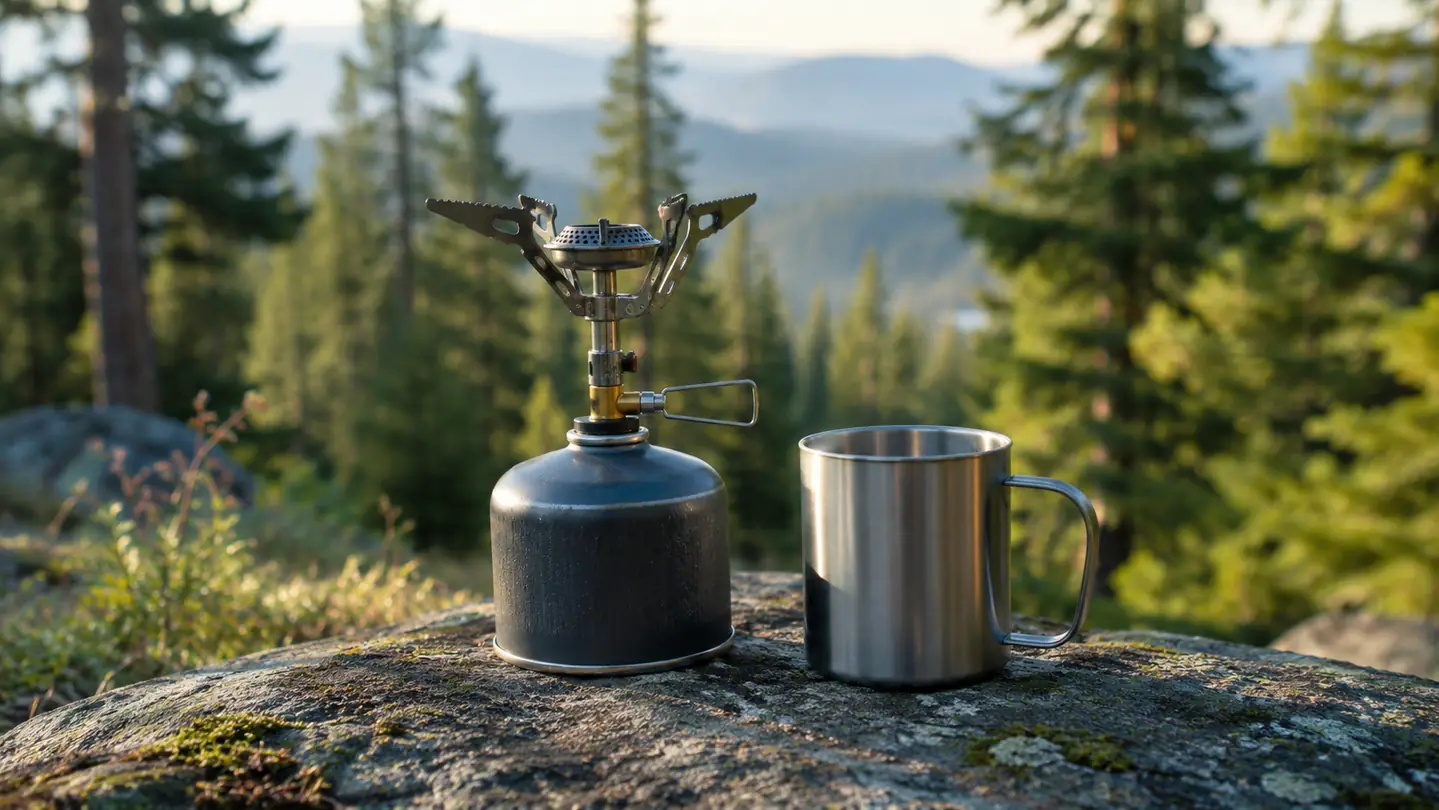
I have lit a lot of stoves in thirty years of search and rescue, and most of them were too heavy, too finicky, or too slow when the weather turned. So when I started testing the MSR PocketRocket 2 for my own trips out of Bend, I did not expect much from something that fits in a shirt pocket. Two seasons later, it is the stove I grab first, and the one I have talked the most people out of buying. Both of those things are true, and both are worth explaining.
The MSR PocketRocket 2 is an ultralight canister stove that boils a liter of water in about three and a half minutes on a good day. It weighs 2.6 ounces, folds down small enough to disappear into a cook pot, and runs on standard isobutane canisters. That sounds simple, because it is. The question is whether simple holds up when you are tired, cold, and cooking in the wind at 7,000 feet. I have now used this stove on roughly forty trips across the Cascades and the high desert, and I can tell you exactly where it shines and where it does not.
The Quick Verdict
The MSR PocketRocket 2 is the best ultralight stove I have used for solo and duo trips where every ounce counts. It is fast, reliable, and simple. Just know that it is not a winter stove, and it is not a windproof stove, and buy it for what it is.
Amazon Check Today's Price →The stove I have carried on forty trips without a single failure
If you want one stove that disappears into your pack and boils water fast, the MSR PocketRocket 2 is the one I reach for. Check today's price on Amazon and see if it fits your kit.
Amazon Check Today's Price on Amazon →How I've Used It
I am Cal Hendricks, 52, retired county search-and-rescue volunteer coordinator, and I live outside Bend, Oregon. My testing ground is the Cascades and the high desert, a few trips a month from spring to fall, plus a couple of winter overnights. My wife Joanne and I car camp in the 4Runner sometimes, but most of my PocketRocket use is backpacking, where the weight of everything in my pack gets measured against how much I actually need it.
Over the last two seasons I have used the MSR PocketRocket 2 for morning coffee, freeze-dried dinners, the occasional real meal when I was willing to carry the weight, and more cups of tea than I can count. I have used it in rain, in wind, at temperatures down to the mid-twenties, and in the kind of dry high desert evenings where the air cools off fast. I have also loaned it to my grown kids on their own trips, which is the real test of any piece of gear. It has come back every time, and it has come back working.
One trip stands out. In early June of last year I did a two-night loop in the Three Sisters Wilderness with my son, and the stove made coffee for both of us at 6:30 in the morning before the sun cleared the ridge. A liter and a half took just over five minutes total, which meant we were not standing around shivering. On the same trip I cooked a freeze-dried lasagna for dinner after a day of rain, and the simmer control let me nurse it along instead of scorching the bottom of the pot. That is the kind of detail you only notice when the weather has already tested you.
The high desert is a different test. On a September trip near Paulina Peak, the wind came up hard in the late afternoon, and my first boil took close to seven minutes because I had not set up any wind protection. I learned that lesson once. Now I carry the MSR windscreen on trips above the treeline, and the stove goes back to behaving itself. On calm evenings it lights on the first match every single time.
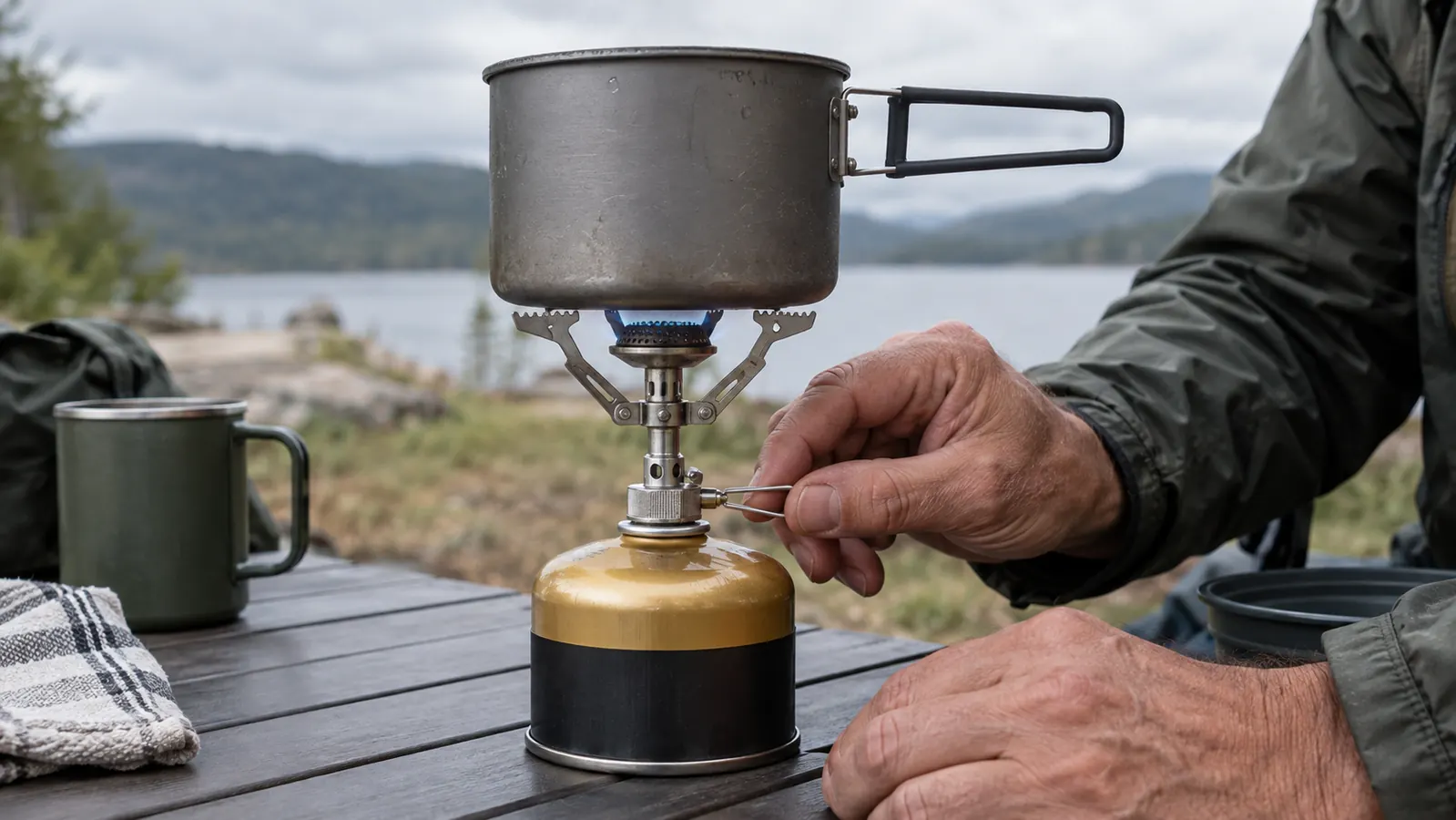
The stove itself is dead simple. Four arms fold out to hold the pot, the burner screws onto a standard isobutane canister, and a valve on the side controls the flame. There is no piezo igniter, so you need a lighter or matches. That omission bothers some people, and I will get to it. But for me, the lack of a built-in igniter is part of why this stove has never failed me. There is less to break.
What the MSR PocketRocket 2 Gets Right
The first thing you notice is the weight. At 2.6 ounces, the MSR PocketRocket 2 is light enough that you forget it is in your pack. I have carried stoves that weighed a pound and a half, and I have carried stoves that weighed nothing because I left them at home. This one actually gets carried, because it costs me nothing to bring it. That is the whole point of an ultralight stove, and MSR understands it.
To put that in perspective, my old liquid fuel stove weighed 15 ounces with its pump and fuel bottle, and I left it behind more often than I took it. The PocketRocket 2 rides in a small stuff sack with my 1.3 liter titanium pot, and the whole cook kit fits inside the pot. When I am packing for a solo weekend, the stove is not a decision. It just goes in.
The second thing is the boil time. MSR rates it at 3.5 minutes for a liter of water, and in calm conditions with a full canister, that number is honest. I have timed it at 3 minutes 20 seconds with a half-full canister on a mild evening. In wind, it is slower, and I will talk about that in a minute. But on a normal trip, you are not standing around waiting for your water. You are making coffee before you are fully awake.
I have kept a rough log of boil times because that is the kind of thing I do. On a calm evening at 5,800 feet with a half-full canister, a liter came to a full rolling boil in 3 minutes 20 seconds. On a cooler morning at 6,800 feet, the same liter took 3 minutes 45 seconds. The difference tracks the air temperature, which is exactly what you expect from a canister stove. The rated number sits in the middle of what I have measured, and no stove I have used matches its rating as consistently.
The third thing is the flame control. This is the detail that separates a good stove from a great one. The MSR PocketRocket 2 has a valve that lets you dial the flame down to a gentle simmer, which matters more than most people think. Freeze-dried meals do not need a rolling boil for long, and if you ever cook actual food on a backpacking trip, you will appreciate being able to turn the heat down without the flame going out. I have cooked rice, oatmeal, and even a small pan of eggs on this stove, and the simmer control is genuinely good.
The rice test is the one I trust. On a rainy afternoon in the Deschutes National Forest, I cooked two servings of rice in a small pot, and the flame held steady at the lowest setting for the full fifteen minutes without sputtering or going out. The valve goes from a roaring flame to a blue whisper without hunting for the sweet spot. That is rare in a stove this small, and it is the reason I stopped carrying a separate simmer ring.
Where It Struggles: Wind and Cold
Now the honest part. The MSR PocketRocket 2 is not a windproof stove, and it is not a winter stove. In a breeze, the flame flickers and the boil time stretches. I have had a liter of water take close to seven minutes in a steady wind with no windscreen, which is a long time to stand there holding your jacket around the pot. MSR sells a separate windscreen for this stove, and I recommend it if you camp in open country. The high desert will teach you this lesson once.
The exact day was a September trip on the east side of the Cascades, where the wind started as a gust and settled into a steady fifteen miles an hour. I tried three things in order: a rock windbreak, which helped for about two minutes until the wind shifted; my jacket held around the pot, which worked but tied up both hands; and finally the MSR windscreen on later trips, which is the fix that actually stuck. If you buy this stove, buy that screen in the same order.
Cold is the other limitation. This is a canister stove, which means it runs on the pressure inside an isobutane canister. When the temperature drops, that pressure drops, and the flame gets weak. Below about freezing, the MSR PocketRocket 2 becomes sluggish. I have used it down to the mid-twenties by keeping the canister inside my jacket between uses and sleeping with it on cold nights, which works, but it is a workaround. If you plan to camp in serious winter conditions, this is not the stove for you. That is not a flaw in the stove. It is a limitation of the design, and you should know it before you buy.
The coldest morning I pushed it was a February overnight in the high desert when the thermometer read 18 degrees. The first boil took almost nine minutes, and the flame had that weak, orange quality you see when the canister is cold. I set the canister inside my jacket against my chest for ten minutes, and the second boil came in just under five. That trick works, but it is also why I do not recommend this stove as a dedicated winter stove. For a three-season kit it is excellent. For January camping, get a liquid fuel stove.
I have timed this stove at 3 minutes 20 seconds for a liter of water on a calm evening, and I have also watched it take seven minutes in a steady wind. Both numbers are true, and both are part of the same honest stove.
Durability and Maintenance Over Two Seasons
I have dropped this stove, packed it loose in a pot, loaned it to my kids, and run it on canisters from three different brands. It has never failed to light, and it has never clogged. The MSR PocketRocket 2 is not a fragile piece of gear. The burner is protected by the folded arms when it is packed, and the valve has held its adjustment perfectly. After roughly forty trips, the only wear I can find is a few scuffs on the metal where the arms fold out.
The drop that stands out happened at a campsite near Todd Lake, where I knocked the whole cook kit off a log seat. The pot dented, the lid went one way, and the stove hit granite hard enough to bounce. I expected a bent arm or a cracked valve stem. Instead I screwed it onto a fresh canister and it lit on the first match. The folded arms take the impact when the stove is packed, which you only appreciate after a drop like that.
Maintenance is almost nothing. I wipe the burner head occasionally, and I make sure the canister threads stay clean. That is it. There is no pump, no fuel line, no priming, and no cleaning kit to carry. The simplicity that makes this stove light is the same simplicity that makes it reliable. In my years coordinating search and rescue, I learned to trust gear that does one thing and does it without fuss. The MSR PocketRocket 2 is that kind of gear.
One small incident taught me the only maintenance habit that matters. After my son came back from a trip in the Wallowas, I found grit in the threads where the stove screws onto the canister. I brushed it out with an old toothbrush, wiped the burner with a cloth, and it has run fine since. Sand and dirt are the only things that can bother a stove like this, and a minute of cleaning handles them. I now check the threads before every trip, the same way I check my boots for loose soles. It takes ten seconds.
I have also run this stove on MSR canisters, Jetboil canisters, and a store brand from a gas station in Sisters. All three threaded on cleanly and burned the same. That matters if you buy fuel on the road, because you never know which brand the shop will have. It is one less thing to plan around.
What I Liked
- Weighs just 2.6 ounces and packs down smaller than a fist
- Boils a liter of water in about 3.5 minutes in calm conditions
- Excellent simmer control for an ultralight stove
- Simple, durable design with almost nothing to break
- Works with standard isobutane canisters from any brand
Where It Falls Short
- No built-in igniter, so you need a lighter or matches
- Slow and flame-flickery in wind without a windscreen
- Performance drops in cold weather like any canister stove
- Small burner means group cooking takes multiple boils
Who This Is For
The MSR PocketRocket 2 is for the backpacker who counts ounces, the solo hiker who wants hot coffee without a fire, and the couple who splits gear and wants a stove that disappears into a pot. It is for anyone who camps in two seasons and wants a stove that lights the first time, every time, without a ritual. If you are new to backpacking, this is a forgiving first stove because there is almost nothing to learn. Screw it on, open the valve, light it, cook.
Who Should Skip It
Skip the MSR PocketRocket 2 if you camp mostly in winter, if you cook in exposed wind without a windscreen, or if you want a built-in igniter and an integrated pot system. For those jobs, a liquid fuel stove or a larger windscreen-equipped stove is a better fit. Also skip it if you regularly cook for more than two people. This stove is fast, but it is small, and a big group dinner will mean multiple boils. Know what you are buying, and you will not be disappointed.
Two seasons, thirty trips, zero failures
That is my honest record with the MSR PocketRocket 2. If you want a stove that earns its place in your pack, check today's price on Amazon.
Amazon Check Today's Price on Amazon →