
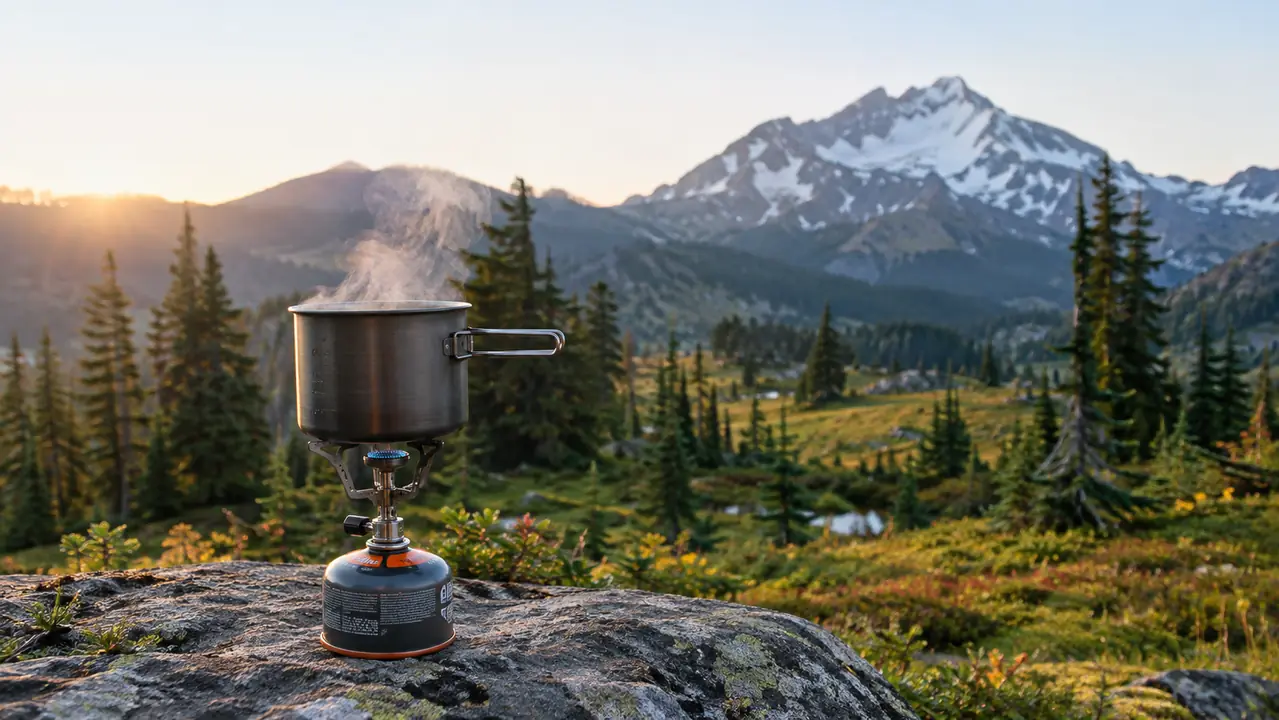
Standing on a windy ledge above Todd Lake, watching the water take forever to boil, I had the same question you probably have: which stove should I carry, the MSR PocketRocket 2 or the Jetboil Zip? I have owned both for two seasons, taken both into the Cascades, the high desert, and a couple of genuinely cold winter overnights, and I have a clear answer. For most of my trips, it is the MSR PocketRocket 2, and the reasons come down to weight, flexibility, and what I actually cook.
Here is the shorter version. If your trip is about covering miles and eating simple meals, the PocketRocket 2 disappears into your pack and works with any pot you own. If your trip is mostly about hot water, and you want it fast even in a wind, the Zip does that better than almost anything its size. I will walk through where each one earned its keep, and where each one let me down.
Why I Have Carried Both
I did not buy these stoves to run a comparison project. I bought the PocketRocket 2 first, after a search and rescue colleague showed me how little it weighed. Then I picked up a Jetboil Zip for the winter trips, because I wanted push-button ignition on cold mornings when my lighter was somewhere in the bottom of my pack. Over the last two seasons, the two stoves have traded places in my 4Runner more times than I can count.
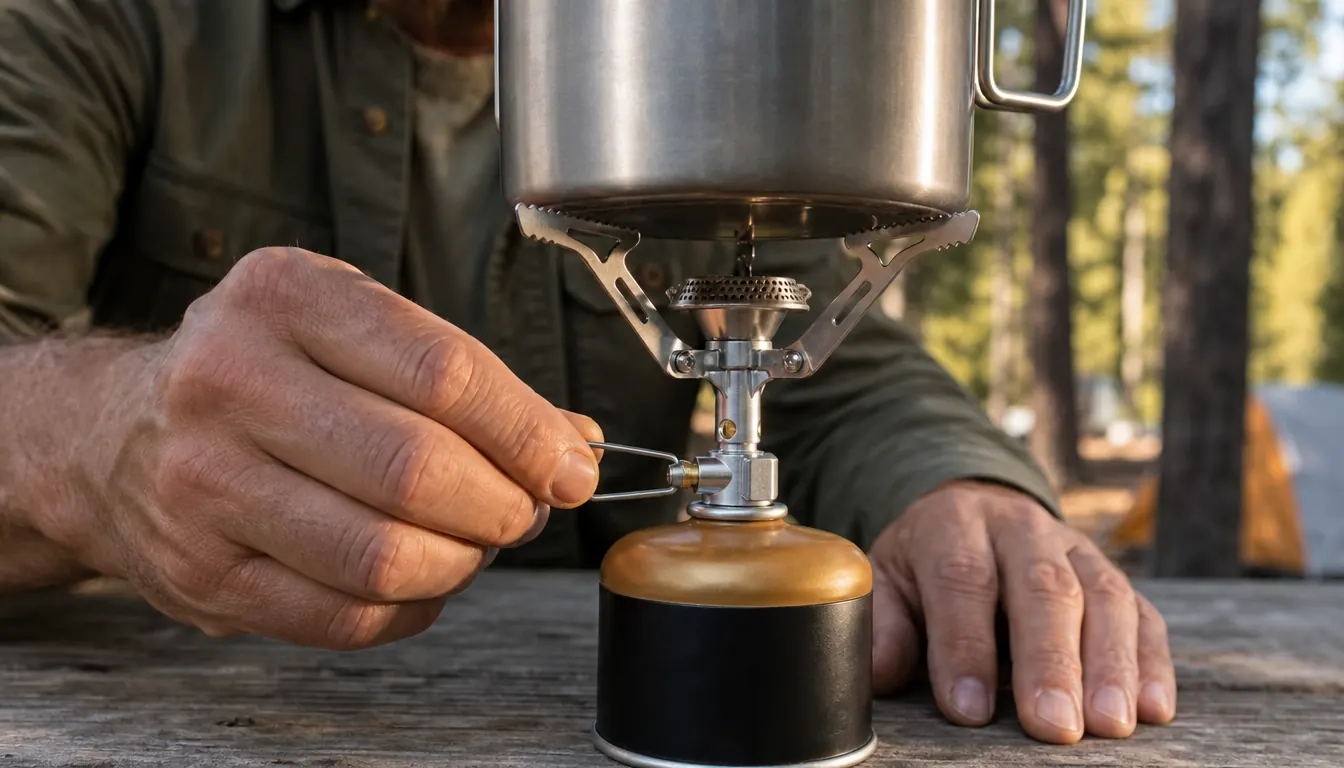
Here is the setup I keep coming back to. The PocketRocket 2 screws onto a standard isobutane canister and folds down to almost nothing. The Zip is an integrated system: the burner clips to its own cup, the canister nests inside, and the whole cylinder rides in a stuff sack. Same fuel, same basic idea, two very different philosophies about what a stove should be.
How I Tested Them
I did not run these stoves in a lab. I ran them the way I actually camp. Over two seasons, the PocketRocket 2 and the Zip came on a dozen trips together: spring car camps in the high desert near Bend, summer backpacking trips into the Three Sisters and the Jefferson Park area, and two winter overnights where the temperature sat in the teens overnight. I used the same canister brand for both, kept the same pot full of water, and timed the boil when I remembered to.
The measurements that mattered were simple. How long to boil a full pot in still air. How long in a breeze. How much fuel was left after a week of two meals a day. How stable each stove felt with a full pot on top. And the everyday questions that never make it into a spec sheet: which one was easier to light with cold hands, which one packed better with the rest of my kit, which one I trusted not to tip over on uneven ground.
I also kept a note on the annoying stuff, because the annoying stuff is what decides whether a stove stays in your kit. Which one was noisy in a way that made conversation hard. Which one sputtered when the canister got low. Which one needed the valve adjusted twice to keep a simmer. Those notes are where most of my opinions in this article come from, more than the stopwatch.
One thing I changed mid-season: I stopped using the little wind clip that ships with the PocketRocket 2 and started carrying a taller folding windscreen instead. It weighs about an ounce, wraps around the canister and pot, and cuts the boil time in wind by a surprising margin. The Zip never needed that, which tells you something about the design difference.
The Comparison at a Glance
| MSR PocketRocket 2 | Jetboil Zip | |
|---|---|---|
| Price | Lower up-front cost, and it works with pots you already own | Costs more, and the cup and base are part of the system |
| Weight | About 2.6 oz (73 g) for the stove alone | About 12.5 oz (354 g) for the full system |
| Boil speed (still air) | MSR rates it at about 3.5 minutes for a liter | Similar ballpark for a full cup of water |
| Wind performance | Open flame, needs a sheltered spot or the little wind clip | Flux ring and enclosed cup hold up much better in a breeze |
| Simmering | Good enough for oatmeal, rice, and one-pan dinners with a light touch | Really a boil-only valve, hard to hold a low flame |
| Cooking flexibility | Any pot, pan, or mug you already own | Locked into the 0.8-liter cup it ships with |
| Ignition | Needs a lighter or matches | Push-button piezo igniter built into the burner |
| Pack size | Folds small enough to hide inside a cook pot | Neat cylinder, but it takes up real space in the pack |
| Best for | Ultralight backpackers who cook a variety of meals | Boil-water fast for one or two people, especially in wind |
Where the MSR PocketRocket 2 Wins
The weight difference is the first thing you notice. The PocketRocket 2 is about 2.6 ounces. The Zip is about 12.5 ounces with its cup. That is a ten-ounce gap, and in the backcountry, ten ounces is a real choice between carrying this stove or carrying something else you actually need. On a three-day traverse, I would rather spend those ounces on food, a warmer layer, or an extra liter of water.
The flexibility is the second thing. Because the PocketRocket 2 is just a burner, I can set a 1.4-liter pot on it for a two-person dinner, or balance a small skillet for eggs, or heat a mug of water for coffee while the pot works. The Zip cooks in its own cup, and that is about it. I have made a lot of one-pot meals in the Zip cup, but I have never made a decent pancake in it. With the PocketRocket 2, my cook kit stayed exactly the same as it was before I bought the stove.
Let me also say something about stability. A stove that tips is worse than a slow stove, because a tipped pot means dinner in the dirt and a possible burn. The PocketRocket 2 has three wide-set legs, and I have used it with a full 1.4-liter pot without a scare. The Zip is stable too, because the cup locks onto the burner base. I have never tipped either one, but I trust the PocketRocket 2 more on uneven ground, and that matters when you cook on a slanted slab of basalt.

Where the Jetboil Zip Wins
Wind. That is the Zip's whole game, and it plays it well. The burner clips into a flux ring on the bottom of the cup, so the flame is partially enclosed and the heat wraps around the cup instead of blowing away. On that ledge above Todd Lake, the PocketRocket 2 needed my body and a rock as a windbreak. The Zip sat in the open and boiled the same amount of water in about the same time. If you camp in exposed places, that is worth a lot.
The ignition is the second thing. The Zip has a push-button piezo igniter, so on a cold morning I can click it and have flame. The PocketRocket 2 needs a lighter or matches, and when the wind is up or my fingers are stiff, that is a small ceremony every time. It is not a reason to choose the Zip on its own. But for winter trips, when I am wearing gloves and trying to get coffee started before full light, I have wished for that button more than once.
The third thing is fuel economy. Because the flux ring captures heat that an open burner would lose to the air, the Zip gets more cups of water out of a canister than the PocketRocket 2 does in the same conditions. On the longer trips, I have finished with noticeably more fuel left in the canister when I used the Zip for morning coffee. That is not a reason to carry the extra ten ounces, but it is a real difference if you are trying to stretch a canister.
The Stove That Disappears Into Your Pack
The Jetboil Zip wins the wind test, and I will not argue with that. But on most trips, the MSR PocketRocket 2 is the one I reach for: ten ounces lighter, works with any pot you own, and two seasons of reliable boils. Check today's price on Amazon and see if it fits your kit.
Amazon Check Today's Price on Amazon →The Tradeoffs Nobody Puts on the Box
Here is what the marketing does not tell you. The PocketRocket 2 is an open burner, so in any real wind it is slow. The little wind clip that comes with it helps, but only so much. I have learned to set up my kitchen behind a rock, a log, or the 4Runner, and that has solved most of my wind problems. The Zip does not need that, which is exactly why it is the better winter companion.
Simmering deserves its own note, because it separates the two stoves more than any other feature. The PocketRocket 2 can be turned down to a low flame, and with practice I can hold rice or oatmeal without scorching. The Zip's valve is really on and off, and the flame tends to jump. If you cook from scratch on trail, that alone will push you toward the PocketRocket 2.
Cold weather is the other honest note. Both stoves run on the same isobutane and propane mix, and both lose pressure when the temperature drops below freezing. Neither is the stove I would pick for a serious winter expedition. For the couple of winter overnights I do each year, I keep the canisters inside my sleeping bag at night and both stoves work well enough for coffee and a hot dinner. The Zip's enclosed design and the PocketRocket 2's lower weight each earn their keep in different conditions.
There is also the question of what can break. The PocketRocket 2 is a burner, a valve, and three folding legs. There is almost nothing to go wrong, and if the O-ring wears out, a replacement is a few dollars. The Zip adds a piezo igniter, a plastic base, and a cup that you will eventually drop on a rock. Mine has a dent in the cozy and a small scar on the base, and it still works fine. But the simpler stove is the stove I worry about less.
Ten ounces: that is the whole argument. The PocketRocket 2 weighs 2.6 ounces; the Zip weighs 12.5 with its cup. Weight decides most of my trips.
Who Should Buy Which
Buy the MSR PocketRocket 2 if you backpack, if you like cooking your own meals rather than pouring hot water into a bag, if you already own a decent pot, or if every ounce in your pack has to justify itself. That describes me on most trips, and it is the stove I grab first when the season opens. Buy the Jetboil Zip if your trips are mostly about boiling water quickly, if you camp in exposed places where wind is the rule, or if you want the simplest possible one-piece system for car camping and base camp mornings.
One more thing, and it is the thing I tell people at the trailhead. There is no wrong answer here. Both stoves are well built, both have been reliable for me, and both will still be working long after cheaper gear has been retired. The right choice is the one that matches how you actually camp, not the one that looks better in a photo. If you are still deciding, look at your last three trips and ask which stove would have been the better companion on each of them. That answer is your answer.
Here is a concrete test I use when people ask me at the trailhead. Picture your average trip: how many meals are you actually cooking, and how much wind do you usually get? If you are pouring hot water into freeze-dried bags on an exposed ridgeline, the Zip is the better tool. If you are making breakfast for two in a sheltered camp, the PocketRocket 2 wins. Match the stove to the trips you take, not the trips you imagine.
The Bottom Line
After two seasons, my answer has not changed. The MSR PocketRocket 2 is the stove I carry on most trips, because it is light enough to forget and flexible enough to cook real food. The Jetboil Zip stays in the rotation for the windy shoulder-season trips and the winter overnights, where its enclosed cup and push-button start earn their weight. If you are building a kit from scratch and you can only buy one, start with the PocketRocket 2 and learn its wind habits. If your trips are mostly about hot water, the Zip will not let you down.
Start With the Stove I Carry
The MSR PocketRocket 2 is the first stove I would buy again tomorrow. Light, simple, and it cooks real meals with the pot you already own. See today's price on Amazon and judge it for yourself.
Amazon Check Today's Price on Amazon →