
The first thing nobody tells you about emergency radios is that most of them spend their whole lives in a drawer. You buy one, test it once, put it in the kit, and forget about it. Then the power goes out for three days and you discover the batteries were dead the whole time. I have been that person. I spent twenty years as a county search and rescue volunteer, and I have pulled more dead gear out of more packs than I care to count. So when I bought the Midland ER310 for our home kit, I did something most people skip. I used it. For a full year, through winter storms, wildfire season outages, and every camping trip where it earned its spot in the truck.
The honest version of this review is not a list of features. It is a field report from a year of real use. The ER310 is one of the best selling emergency radios on the market, and the reputation is mostly earned. But it has limits, and the marketing does not always make them obvious. Here is what worked, what did not, and who should buy it.
I am not going to tell you this radio will save your life. No piece of gear does that on its own. What it will do is tell you what the weather is doing when the phone network is down, which gives you the information you need to make your own decisions. That is a smaller promise than the ads make, and it is the one the ER310 actually keeps.
The Quick Verdict
A dependable weather radio that earns its place in a home kit or a vehicle kit, as long as you understand the crank, the speaker, and the charging limits before you need them in a real emergency.
Amazon Check Today's Price →The Radio I Keep in the Truck and the Garage
I bought the ER310 for the house and liked it well enough to put a second one in the 4Runner. If you want the same radio, check today's price on Amazon and see if it fits your kit.
Amazon Check Today's Price on Amazon →How I've Used It
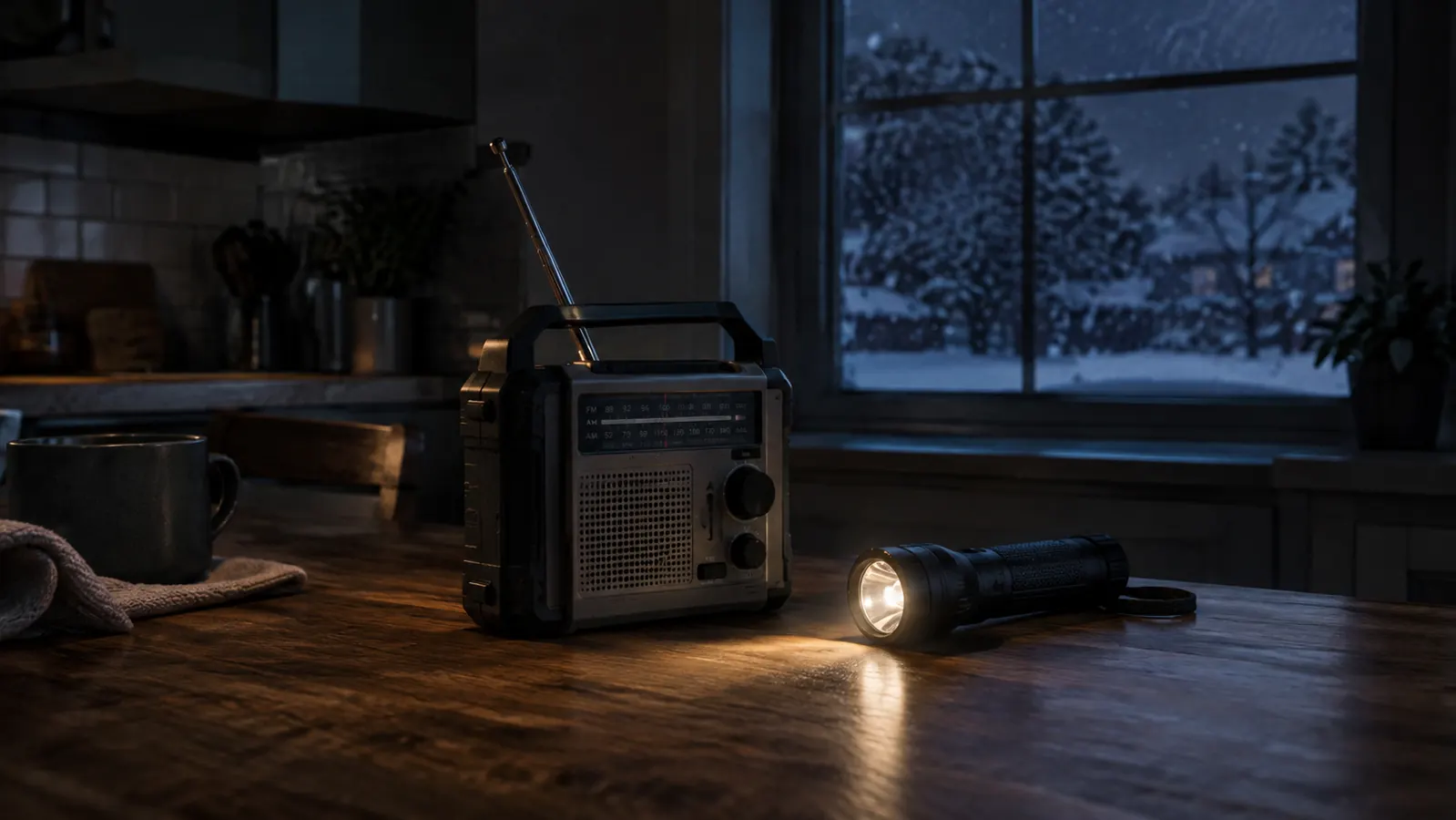
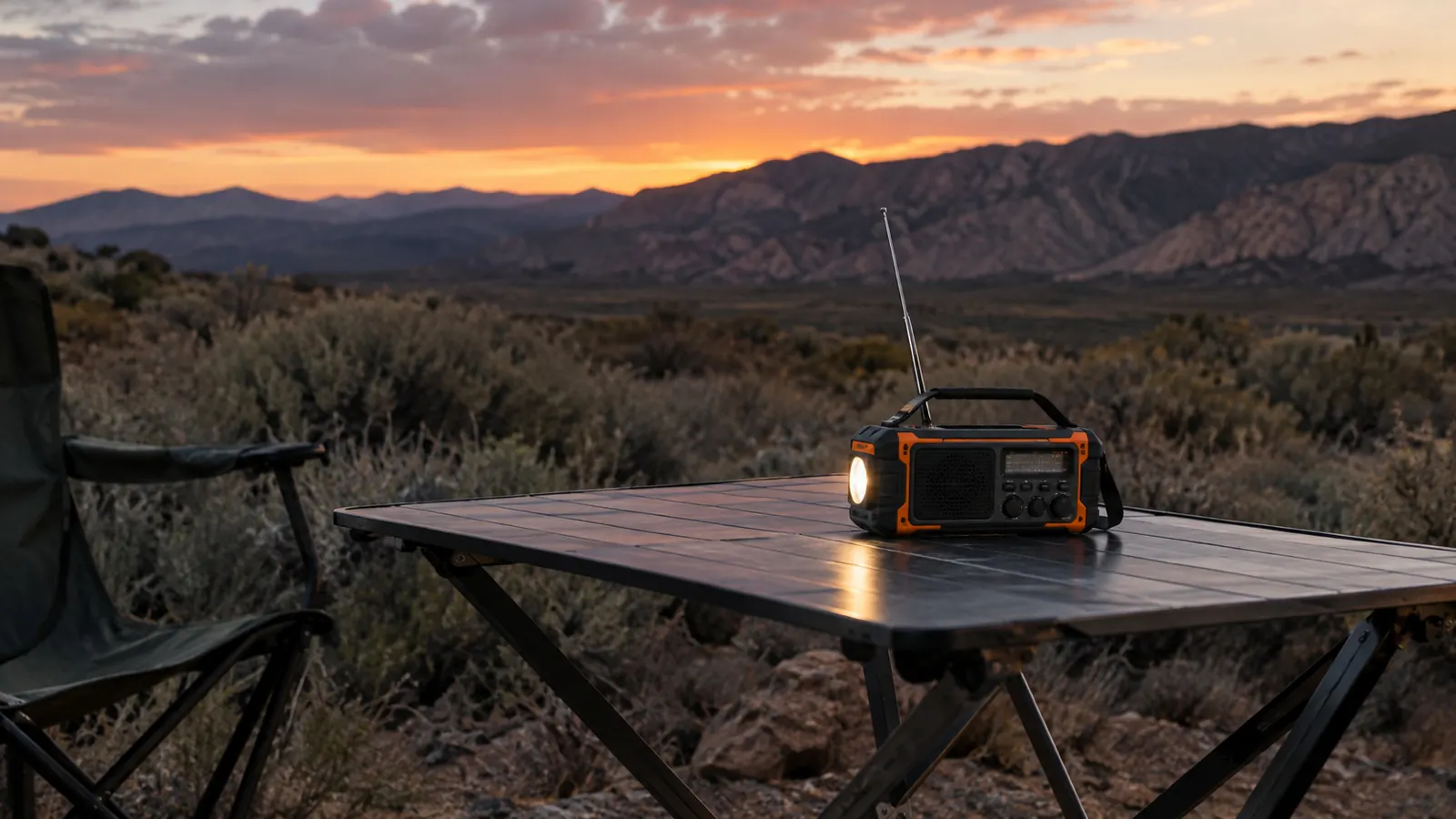
Testing gear sounds glamorous until you realize it means leaving a perfectly good radio in a cold truck all winter to see if it still works in the morning. I did not go that far with the ER310, but I did put it through a normal year of hard use. It rode in the 4Runner through a Central Oregon winter. It went on car camping trips in the Cascades and the high desert. It spent two days on the kitchen counter during a January outage when the temperature outside dropped to single digits and the wind took down a power line two miles from our place.
My test method is simple. I charged it fully, then I left it alone for two months. Then I checked it. Most radios in this class lose their charge or develop a dead cell in storage. The ER310 held up. When we lost power in January, it turned on immediately and pulled in the NOAA forecast from the Bend transmitter without ten minutes of antenna fiddling. That is the test that matters, and it passed.
One detail worth knowing before you buy. The ER310 has a rechargeable battery built in, and it also takes three AA batteries as a backup. That matters more than most reviews admit. A radio that only runs on a proprietary rechargeable pack is a liability in year three, because the pack eventually dies and replacements are hard to find. The AA backup means you can keep this radio going with batteries from any gas station in the country.
Joanne rolled her eyes when I said I was buying a second one for the garage kit. Then the wildfire smoke rolled in last August and the power flickered for three days straight, and she was the one who reminded me to keep it charged. The ER310 now lives on the shelf next to the water jugs, and neither of us thinks twice about it. That is the highest compliment a piece of emergency gear can get. It becomes part of the background, until the day it becomes the most important thing in the room.
What the ER310 Does Right
The strongest part of this radio is the weather reception. Midland builds these for the NOAA Weather Radio network, and the ER310 picks up alerts from a long way out. During our January outage, the radio caught a winter storm warning for Deschutes County a full six hours before my phone buzzed with the same alert. The tone alert is the feature I care about most. You can set it to go off when the National Weather Service issues a warning, and it is loud enough to wake you from a deep sleep. That is the entire point of a weather radio, and the ER310 does it well.
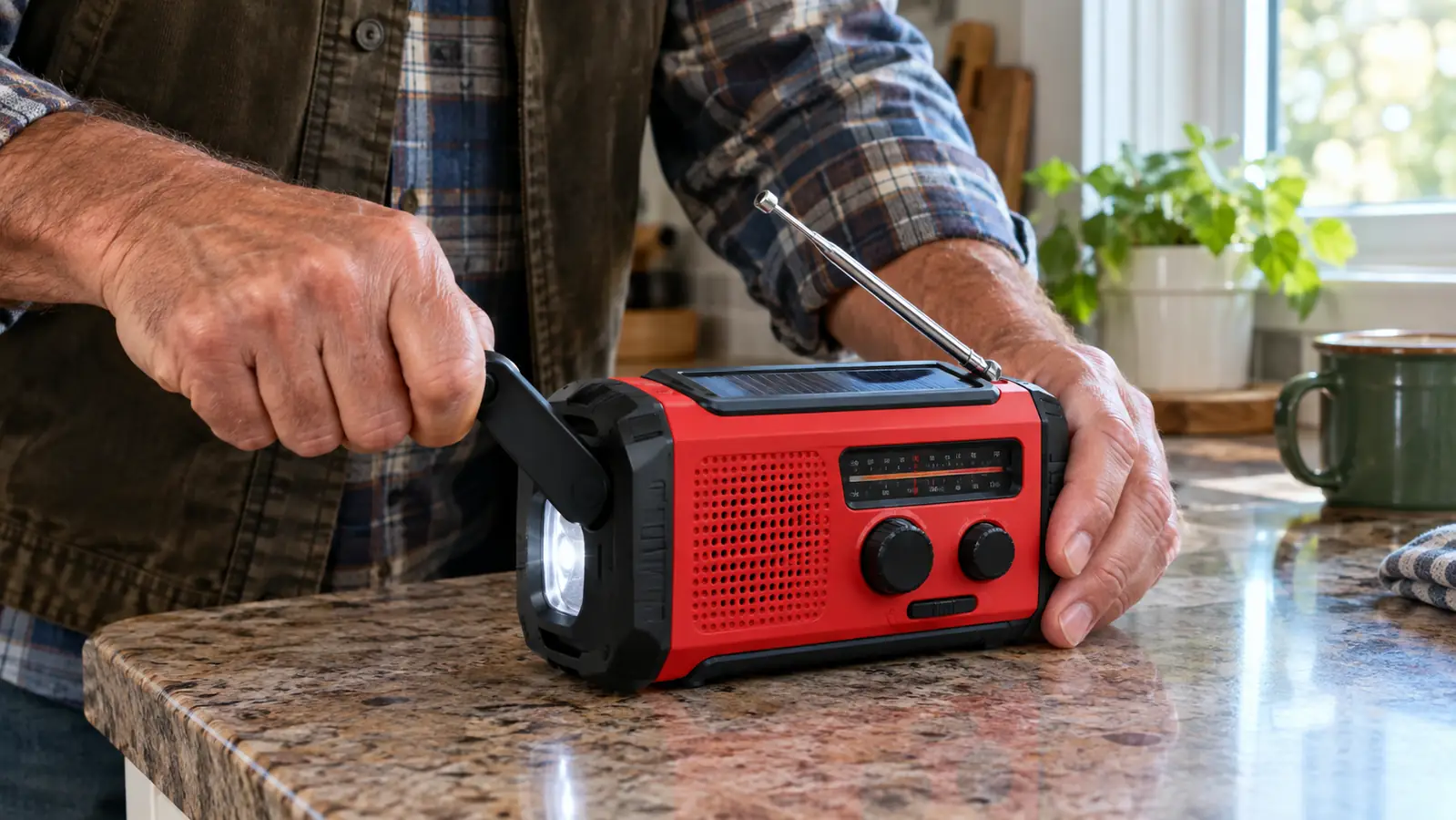
The crank is the second thing that works better than I expected. It takes real effort, and I will get to that in a minute, but a few minutes of cranking gives you enough power for a stretch of listening. The crank also charges the flashlight battery, which is a small thing that makes a big difference in practice. In a long outage, you are not going to crank for twenty minutes to hear the news. You are going to crank for three minutes to hear the forecast, then conserve.
The flashlight is genuinely useful, not a gimmick. It throws a wide beam that lights up a room well enough to move around safely, and the SOS beacon mode is bright enough to be seen from a distance if you are stuck outside. The build quality is what you would expect from Midland. Solid plastic, a well seated battery door, and a handle that feels like it will survive being grabbed in a hurry. I dropped it once on a granite slab at a campsite in the high desert and it took the hit without a scratch.
The buttons are big enough to use with gloves on, which is not true of every radio in this class. In cold weather, when you are wearing mittens and trying to switch from weather band to FM, that matters. The display is easy to read in low light with the backlight on. Small things, but they are the small things that separate a tool from a toy.
Where It Falls Short
Now the honest part. The crank is work. It is not a fun little wind-up toy. Generating a meaningful charge takes minutes of steady cranking, and your arm will notice. The marketing shows someone casually spinning the handle while reading a book. Reality is that you crank, rest, crank again, and the power meter crawls up slowly. I tested the limit once so you do not have to. Forty minutes of cranking, in shifts, brought a dead phone from zero to about fifteen percent. That is a lot of effort for one short call.
The speaker is the other honest weakness. It is fine for voices, which is what matters for weather alerts and news. It is not fine for music. The AM and FM bands sound thin and boxy, and if you are hoping to listen to a ballgame on the porch, this is not the radio for you. I keep a small dedicated FM radio for that. The ER310 is a tool, not an entertainment device, and the sooner you know that, the happier you will be with it.
Two smaller quirks are worth knowing. The clock and alarm settings reset if the internal battery goes completely flat, so if you store it for months, expect to reset the time when you pull it out. And the antenna is the most exposed part of the radio. It telescopes out and it works well, but it is easy to snap if you are careless. I treat the antenna like it is made of glass and the rest of the radio like it is made of iron, because that is exactly how the design feels. The radio is splash resistant, not waterproof, so keep it out of the rain when you can.
The tuning knob is small and a little fiddly, especially with gloves on. It works, but it takes a deliberate pinch rather than a casual spin. I have learned to set my stations before I need them, and I would suggest you do the same.
The ER310 caught the winter storm warning for our county six hours before my phone buzzed with the same alert. That is the entire point of a weather radio.
The Phone Charging Reality Check
This is the part of the product description that causes the most confusion, so let me be direct. The ER310 has a USB port that can charge a phone. It works. It is also slow, and it drains the radio's own battery quickly. In my test, the radio charged a phone at roughly the speed of an old wall charger from a decade ago, and a full charge of the radio's internal battery was good for maybe half a phone charge. That is not a criticism so much as a reality check. No hand crank radio on the market can fully charge a modern smartphone in an emergency. The physics do not work out.
What the USB port is actually for, in my view, is topping off. If your phone is at forty percent and the power is out, you can crank for ten minutes, get it to fifty-five, and make the calls you need. It is also useful for running a small device that does not draw much power, like a headlamp battery pack. If you go into this expecting a generator, you will be disappointed. If you go into it expecting a way to stretch your phone's battery through a bad night, it does the job.
I would rather have the ER310's slow charging than no charging at all. In a real emergency, the difference between a phone that is dead and a phone that has enough for one call can be the difference between a bad night and a worse one. But the marketing overstates what the crank can do, and I want you to know that before you buy, not after. That is the honest part of an honest review.
Alternatives I Considered
I did not buy the ER310 without looking at the other options. Midland makes a whole line of emergency radios, and the cheaper models in the lineup are tempting. They cost less and they do the basics. What you give up with the cheaper models is battery capacity, the alert system, and the crank quality. If you only want a radio to listen to the news during a one day outage, the cheaper option is fine. If you want something that can carry you through a multiday event with weather alerts, the ER310 is worth the difference.
I also looked at the big name alternatives from other brands. The ones with the same feature set all landed in the same price range, and the ones that were significantly cheaper all gave up something I did not want to give up, usually the NOAA alert system or the battery life. The ER310 sits in a sensible middle. It does the core job better than the cheap radios and costs less than the premium ones. That is a harder position to defend in a review because it is not dramatic, but it is the truth.
For most people, the choice is not between the ER310 and another radio. It is between the ER310 and no radio at all. And no radio at all is the choice that leaves you listening to the wind during an outage, guessing at what is happening outside. I have spent enough nights in the field to know how much a weather forecast is worth when the weather turns.
One more thing. I have bought emergency gear that looked good on paper and failed in the field, so I do not hand out recommendations lightly. The ER310 is the radio I would buy again tomorrow if this one got run over in the driveway. I have not found a reason to switch.
What I Liked
- Reliable NOAA reception with a loud tone alert that wakes you up
- Crank works, and the built in battery holds its charge through months of storage
- AA battery backup means you are never stuck with a dead proprietary pack
- Flashlight is genuinely useful and the SOS beacon is bright
- Big buttons work with gloves on and the build quality is solid
Where It Falls Short
- Cranking takes real effort and phone charging is slow, enough for a call, not a full charge
- Speaker is thin and boxy, fine for voices, not for music
- Clock and alarm settings reset if the internal battery goes flat
- Antenna is the weak point and needs careful handling
- Splash resistant only, not fully waterproof
Who This Is For
The ER310 is for the person building a home emergency kit who wants one less thing to worry about. It is for the car camper who spends weekends in places where cell service drops out and the weather can change in an hour. It is for anyone who lives in an area with winter storms, wildfire season, or summer thunderstorm alerts, which is most of the country. It is also for the person who remembers the ice storm of 2021 and does not want to sit in the dark guessing again. If you want a radio that sits in a drawer for eleven months and works on the day you actually need it, this is that radio.
Who Should Skip It
Skip the ER310 if you want a radio for music or entertainment, because the speaker will disappoint you. Skip it if you expect the crank to recharge your phone like a wall outlet, because it will not. Skip it if you want something pocket sized, because it is larger than a typical handheld radio and it needs room for the antenna. And if you live somewhere with no severe weather, no power outages, and no reason to listen to the news when the grid goes down, you may not need any weather radio at all. That is the honest answer, and it saves you money.
Your Kit Is Only as Good as the Radio in It
After a year of field use, the ER310 is the radio I keep in the truck and the garage. If you are building or upgrading an emergency kit, check today's price on Amazon and decide for yourself.
Amazon Check Today's Price on Amazon →