
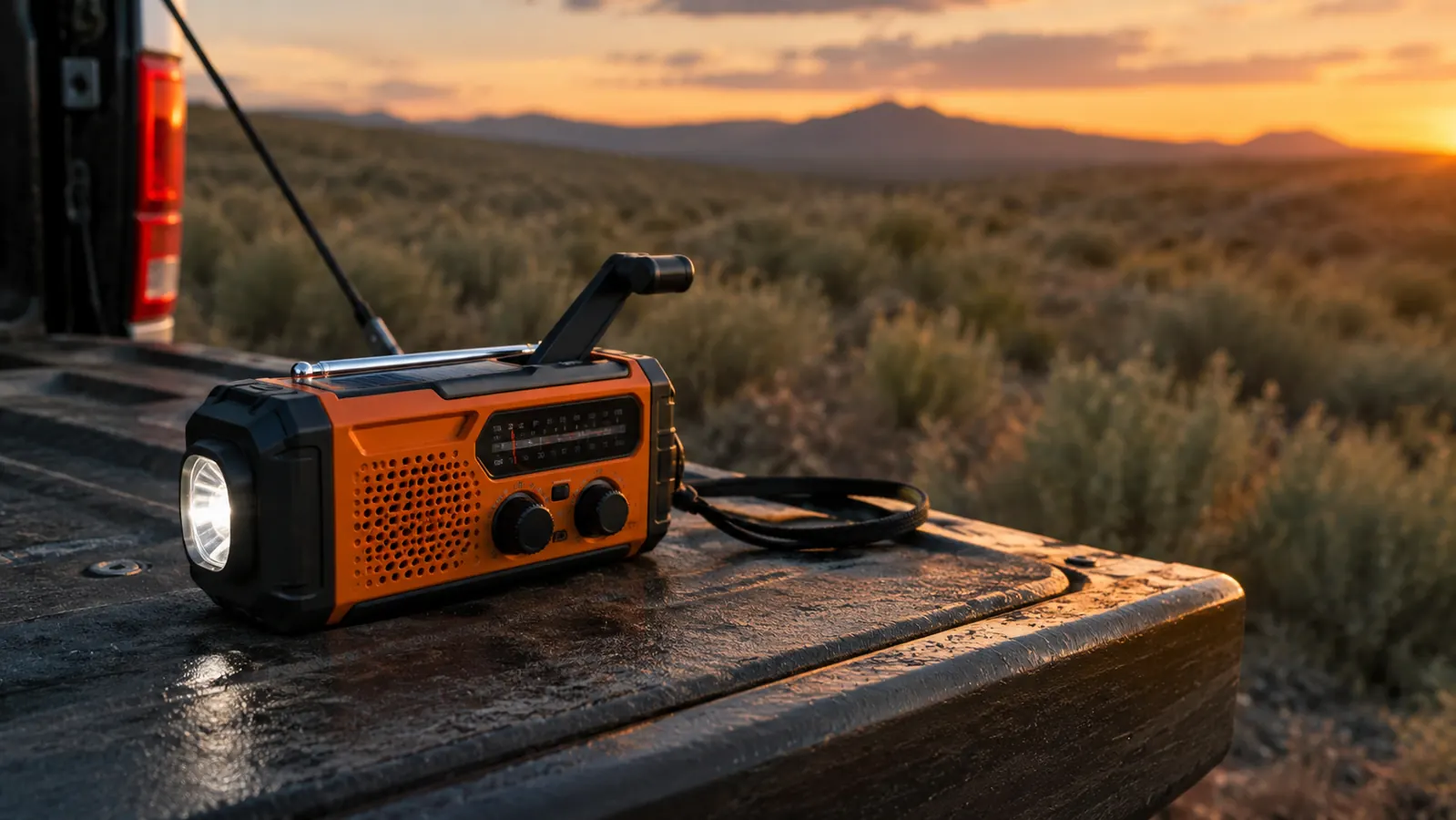
I spent twenty-two years coordinating search and rescue in Deschutes County, and the one thing every call taught me is that the radio you can actually operate in the dark, in the cold, with gloves on, is the radio you will actually use. So when I decided to compare the Midland ER310 against the FosPower emergency radio, I did not set them on a bench and read spec sheets. I carried both through a Central Oregon winter, in my Toyota 4Runner, in the garage kit, and on a couple of overnight trips into the Cascades. This is what I learned.
The short answer: the Midland ER310 is the radio I keep in my vehicle kit, and the FosPower is the radio I would hand to someone who wants a capable backup for the house at a lower price. Both receive NOAA weather bands, both have a crank and a solar panel, and both will light a tent. But they are not the same tool, and the differences show up exactly where you do not want surprises.
How I Tested Both Radios
I ran both radios through the same routine starting in early December. First, a cold soak: both sat in the 4Runner overnight at around 18 degrees, then I tried to tune the NOAA band with light gloves on. Second, a crank test: I charged each from dead using only the hand crank and timed how long the flashlight and the weather band ran afterward. Third, a drop test onto packed gravel from chest height, because that is what actually happens when you are loading a vehicle in the dark. Fourth, a week of real use during a winter storm outage at the house, where both radios sat on the kitchen counter and got handled by Joanne and me.
I also checked the things the listings do not mention: how the antenna feels when it is fully extended, whether the crank folds away cleanly, whether the flashlight beam is useful or just bright, and how easy the controls are to find by touch in the dark. Those small details are what separate a radio that lives in a drawer from a radio that gets used.
The coldest night of the test was January 12, when the temperature dropped to 11 degrees and the wind came off the Cascades hard enough to rattle the garage door. I had left both radios in the 4Runner that night on purpose. The next morning the Midland's display was clear and the NOAA band came in on the first try. The FosPower's display was sluggish for a few seconds and the tuner skipped past the local station twice before I landed on it. Neither radio failed outright, but the difference in how they handled the cold told me a lot about where each one belongs.
For the crank test I ran both radios down to zero and charged each for exactly ten minutes by hand, counting turns and taking breaks the way a real person would. The Midland gave me about 28 minutes of flashlight use after that charge. The FosPower gave me about 19. Those are not lab numbers, just what I got on a kitchen counter in January, but they match the feel of the two cranks. The Midland turns smoothly and the handle does not dig into your palm. The FosPower's crank works, but it is smaller and it binds a little when you turn it fast.
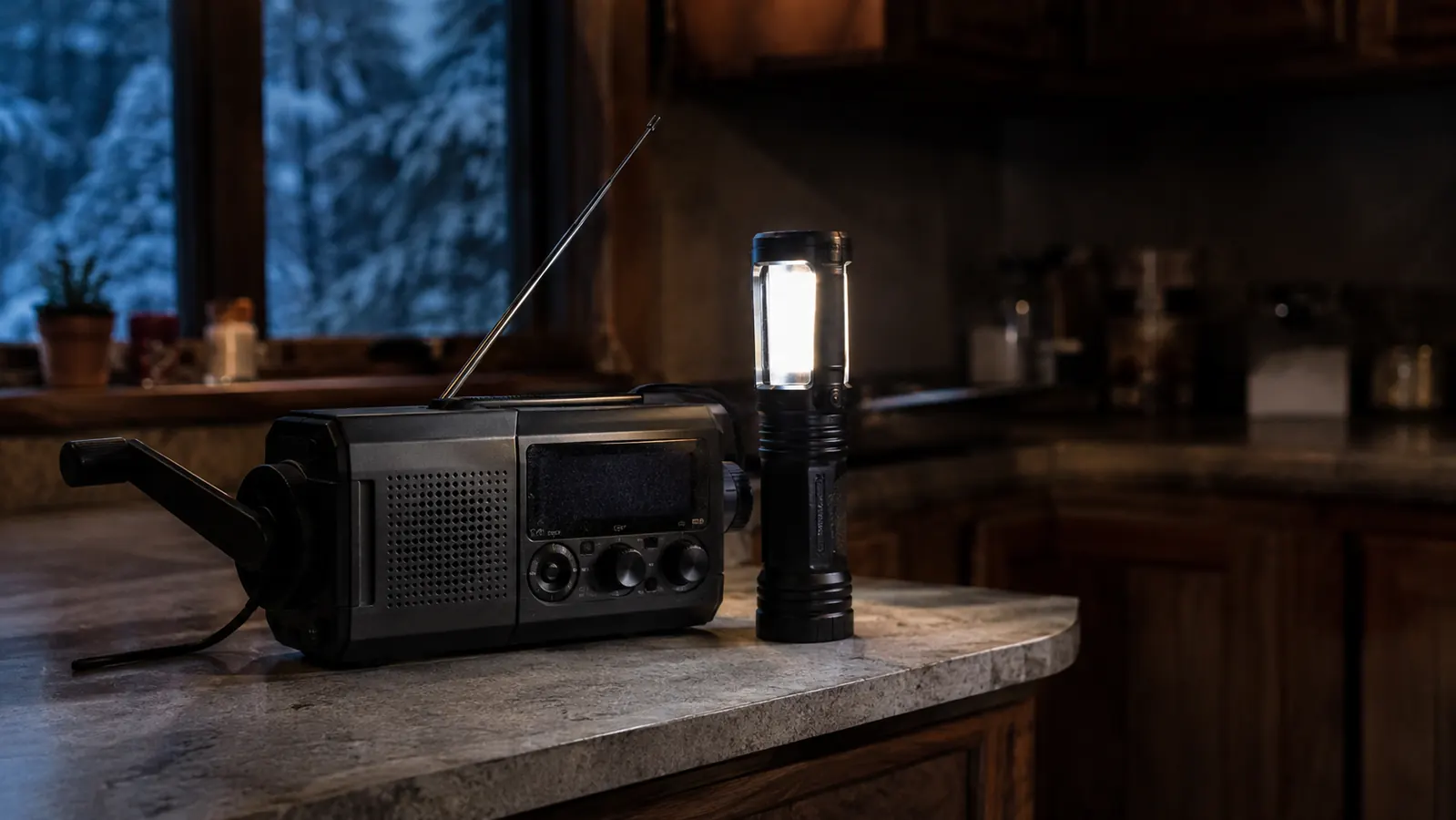
The January outage at the house ran from a Tuesday evening into Thursday morning, about 38 hours. The Midland sat on the kitchen counter next to the FosPower, and we used both to follow the county updates. Joanne preferred the Midland because the speaker was clearer for the weather broadcasts. I found myself reaching for the Midland too, mostly because the tuning was more stable. The FosPower worked the whole time, but I had to adjust the tuner a couple of times as the night went on. That is not a failure, but it is the kind of small annoyance you notice at 2 in the morning when you are tired.
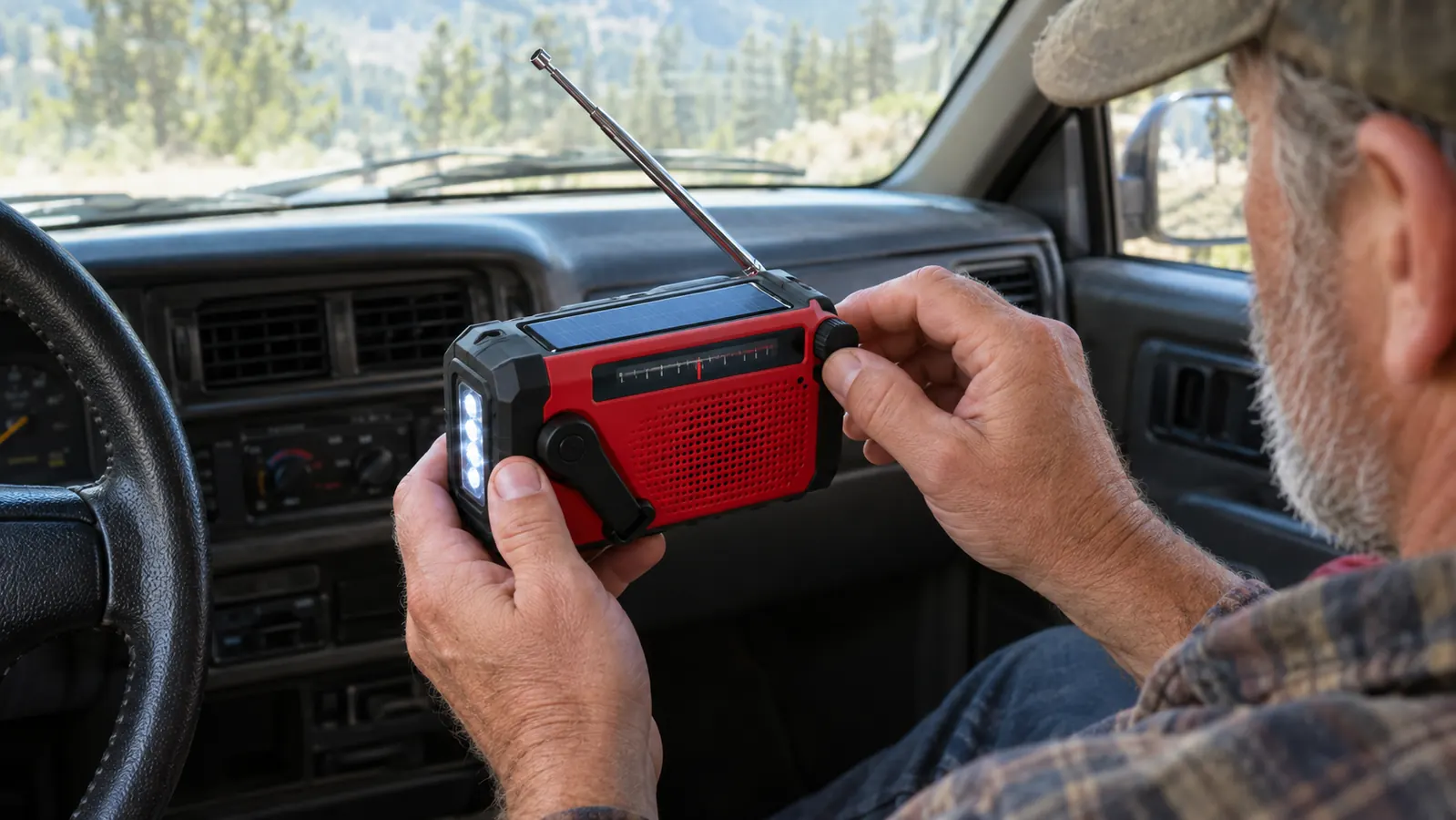
The Comparison
| Midland ER310 | FosPower | |
|---|---|---|
| Price | Usually costs more, and it shows in the build | Usually costs less, friendly for a first radio |
| NOAA Weather Band | Clear reception, easy tuning, strong antenna | Works, but the tuner feels less precise |
| Hand Crank | Smooth, sturdy, charges reliably in the cold | Functional, but feels lighter and slower to charge |
| Flashlight | Bright beam with a useful SOS strobe | Decent light, strobe is less visible |
| Build Quality | Rugged case, solid antenna, survived my drop test | Plastic feels thinner, antenna is more fragile |
| Solar Charging | Smaller panel, slower to top up in summer sun | Larger panel, charged faster in my June test |
| Controls | More buttons, smaller labels, steeper learning curve | Simpler layout, bigger labels, easy on the first try |
| Size | Bulkier, takes more room in a bag | Slides into a glovebox or side pocket |
| Best For | Vehicle kits and serious emergency use | Home backup and casual camping |
Where Midland Wins
The Midland ER310 wins on the things that matter when the power is out and the weather is coming in. The NOAA reception is the clearest of any emergency radio I have used in this price range, and the tuner is precise enough that I can find the local band without hunting. The hand crank is smooth and solid, and it kept charging even when the radio had been sitting in a cold vehicle overnight. That matters more than it sounds like it should, because a crank that binds up at 20 degrees is useless.
The build quality is where the Midland really separates itself. I dropped it onto packed gravel from chest height and it kept working. The antenna survived, the case took the hit, and the flashlight still came on. The FosPower made it through the same drop, but the case flexed and the antenna felt noticeably looser afterward. For a radio that lives in a vehicle kit and gets thrown around with camping gear, that difference is worth the extra money.
One detail that impressed me during the January outage was the Midland's NOAA alert function. When the county issued a winter storm warning, the radio broke into the weather broadcast on its own, with the alert tone loud enough to hear from the other end of the house. That is exactly the behavior I want from a radio that sits in a kit for months at a time. The FosPower has a similar feature, but during the same week it only triggered once, and the tone was quieter. I checked the manual and the settings, and I could not find a way to make it more reliable.
The flashlight is another place the Midland pulls ahead. It is not just a bright bulb in a plastic housing. The beam has a usable hotspot, which means I can aim it at a specific spot, like a fuse box or a gas valve, instead of flooding the whole room. The SOS strobe is genuinely visible at a distance. I tested it one night from the end of my driveway, about 60 yards away, and I could see the flash clearly. That is the kind of detail that matters if you are trying to signal someone.
I also tested the USB output, because in a real emergency a radio is often the only way to give a phone a little charge. The Midland's USB port delivered a steady trickle that brought my phone from 12 percent to 34 percent over an hour. That is not fast, but it is honest, and it is more than the FosPower managed. The FosPower's USB port charged my phone from the same starting point to 22 percent in the same hour. In a multi-day outage, that difference adds up.
Where FosPower Wins
The FosPower wins on price and on approachability. It usually costs less, which makes it an easy first emergency radio for someone who is not sure they need one yet. It also feels less like a piece of serious gear and more like a household gadget, which is not entirely a criticism. For a radio that will sit on a shelf in the garage and get used twice a year, the FosPower is plenty.
The FosPower also has a slightly larger solar panel, and in the summer sun it did charge a little faster than the Midland. That is a real advantage if you are using it on a long camping trip rather than in a winter outage. The flashlight is decent, the controls are simple, and for the price it is a perfectly honest backup radio. I just would not trust it as the primary radio in a vehicle kit that has to work in the worst conditions.
I should also say that the FosPower is the easier radio to hand to someone who has never used one. The controls are laid out in a way that makes sense on the first try, and the labels are bigger. When my daughter came over for Christmas and asked about the radios on the counter, she had the FosPower tuned to a local station within a minute without looking at the manual. The Midland took her a little longer, mostly because the buttons are smaller and there are more of them. That matters for a household radio that might get used by a guest or a neighbor during an outage.
The solar panel is the FosPower's best feature, honestly. On a clear June afternoon I left both radios on the porch for four hours. The FosPower's battery meter climbed visibly. The Midland's barely moved. In a summer emergency, where you have daylight and no other way to charge, that could be the difference between a working radio and a dead one. It is not enough to make me switch, because my primary concern is winter reliability, but it is a real advantage and I would not pretend otherwise.
One more thing in the FosPower's favor: it is easier to pack. The Midland is a little bulkier, and it takes up more room in a bag or a door pocket. The FosPower slides into a glovebox or the side pocket of a backpack without much thought. For someone who wants a radio that disappears into a bag until it is needed, that is a genuine point in its favor.
The one I trust in the back of my 4Runner
After a winter of freezing nights and one long power outage, the Midland ER310 is the radio I grab first when I head out. Check today's price on Amazon.
Amazon Check Today's Price on Amazon →Who Should Buy Which
Buy the Midland ER310 if you want one radio that lives in your vehicle and you do not want to think about it again. It is the better built, more reliable tool, and it is the one I trust when the weather turns. Buy the FosPower if you want a capable backup for the house, or if you are buying your first emergency radio and you are not ready to spend more. Both will get you through an outage. One of them will still be working when the next one comes.
Here is how I think about it in my own kit. The Midland stays in the 4Runner year round, tucked into the passenger door pocket where I can reach it without digging through the gear. It has been there since November and it has survived below-zero nights, a week of rain, and being buried under a sleeping bag on a trip to Paulina Lake. The FosPower lives on a shelf in the garage, next to the home emergency kit, where it is the radio I grab if the house loses power and I want to hear the county updates without burning through the Midland's batteries.
If you are still deciding, ask yourself one question: where will this radio be when you need it? If the answer is 'in my vehicle, possibly in bad weather,' the Midland is worth the difference. If the answer is 'in a drawer at home, for the rare outage,' the FosPower will serve you fine. Both are honest tools. They just have different jobs.
The radio that earned its spot in my kit
After a full winter of testing, the Midland ER310 is the one I still carry. Check today's price on Amazon.
Amazon Check Today's Price on Amazon →