
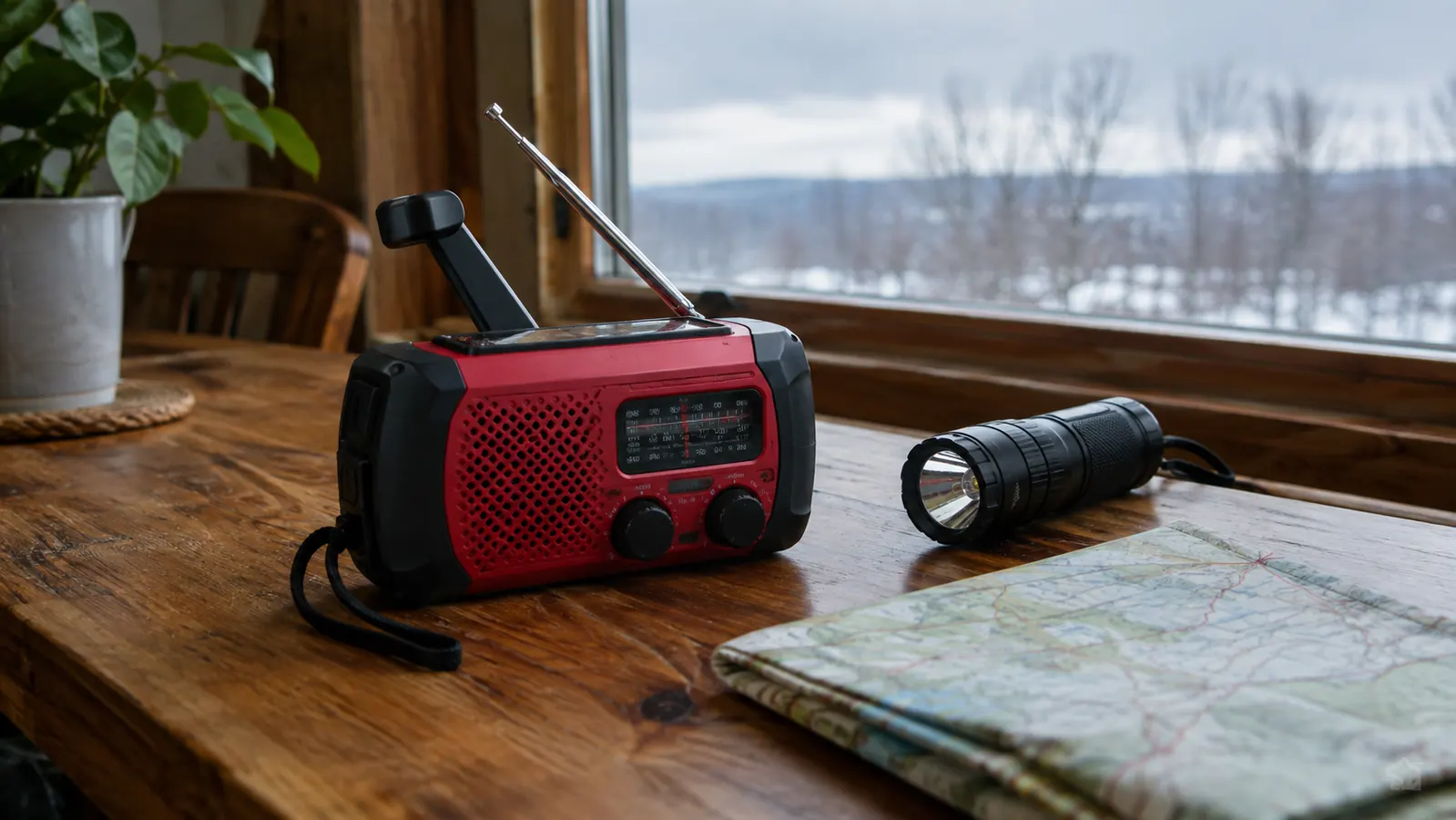
The first time the power went out for three days at our place east of Bend, the thing I missed most was not the heat or the coffee. It was knowing what was actually happening. Phones died, the internet went with them, and every scrap of information came secondhand from a neighbor who had driven into town. That is when I started treating a radio as part of the plan instead of an afterthought. The Midland ER310 is the emergency crank radio I keep in the garage kit now, and this is the five-step plan I use to stay informed when the grid goes quiet.
This is not a guide to surviving the apocalypse. It is a guide to the boring, practical problem of keeping current during a winter storm or a wildfire-season outage, when the difference between rumor and fact matters. The steps below work with any decent emergency radio, but I will tell you where the Midland ER310 earns its place and where it does not.
Know what is happening before the rumors fill the gap
The Midland ER310 gives you NOAA weather alerts, AM/FM, and a hand crank that charges the battery when the wall is dead. It is the radio I reach for first when the forecast turns ugly.
Amazon Check Today's Price on Amazon →Step 1: Decide what information you actually need
Before you buy anything, write down the three or four things you need to know during an outage. For us it is: is the road into town open, is the fire moving, when did the utility say power comes back, and is there a shelter open. That list drives everything else. It tells you which channels matter, how long the radio needs to run, and whether you need NOAA weather alerts or just AM/FM. The first winter we lived here, I tried to cover that list with my phone alone. It worked for about twelve hours. By the second morning, the battery was below twenty percent and the cell network was congested enough that texts crawled and data was useless. I learned the radio is not a backup to the phone. It is the other way around.
The Midland ER310 covers all of that. It receives NOAA weather channels with alert tones, AM, and FM, so the same radio that wakes you for a flash flood warning also gets you the local station that reads the school closures. If your list is longer, like you need to monitor a county repeater or a specific public safety channel, this radio is not the tool for that. It is a broadcast receiver, not a scanner.
Keep the list short. The goal is to stay informed, not to collect information. Every extra channel you think you need is one more thing to fiddle with when your hands are cold and the room is dark.
Step 2: Set up the radio before you need it
The most common mistake I see in preparedness groups is people pulling a radio out of a box during the first outage and trying to learn it by flashlight. Do the setup on a normal evening. Put batteries in, charge the internal battery fully, tune the NOAA channel for your county, and confirm the alert function works. The Midland ER310 has a weather alert mode that stays in standby and breaks into whatever you are listening to when the National Weather Service issues a warning. That only helps if you set it up ahead of time. The alert function is a switch on the side of the radio. When it is on, the radio sits silent and wakes up for the NWS weekly test tone, which in our area comes through on Wednesday afternoons. That test tone is a gift. It means every Wednesday I get a free confirmation that the radio is still receiving the right NOAA channel. If a Wednesday goes by with no tone, I know something is wrong before a storm is on top of me.
Write the frequencies on a piece of tape and stick it to the back of the radio. NOAA weather channels are numbered, not named, and the right one for Bend is not the right one for a campsite in the Cascades. When you travel, look up the local frequency before you leave. A laminated card with the seven NOAA frequencies is cheap insurance and takes up no space.
Also decide where the radio lives. Ours stays in the garage kit next to the door, not buried under camping gear. If the power goes out at 2 a.m., I want to grab it without moving three bins. The ER310 is about the size of a thick paperback and heavy enough to feel solid, so it is easy to keep in a dedicated spot.
Step 3: Learn the power options and test them
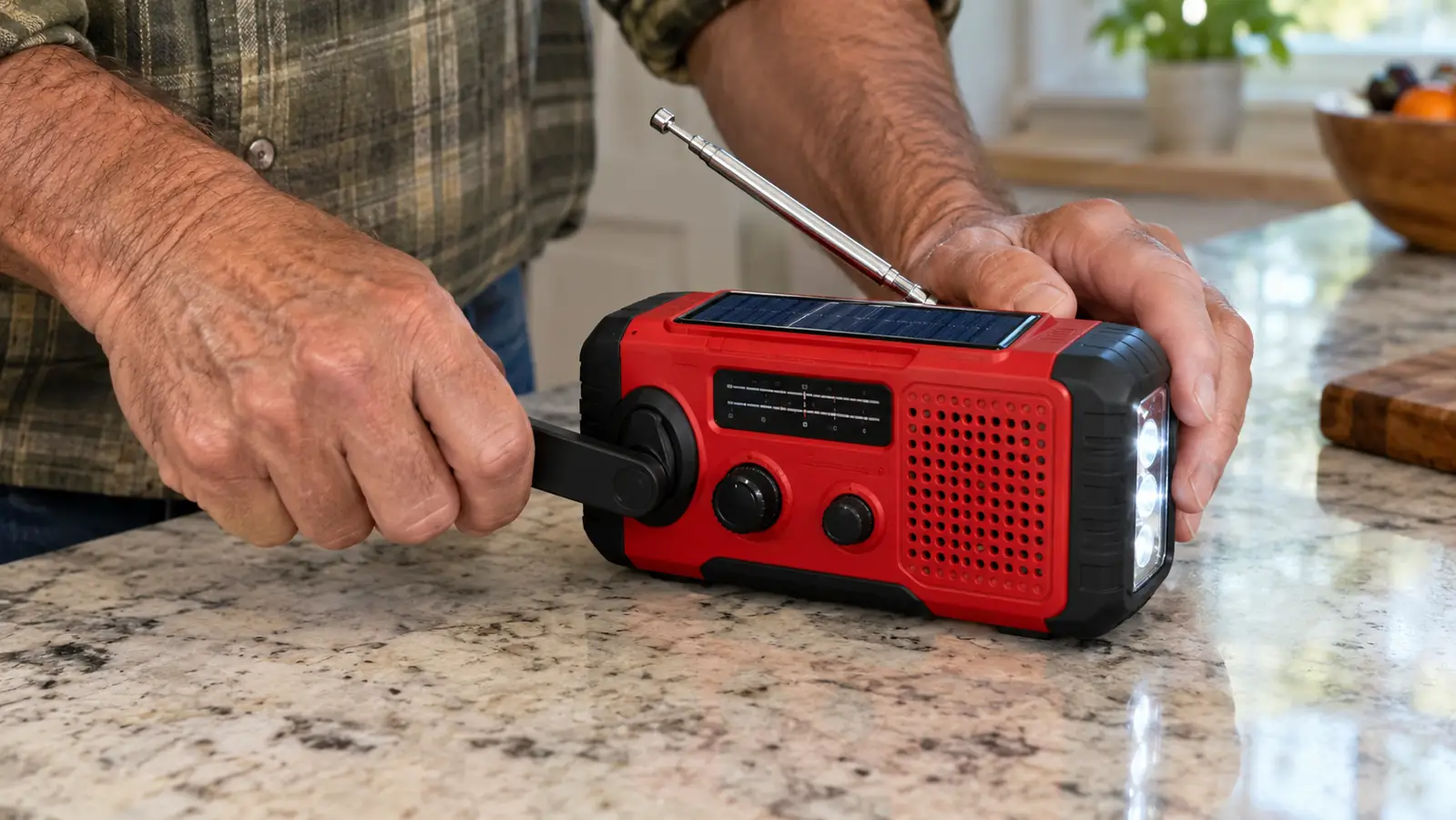
The Midland ER310 has four ways to get power: the hand crank, a solar panel on the back, three AA batteries, and a USB input. That sounds like a lot of options, and it is, but each one has a job. The hand crank is the one that matters when everything else is dead. Two minutes of cranking gives you a useful chunk of listening time, and the radio has a light that shows when the battery is charging. The solar panel is a slow top-up in good sun, not a primary source. The AA tray is the reliable fallback, and the USB input means you can charge it from a power bank if you have one. The internal battery is rated at 2600 mAh, and the manual says two minutes of cranking provides about thirty minutes of listening at moderate volume. In practice, I have found that to be close to honest. Two minutes of steady turning gives me enough for a full NOAA forecast and the local news, and the battery indicator on the front shows the charge level at a glance. The USB port on the side will also top off a phone in a pinch, but it pulls from the same battery, so I treat that as an emergency option, not a routine one.
Test each method once a month, not just the crank. I have seen radios go into an outage with a battery that was never charged and a solar panel that never saw direct sun. The ER310 has a battery indicator, so you can check the level at a glance. Make it part of the same routine as checking the smoke detector. First of the month, five minutes, done.
One honest note: the hand crank is work. It is not a magic infinite power source. If you are listening for hours, you will be cranking in intervals, and that is fine. The radio is designed for short bursts of information, not for running all day like a household appliance. Plan your listening around that. Check in every hour, get the update, turn it off.
Step 4: Build a listening routine for the first hour
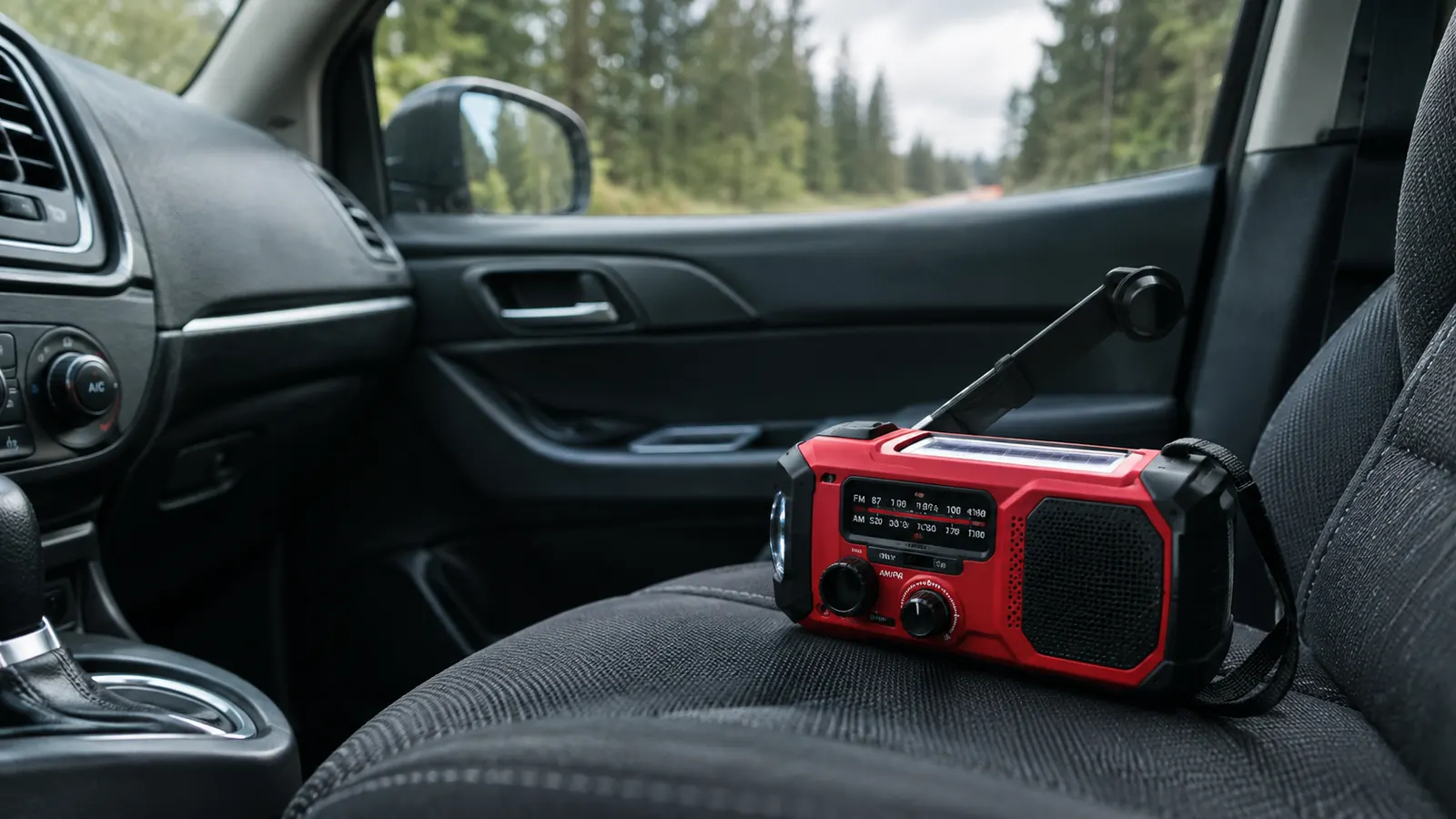
When the power goes out, the first hour sets the tone for the whole event. My routine is simple. Turn the radio on, check the NOAA alert first, then find the local AM station that does emergency announcements. AM travels farther at night and is usually where the local information lands. FM is better for music and general news, but for a county-level emergency, AM is the workhorse.
The Midland ER310 has a keypad for direct frequency entry, which makes this faster than a radio with only a tuning knob. I punch in the NOAA channel, listen for the forecast and any alerts, then switch to the AM station. The radio also has a built-in LED flashlight and a reading light, which sounds like a gimmick until you are trying to read a map in the dark. The flashlight is not a replacement for a real headlamp, but it is one less thing to dig for. The night the windstorm took our power in March of 2021, the radio earned its spot. The outage started at 9:40 p.m. I grabbed the ER310, punched in the NOAA channel, and heard the high wind warning before the county even put out the road closure. By 7 a.m. the AM station was reading the full list of open shelters. None of that helps if you are trying to tune a radio in the dark, which is exactly why I keep the frequencies written on tape and the routine on a card.
Write the routine down. It sounds silly, but when the power is out and the house is cold, you do not want to be remembering which button does what. A three-line card taped to the radio is enough: NOAA first, AM second, check the battery light, crank if low.
Step 5: Rehearse the whole thing once a season
A plan that has never been practiced is a wish. Once a season, I run a short drill. I turn off the main breaker for an hour, grab the radio from the garage kit, and go through the routine: NOAA alert, AM station, battery check, crank for two minutes. It takes less than an hour and it has caught real problems. The first time I did it, the NOAA channel was off by one frequency because I had changed counties and never updated it. One drill last fall caught a problem I would never have found otherwise. The AA batteries in the tray had been sitting in the garage for two years. They checked fine with a battery tester, but the low-battery light came on after ten minutes of listening. I replaced them, and now I write the date on the batteries with a marker when they go in. It takes five seconds and it means I never have to guess how old they are.
The drill also tells you whether the radio is actually where you think it is. If you have to hunt for it, the plan has a hole. The Midland ER310 has survived a few of these drills in our house, including one where it sat in a cold garage for a month and still had a usable charge. That is the kind of behavior you want to find out in a drill, not during a real event.
After the drill, write down anything that went wrong and fix it. Maybe the AA batteries were old, maybe the radio was in the wrong bin, maybe you forgot which button silences the alert tone. Whatever it is, fix it the same week. The point of the drill is to make the real event boring.
What Else Helps
A radio is one leg of the stool. The other two are a way to charge your phone and a paper copy of the information you might need. A small power bank that you keep charged and set aside for outages will keep a phone alive for days if you use it sparingly. And a printed list of emergency contacts, local radio frequencies, and the county road status phone number does not need a battery. I keep both in the same garage kit as the Midland ER310, so the whole setup comes out in one trip.
Also think about where you listen. A radio in the kitchen is fine, but if the outage happens in a winter storm, you may be spending time in one room with a heat source. The ER310 is small enough to move with you, and the hand crank means you are not tied to a wall outlet. That mobility is worth more than any single feature on the spec sheet.
Two minutes of cranking gave me a full weather update and a local news roundup, and I knew the road situation before the neighbors did.
Put the plan in place before the next storm
The Midland ER310 is the radio I keep in my own garage kit, and it is the one I recommend when someone asks what to buy first. Set it up, test it, and rehearse the routine once a season.
Amazon Check Today's Price on Amazon →