
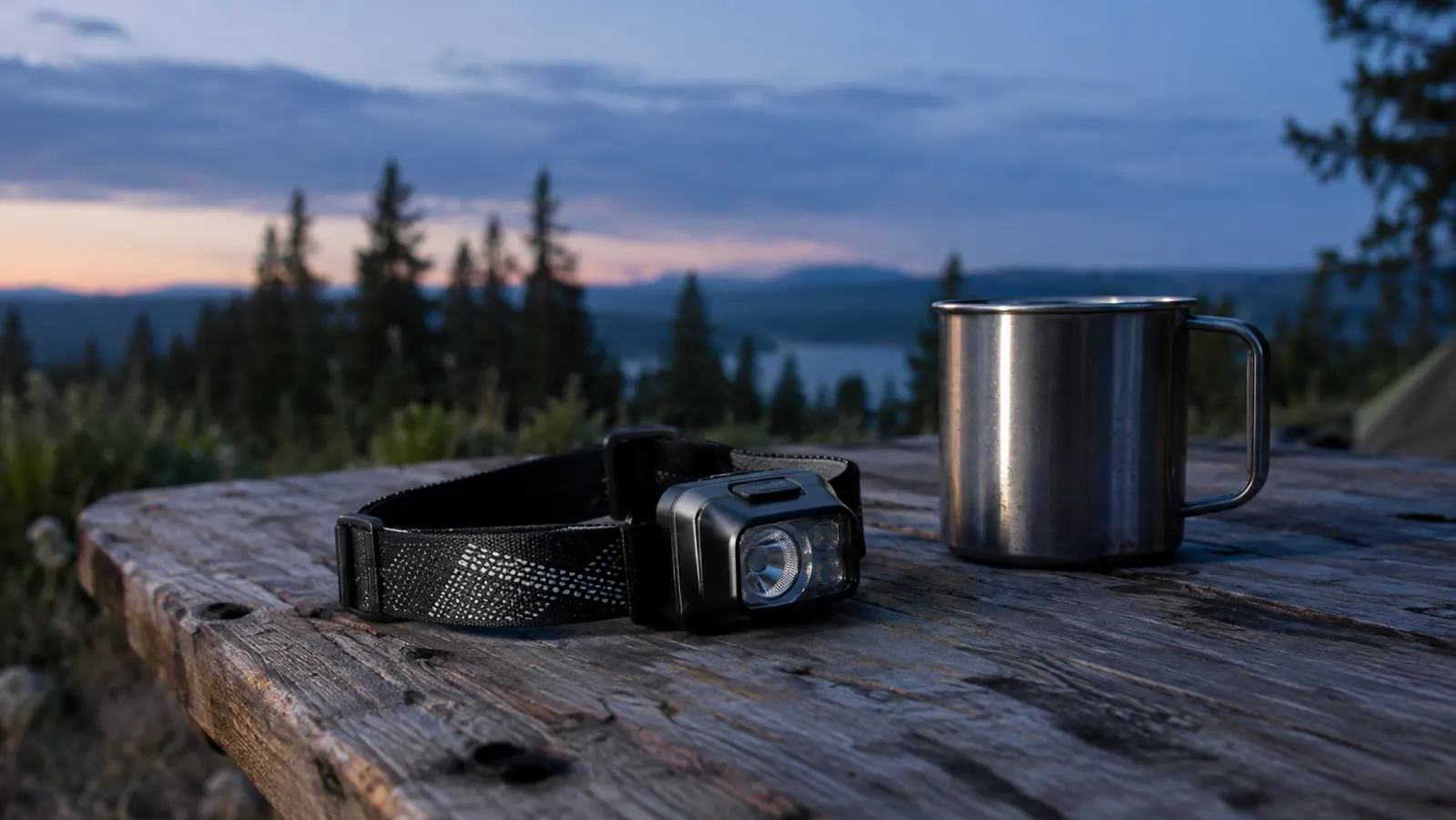
The first time I cooked dinner in the dark was on a late September trip in 2023, at a campsite in the Deschutes National Forest. I held a flashlight in one hand and a pan in the other, and tried to stir chili with my elbow. I dropped the spoon twice, nearly tipped the pot, and ate lukewarm food in the dark because I was done fighting with it. That night I decided the whole setup was wrong. What I needed was light that stayed where I was looking without asking me to hold it. That is the case for a headlamp, and it is the reason I now plan every campsite lighting setup around one. The Coast XPH30R is the rechargeable headlamp I have been using for the past two seasons, and it is the working example for the five steps below.
Planning hands-free light is not complicated, but it is more than buying a lamp and strapping it on. You need to think about where the light will live at camp, how it will charge, how it will hang, and what happens when the battery runs low on the third night. These five steps cover all of it, and they work whether you are car camping in the Cascades or backpacking into the high desert.
Start with a headlamp that can do the whole trip
The Coast XPH30R runs on a USB-C rechargeable battery, puts out up to 1200 lumens, and weighs 4.37 ounces. It is the headlamp I reach for on every trip now. Check today's price on Amazon before you build your camp lighting plan around it.
Amazon Check Today's Price on Amazon →Step 1: Decide what the headlamp is for at your camp
Before you pick a headlamp or plan around one, decide which jobs it will actually do. At my campsites, the headlamp handles four things: cooking and washing up after dark, walking to and from the tent, reading or sorting gear inside the tent, and emergency light if the lantern dies. Each job wants a different beam. Cooking wants a wide, even flood so you can see the whole stove and cutting board at once. Walking wants a beam that reaches far enough to show the trail and the rocks on it. Tent work wants a low, dim setting that does not blind you against the tent wall.
The Coast XPH30R covers all four because of its twist focus beam. Twist the bezel one way and you get a wide flood that lights up the whole camp table. Twist it the other way and the beam narrows into a spot that reaches across a dark clearing. I use the flood for cooking and the spot for walking the path to the vault toilet. On that first Deschutes trip, I set the beam to the wide flood and could see the whole two-burner stove, the cutting board, and the cooler lid at once. That was the moment I stopped carrying a lantern at all. A lantern throws light in every direction, but most of it lands where you are not looking. The flood keeps the light where your eyes already are, which is all you actually need at a camp table. The lantern stayed home on most trips after that night, and I have not missed it once. The gear tote is lighter for it.
Write your own list before you buy. If your camp nights are mostly sitting by the fire, a headlamp is still useful, but your plan will look different from mine. If you backpack, weight and battery life matter more than raw lumens. The point of this step is to know the jobs before you choose the tool.
Step 2: Plan the battery before you leave the house
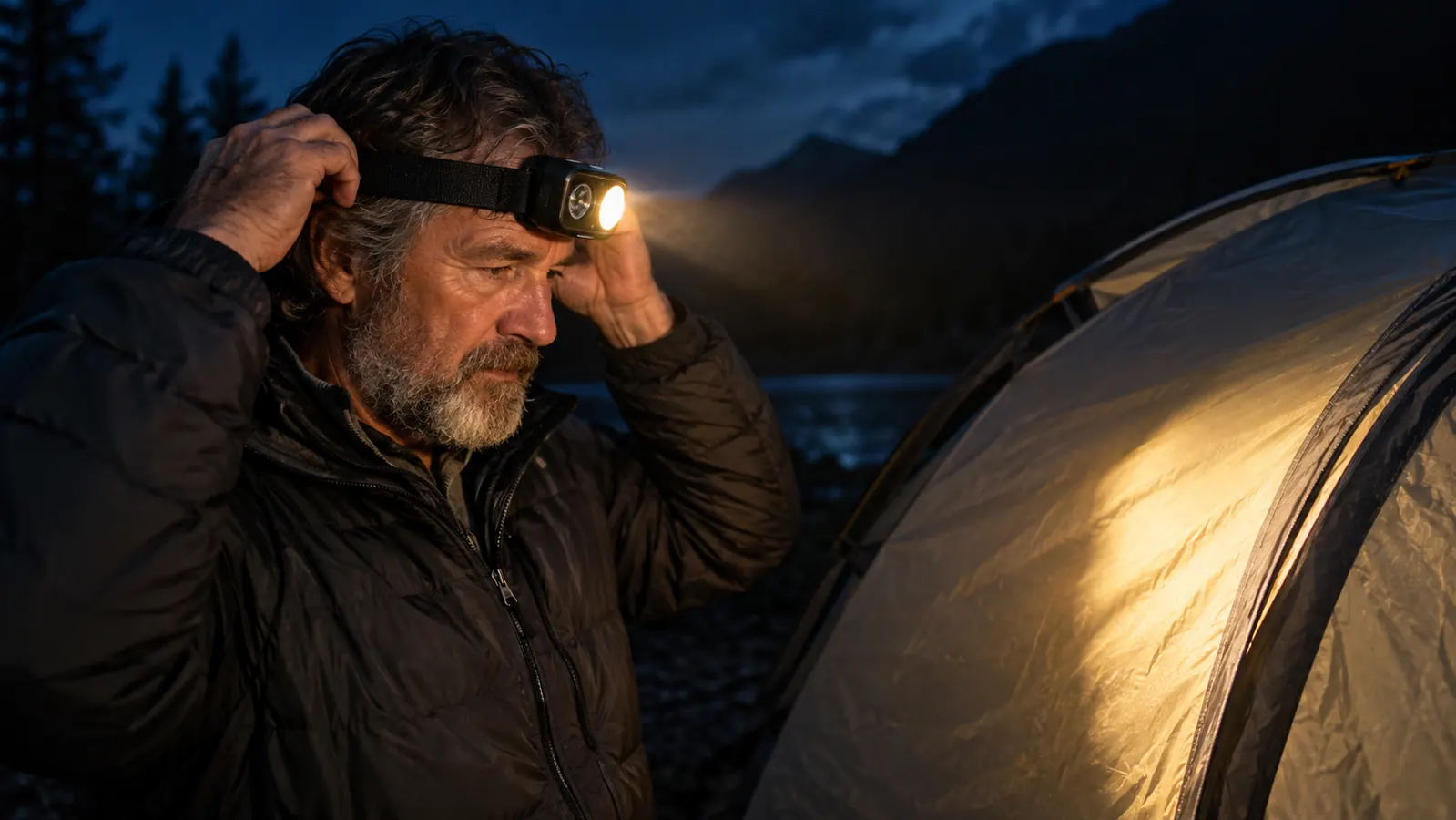
A rechargeable headlamp is only as good as its charge, and the worst time to discover that is at 10 p.m. at a site with no power. I charge the Coast XPH30R the night before a trip and again the morning of, even if I only used it for ten minutes since the last charge. It takes a couple of hours to top off over USB-C, so I plug it in while I pack the rest of my gear.
For a weekend trip, one full charge is usually enough for me. I use the lower modes for most camp chores and save the high output for the moments I actually need it. On a four-night trip in the high desert in May, I charged the headlamp once mid-trip from a small power bank and never got close to empty. That trip was near the Badlands wilderness, and the pattern was the same every day: spot beam for the walk to the cook area before sunrise, low flood while I made coffee, and a few minutes of high output after dinner to wash dishes. By the third morning the indicator showed two of four lights, so I topped it off while I ate breakfast. The battery indicator on the side of the Coast XPH30R is a row of small lights, and I check it each morning the way I check my water supply.
One thing I have learned the hard way: do not trust the charge that came in the box. The first time I took this headlamp out, I assumed it was ready to go and found a half-empty battery by the second night. Now I charge it fully before every trip, no exceptions. It is a small habit that costs nothing and saves a lot of fumbling.
Step 3: Set up a light station at camp
A headlamp is hands-free, but it is not the only light you need. I set up a small light station at camp so the headlamp is not doing every job. The station is simple: a lantern on the camp table for general light, the headlamp on my head for anything I am actively working on, and a spare light in the tent for middle-of-the-night needs. The Coast XPH30R has a magnetic base, so I can stick it to the side of my 4Runner, the camp table leg, or the stove shelf when I need light in a specific spot and want my head free.
On a late September trip to Paulina Lake, I stuck the headlamp to the inside of the tailgate while I loaded the cooler, which freed both hands for the latch. I used to wrestle with a magnetic work light for that job, and it never stayed put on the painted panel. This one clicked on and held through the whole load-out. At 4.37 ounces, it is light enough to hang anywhere. The magnetic base has replaced the heavier propane lantern I used to carry for tent reading.
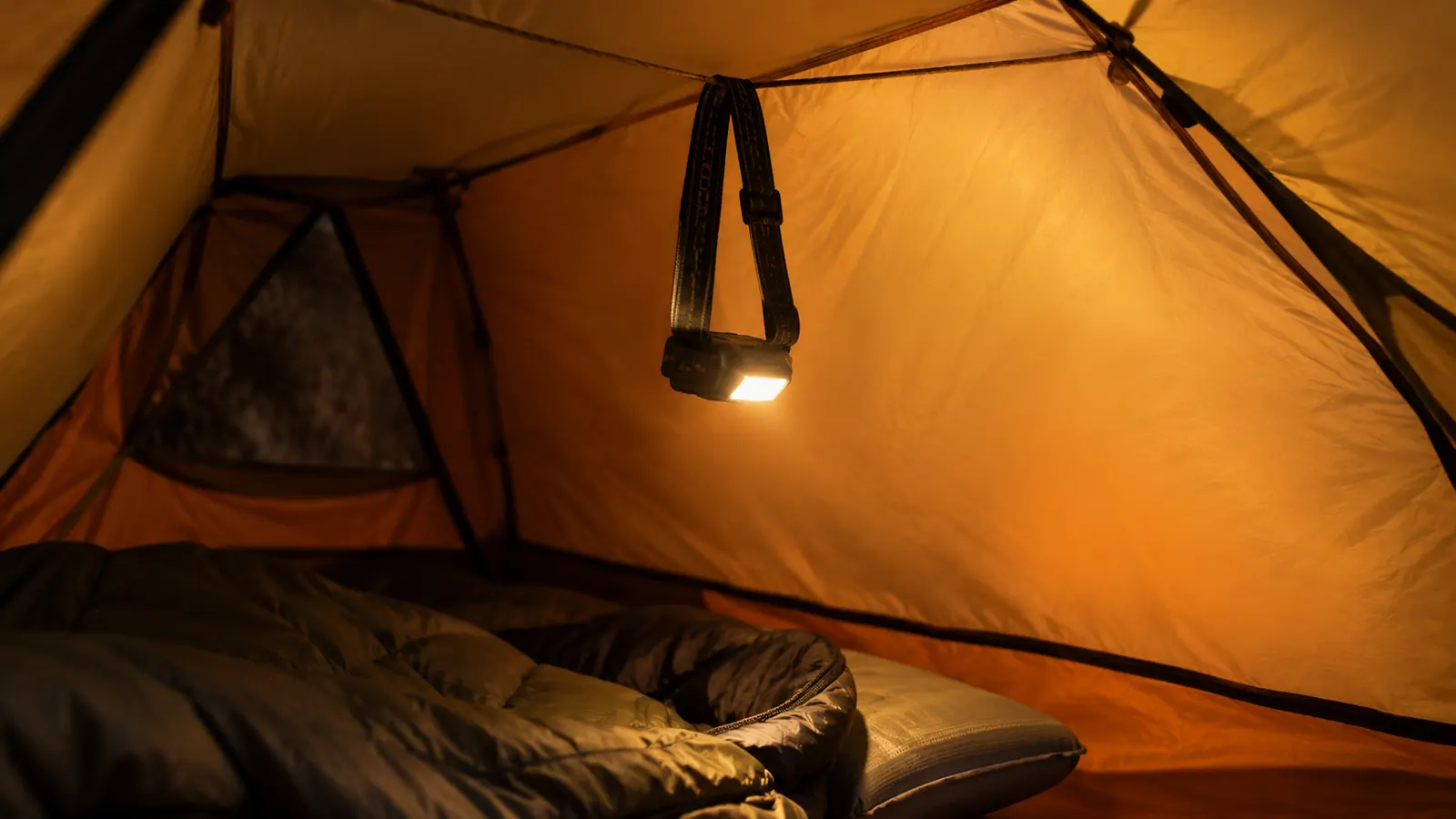
I also hang the headlamp from the tent ridgeline by its strap when I want soft light inside the tent. The strap loops over the ridge and the lamp hangs down, lighting the whole interior without blinding anyone. One October night at a site near Sisters, I hung it that way while Joanne read and I sorted the next day's food bag, and neither of us had to move to see. When I got up at 3 a.m., the lamp was still in reach: I unclipped it, used the low flood for the short walk, and clipped it back when I returned. That is the kind of small convenience that makes a headlamp earn its place in the kit.
Step 4: Match the beam to the task
The biggest mistake I see new campers make with a headlamp is using the brightest setting for everything. A 1200-lumen beam bouncing off a tent wall or a camp table is uncomfortable and wastes battery. The Coast XPH30R has multiple brightness levels, and I use the lowest one that gets the job done. For cooking, that is usually the mid flood. For reading in the tent, it is the lowest setting. For walking a dark trail, it is the high spot beam.
When the Coast XPH30R was new, I took it into the tent on a late October trip to Tumalo and left it on high. The light bounced off every wall and I could not see anything outside the beam, so I had to sort gear by touch. The lesson stuck: start low and move up only when the task asks for it. A wide flood at low power is perfect for camp chores because it lights the whole area without a harsh hotspot. A tight spot at high power is what I want when I hear something outside the tent at 2 a.m. and need to see across the clearing. That happened on the same Tumalo trip. Something moved in the brush about forty feet out, and I twisted to the spot beam, hit high, and lit up the whole space between the tent and the treeline. It was a porcupine. The beam showed me exactly what it was and where it was going, and I went back to sleep.
Practice the controls at home before you go. I spent one frustrating evening at camp trying to find the right mode with cold fingers, and it was entirely avoidable. Now I run through the twist and the button a few times in the kitchen before every trip so the motions are automatic.
Step 5: Have a backup and a plan for the dark
No single light belongs in the field without a backup. My rule is simple: the headlamp is the primary light, a small flashlight lives in my jacket pocket, and the 4Runner carries a larger light in the emergency kit year round. The Coast XPH30R has been reliable for me, but I have had batteries die at bad moments with other lamps, and I do not gamble on it.
My daughter joined me on a May trip in the high desert, and her headlamp went dead on the second night. I handed her the small flashlight from my jacket pocket, and she finished at the wash station without a pause. The backup does not need to be fancy. A small AAA flashlight weighs almost nothing and covers the gap if the headlamp is lost, dropped in the creek, or simply out of charge. I also keep a spare USB-C cable in the car so I can charge the headlamp from the 4Runner if I forget the power bank. That has saved me at least once, on a November trip when I left the power bank on the kitchen counter at home. I ran the headlamp low the first night, and the next morning I plugged it into the 4Runner's outlet while I drove to the trailhead. It was back to full before I parked.
Finally, tell someone your lighting plan if you are camping alone. It sounds like overkill, but knowing that your headlamp is charged, your backup is in your pocket, and your car has a light in the emergency kit means you never have to sit in total darkness wondering what to do. That peace of mind is worth more than any single piece of gear.
What Else Helps
A headlamp does the heavy lifting, but a few small additions make the whole system work better. A lantern for the camp table gives you ambient light so the headlamp is not on your head all evening. A power bank covers multi-night trips. A spare set of batteries for any backup light keeps the backup honest. And a simple carabiner lets you hang the headlamp from a branch or ridgeline when the strap alone will not reach. None of these cost much, and together they mean you never have to choose between seeing and using both hands.
The magnetic base turned the Coast XPH30R into a work light, a tent light, and a tailgate light without me carrying a single extra piece of gear.
Build your camp lighting plan around a headlamp that does it all
The Coast XPH30R is the rechargeable headlamp I have used for two seasons of camping in the Cascades and the high desert. It focuses from flood to spot, charges over USB-C, and weighs 4.37 ounces. Check today's price on Amazon and see if it fits your kit.
Amazon Check Today's Price on Amazon →