
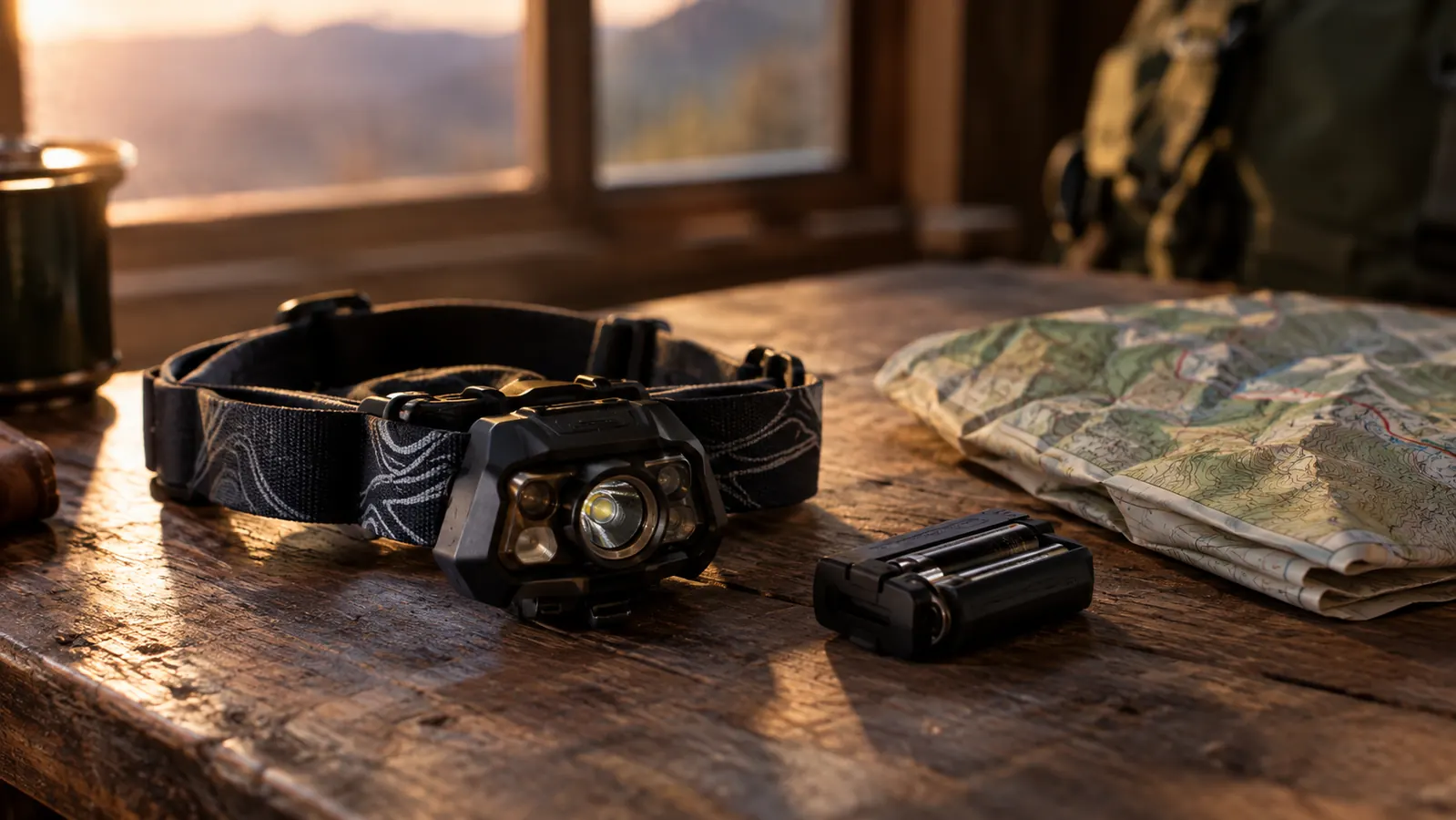
I spent twenty-two years coordinating county search and rescue, and I have a particular hatred for gear that fails at the worst moment. Headlamps top that list. I have killed more cheap headlamps than I can count, usually at 2 a.m. in rain, usually when the person holding the map is looking at me. So when I started testing the Coast XPH30R, I did what I always do: I stopped reading the specs and started using the thing like it owed me money.
This review covers roughly two seasons of regular use, from spring high-desert hikes to a couple of cold winter overnights in the Cascades. I have dropped it, soaked it, left it in the door pocket of my older Toyota 4Runner, and used it as a work light under the hood. It has outlasted every headlamp I have owned, including ones that were far more expensive.
The Quick Verdict
The Coast XPH30R is the headlamp I grab first when I need light I can trust in bad weather. It is not the lightest or the cheapest, but the beam quality, battery life, and build hold up season after season.
Amazon Check Today's Price →The headlamp that survived two seasons of my worst habits
I have tested a lot of headlamps. This is the one still working. Check today's price on Amazon and see why it earned a permanent spot in my kit.
Amazon Check Today's Price on Amazon →How I've Used It
The XPH30R has been my default headlamp since I picked it up before spring thaw. It rides in the door pocket of my 4Runner with my vehicle emergency kit, so it is usually within reach whether I am hiking, camping, or just walking our road after dark.
My testing routine is not scientific. It is practical. I use the lamp for real tasks: setting up camp in the dark, reading a map in the rain, finding a dropped screw in the gravel, walking a rocky trail at night, and one memorable weekend when I used it to help a neighbor rewire a shed after the power went out. If a headlamp survives my regular life, it earns my trust.
Last April, on a wet trail below Broken Top, I ran well behind schedule and ended up night hiking for almost three hours. The lamp started that evening on a full charge, and when I got back to the 4Runner it still showed two of four lights on the indicator. That kind of honesty matters more to me than a claimed lumen number.
I also took it on two winter overnights where the temperature dropped into the teens. That is where cheap headlamps usually give up, either the battery sags or the switch freezes. On the second trip, a January overnight near Todd Lake, the lamp sat on a snow bank for an hour while I cooked dinner, then lit the walk back to camp without a flicker.
In the car, it lives in the door pocket with a spare pair of batteries for the radio and a folding knife. That means it is the light I grab when I stop to help someone with a flat tire or when a winter storm knocks out the power at the house. It has done both jobs more times than I can count, and it has never once been dead when I needed it.
Beam Quality and the Twist Focus
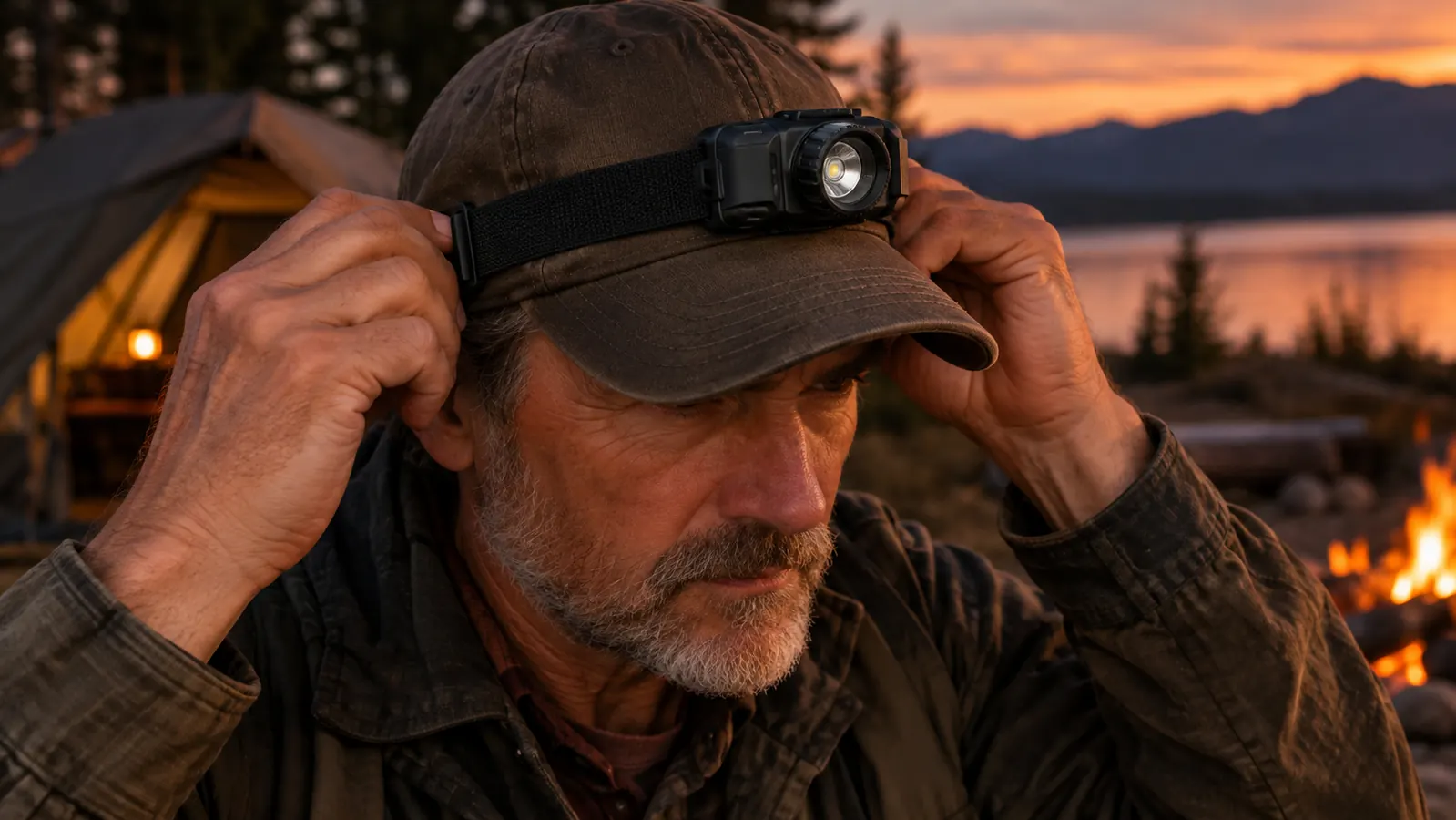
The first thing you notice is the beam. Coast calls it a twist focus, and it is not a gimmick. A quarter turn of the bezel takes you from a wide, soft flood that fills a campsite to a tight spot that reaches across a field. I have used headlamps with separate flood and spot LEDs, and I prefer this system. It is one continuous adjustment, so I can dial in exactly the width I need instead of switching between two fixed modes.
The spot beam is genuinely useful for scanning a treeline or checking a trail junction a hundred yards out. I paced off one marker post on a friend's fence line at about a hundred and twenty yards, and at full spot I could still see the post clearly. The flood is wide enough to cook dinner without lighting up the whole forest. In rain, the beam cuts through better than I expected. I have stood in a downpour reading a soggy map and the light stayed usable, which is more than I can say for my old lamp.
One note: the twist focus takes a little getting used to. The bezel is stiff when the lamp is new, and you need two hands to adjust it while wearing the lamp. After a few weeks it loosens up, and now I can do it with one hand most of the time. The beam stays round through the whole range, which tells me the lens and emitter are aligned properly.
That continuous range earned its keep when I helped a neighbor rewire a shed after an ice storm. I needed a wide flood to light the whole wall while I traced wires, then a tight spot to see inside a junction box, then something in between to read the labels on a breaker. With a two-mode lamp I would have been switching back and forth all evening. With this one I just turned the bezel.
Battery Life and USB-C Charging
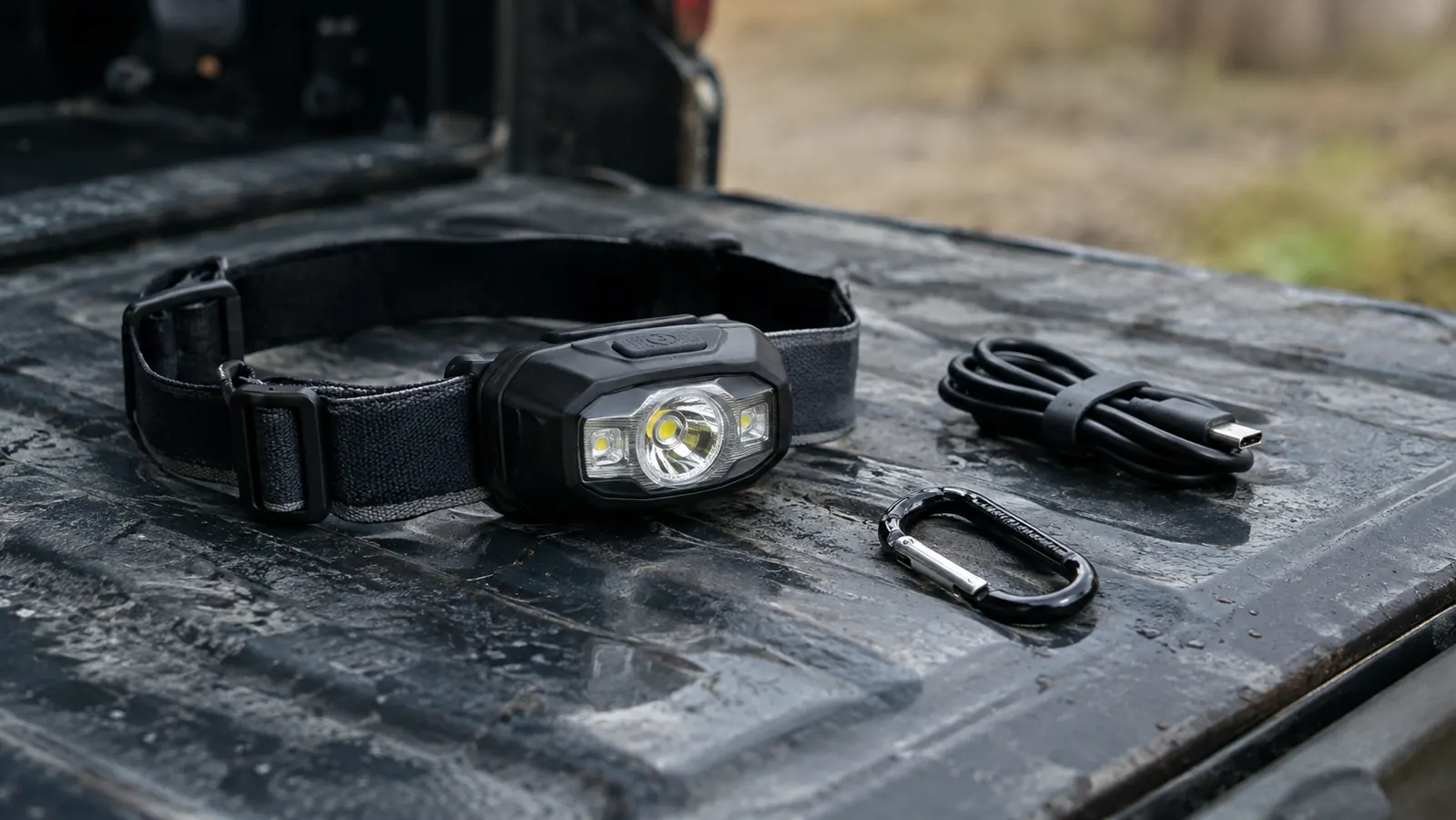
The XPH30R runs on a rechargeable battery and charges through USB-C. That is a big deal for me. I have a drawer full of old headlamps that take weird batteries, and I am tired of hunting for spares at the worst time. With USB-C, I charge it from the same cable I use for my phone and my power bank.
Battery life depends on brightness, but in my normal use, which is a mix of flood and spot at medium to high output, I get several full evenings out of a charge. On a week-long car camping trip last summer I charged it once, and that was only because I was using it as a lantern for hours each night. A three-day backpack in September used about half the battery, and I never once felt the need to carry a spare.
Charging is straightforward. A full charge from dead takes a couple of hours on a normal phone charger, and the little light on the side turns from red to green when it is done. I have also topped it off from a 10,000 mAh power bank while eating lunch on a trailhead, which barely moved the bank's indicator. That makes it easy to keep the lamp full without planning ahead.
The battery indicator is a small set of lights on the side. It is not fancy, but it is honest. When it shows one light, you have maybe an hour of full output left. I have learned to trust it, and I have never been caught in the dark with a dead lamp. That matters more than any spec sheet.
Cold weather does cut into runtime. On the January trip the indicator dropped one light faster than it does in summer, which I expected. The important thing is that the lamp never shut off suddenly. It stepped down gradually, so I always had light to get back to camp. That predictable fade is exactly what I want from a battery indicator.
Build Quality and Weather Resistance
This is where the Coast XPH30R separates itself from the pack. The housing feels solid, the switch is positive, and the strap is wide enough to stay put without giving me a headache. I have dropped it on rock, kicked it across a gravel lot, and left it in the rain on a picnic table overnight. It still works like the day I bought it.
The worst test came in late October. I left the lamp clipped to a pack strap on the roof of the 4Runner, drove a mile down a gravel road, and heard it bounce off the tailgate. It landed on a chunk of basalt, skidded under the bumper, and spent the night there. The next morning it was covered in dust and a little scratched, but it turned on and held a charge. I have had headlamps break from a shorter fall onto carpet.
The IPX4 rating means it handles rain and splashes, not submersion. I have not tested it underwater, because I do not need a headlamp that swims. I need one that survives being on my head in a downpour, and this one does. The charging port cover has stayed sealed through every storm I have used it in, which is more than I can say for the port on my previous lamp.
The magnetic base is a feature I did not expect to use, but I use it constantly. It sticks to the tailgate of my 4Runner, to the side of a metal tool box, and to the underside of a steel shelf in my garage. It turns the headlamp into a hands-free work light, which is worth a lot when you are alone in the dark. I have used it to hold the lamp while I changed a trailer light connector and while I dug a lost socket out from under the workbench.
One small detail I have come to appreciate is the strap buckle. It is a simple friction buckle, not a ratchet, and it has never slipped while I was moving fast. On other headlamps the plastic ratchets wear out and start creeping. This one still holds its setting after two seasons, which tells me the materials were chosen for the long haul.
What Wears Out, What Does Not
Nothing is perfect, and I have found a few things to complain about after two seasons.
The strap is fine, but I wish it were a little grippier. On a sweaty summer hike it can slide down my forehead if I am not wearing a cap. It is not a dealbreaker, but it is a thing I notice. The strap itself has not frayed or stretched after all this use, which I cannot say for the elastic on my last two headlamps.
The twist focus bezel has loosened over time, which is good for one-handed use but means the beam can drift slightly if I bump the lamp. It is a small thing, and it does not affect the light quality, but it is worth knowing. On a couple of cold mornings I have had to give it an extra nudge to get it back to the width I wanted.
The switch is a single button that cycles through modes. I have occasionally clicked past the mode I wanted, especially with gloves on. It is not a problem once you learn the rhythm, but it is not as intuitive as a dedicated switch. I would still take this switch over the tiny rubber buttons on some headlamps, which are impossible to find in the dark.
The lens is still clear after all this use. I expected fine scratches from gravel and rock, but the coating has held up. The rubber around the charging port has not torn, which is the first thing to go on cheaper lamps. Those are the small signs that a manufacturer took the long view.
What I Liked
- Twist focus gives a genuinely useful range from wide flood to tight spot
- USB-C charging from the same cable as your phone
- Magnetic base turns the lamp into a hands-free work light
- Honest battery indicator that you can actually trust
- Solid build that has survived two seasons of real abuse
- Bright enough for trail walking, camp chores, and scanning a treeline
Where It Falls Short
- Strap can slide on a sweaty forehead without a cap
- Twist bezel loosens over time and can drift if bumped
- Single switch cycles modes, easy to overshoot with gloves
- Not the lightest headlamp in its class
After two seasons, a dozen drops, one soaking rain, and a winter in the teens, the XPH30R is still the first headlamp I grab.
Who This Is For
The Coast XPH30R is for anyone who wants one headlamp that does everything. Campers, hikers, hunters, people who keep a kit in the car, people who lose power in winter storms. If you are tired of buying a new headlamp every year because the cheap ones die in the rain, this is the one that ends the cycle.
It is also a great choice if you already carry a USB-C cable and a power bank. One cable charges your phone, your power bank, and your headlamp, which simplifies a kit more than you would expect.
Who Should Skip It
If you need the absolute lightest headlamp for ultralight backpacking, this is not it. It is not heavy by any reasonable standard, but it is not the lightest option out there. Weigh the features against the extra ounce or two.
If you prefer a headlamp with a simple two-mode switch, the single button cycling might annoy you. And if you need a lamp that can be submerged, you need a different rating entirely. For the rest of us, the XPH30R is a solid, honest tool.
Still the first headlamp I grab after two seasons
If you want a headlamp that keeps working when the weather turns, this is the one. Check today's price on Amazon and see if it belongs in your kit.
Amazon Check Today's Price on Amazon →