
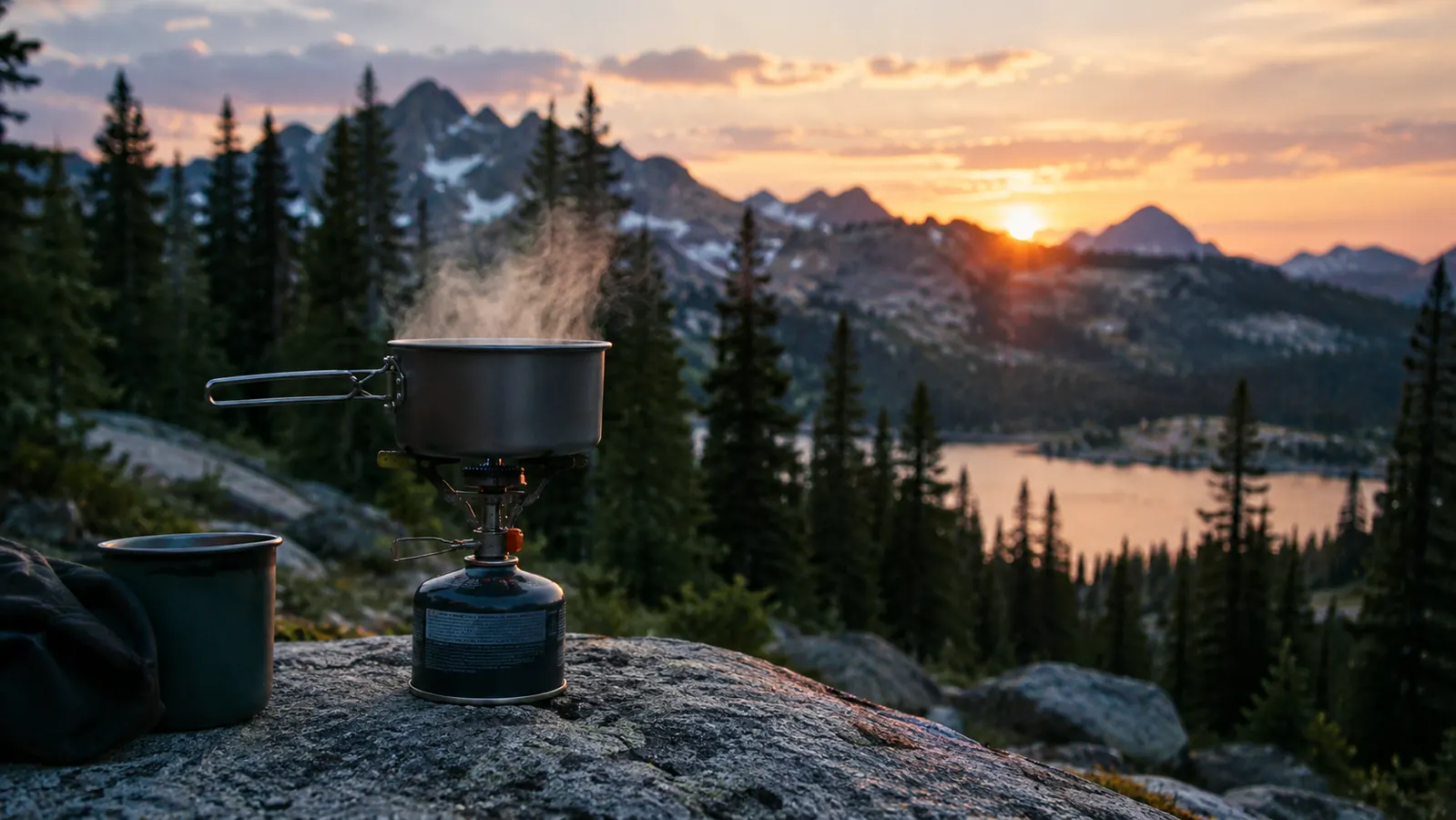
Cold dinner is fine on night one. By night three, you will trade almost anything for a hot meal, and that is the moment most people discover their stove plan was no plan at all. I have been cooking in the Cascades and the high desert long enough to keep a simple rule for every trip: decide what you are eating before you decide what you are carrying. These are the five steps I use to plan a hot backcountry meal around the MSR PocketRocket 2, the little stove that has ridden in my pack for years.
The failure is rarely the stove. It is the planning around it. People pack a stove and a pot, then stand in the wind with a lighter that will not catch, water that has not boiled, and a freeze-dried pouch that needs fourteen minutes of simmering they never budgeted for. The fix is not a better stove, though a better stove helps. The fix is a sequence: pick the meal, count the water, pack the system, cook in order, and clean up before dark. Do those five things and the hot meal stops being a hope and becomes a schedule. This is the same sequence I used for years as a county search and rescue volunteer coordinator, because in the field, dinner is just another operation that goes smoother when someone wrote it down.
A Stove That Boils a Liter in About Three and a Half Minutes
The MSR PocketRocket 2 is the stove I plan every meal around. It weighs 73 grams, lights reliably, and has held a 4.8-star average across more than 4,000 ratings. If you are building a backcountry cooking kit, this is where I would start.
Amazon Check Today's Price on Amazon →The Five Steps, In Order
Step 1: Choose the Meal Before You Choose the Route
The meal decides everything else. A boil-and-wait pouch needs only a cup of boiling water and ten minutes in a cozy. A one-pot pasta dish needs a wider pot, more fuel, and a spoon you can actually eat with. Rice and beans from scratch needs a simmer you can control. If you are new to this, start with meals that only need boiling water. They are the most forgiving, and they are what most experienced backpackers eat most nights anyway.
Match the meal to the day. On a short day with an early camp, a two-pot meal is fine. On a long day with darkness coming at five, you want something that is ready in the time it takes to boil water. I also match the meal to the weather: cold nights get soups and stews, warm nights get something lighter. Joanne and I plan the menu together before a trip, and when our grown kids join us they each pick one night. The PocketRocket 2 boils fast enough that even a slow meal never feels slow.
Write the dinner plan down before you leave. I keep a note in my phone for each trip: what we eat each night, how much water each meal needs, and what that adds up to in fuel. It takes five minutes and it removes every decision at the end of a long day, which is exactly when decisions get expensive.
Step 2: Count the Water Before You Count the Fuel
Water is the heaviest part of any hot meal, and it is the part people get wrong. A typical freeze-dried dinner needs about two cups of boiling water. Add a cup of coffee, a cup of tea, a drink you actually want, and a splash for cleanup, and you are at a liter per person per meal before you start. I plan a liter per person per hot meal and a half liter for a hot drink. That number has never let me down.
Then figure out where the water comes from. In the Cascades, water is everywhere, so I filter at camp and boil what I need. In the high desert, water can be a long walk away, so I carry it. In winter, melting snow takes fuel and time. The PocketRocket 2 will do it, but it will burn through a canister faster than you expect, so plan fuel accordingly. When I am loading the 4Runner for a winter overnight, the fuel canister count is always the thing I double-check.
Counting water is how you avoid the two worst outcomes: a meal that will not rehydrate because you skimped, and a pack that weighs ten pounds more than it should because you carried water you never used. Both are planning problems, not gear problems.
Step 3: Pack the Stove System as One Unit
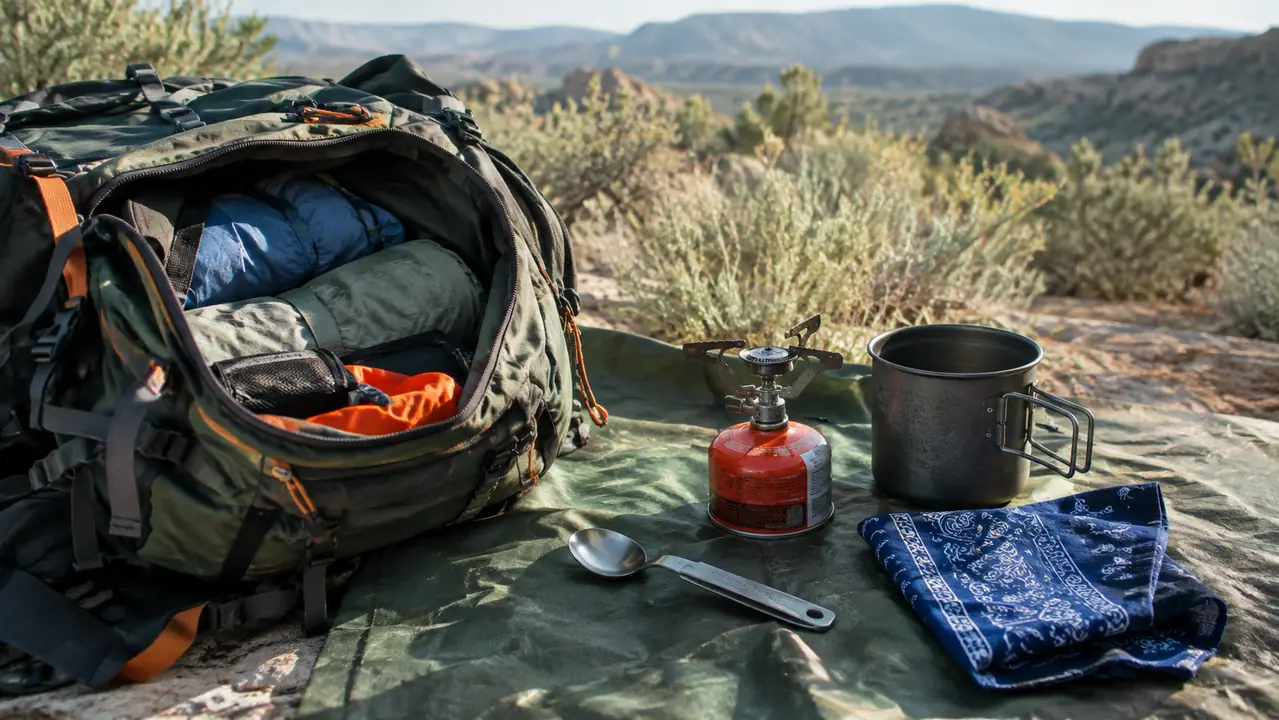
The stove, the fuel, the lighter, and the pot should live together in one stuff sack so cooking never requires a dig through the whole pack. My kit is simple: the MSR PocketRocket 2, one small isobutane canister, a long-reach lighter, a one-liter pot, and a spoon that has survived two seasons. The stove screws onto the canister, the canister goes in the sack, and the whole thing takes up less room than a loaf of bread.
Wind is the enemy of a small stove. I plan a cooking spot before I need one: a flat rock, a fallen log, or the lee side of a tent. The PocketRocket 2 has no built-in igniter, so the lighter is not optional, and I carry a ferro rod as a backup anyway because a cold wet morning is exactly when an igniter fails. I also carry a small piece of foil as a windscreen and only use it when I can keep it away from the base of the canister. A canister that overheats is a canister you do not want to be near.
Fuel math is simple if you test once at home. Boil a liter at home, time it, and you will know exactly how long a canister lasts. I get roughly two to three days of two hot meals a day out of a small canister in mild weather, and about half that in winter. Your mileage will differ. That is why you test at home before you depend on it at altitude.
Step 4: Cook in the Right Order
The order of operations matters more than people think. Boil the water first, all of it, before you add anything. Once the water is boiling, add the meal, stir once, and let it sit off the flame in a cozy. A cozy is just an insulated sleeve, and it turns a pot into a slow cooker. The PocketRocket 2 boils a liter in about three and a half minutes, so the whole sequence from a cold stove to dinner on a spoon is usually under ten minutes.
Do the hot drinks and the meal in one burn. Boil the meal water, then use a second quick boil for coffee. This saves fuel and, more importantly, it means you eat and drink at the same time instead of cooking twice. When it is cold or getting dark, that matters. I also set up camp before I cook, so the stove is the last thing I do, not the first thing in a panic.
Eat before it is fully dark in the shoulder seasons. A hot meal eaten in daylight is a different experience from one eaten by headlamp, and cleanup is easier when you can see what you are doing. On winter trips, I start dinner while there is still light to cook by, even if I eat by headlamp.
Step 5: Clean Up and Pack Out Everything
Leave No Trace applies to dinner. Scrape the pot with a spoon, eat every scrap, and then add a splash of water, bring it to a boil, and swish it around. That boiling rinse handles most of the cleanup, and the hot water makes it quick. I pack out every bit of food waste, including the labels from pouches, because a buried wrapper is still a wrapper, and a bear that learns to raid campsites for freeze-dried pasta is a bear that gets put down. That is the part nobody wants to talk about.
Soap is rarely needed if you boil-rinse right after eating. When I do use soap, it is biodegradable and I use it at least 200 feet from any water source. The gray water from washing goes into the same container I pack out, not onto the ground. It sounds fussy. It is not. It takes three minutes and it keeps the places we camp worth coming back to.
Pack the stove last so it is dry. I wipe the pot with a bandana, let the stove cool completely before it goes in its sack, and check the canister valve is closed by listening for a hiss that is not there. A dry, clean kit that goes back in the same spot every time means the next trip starts ten minutes faster.
A Note on Stove Safety
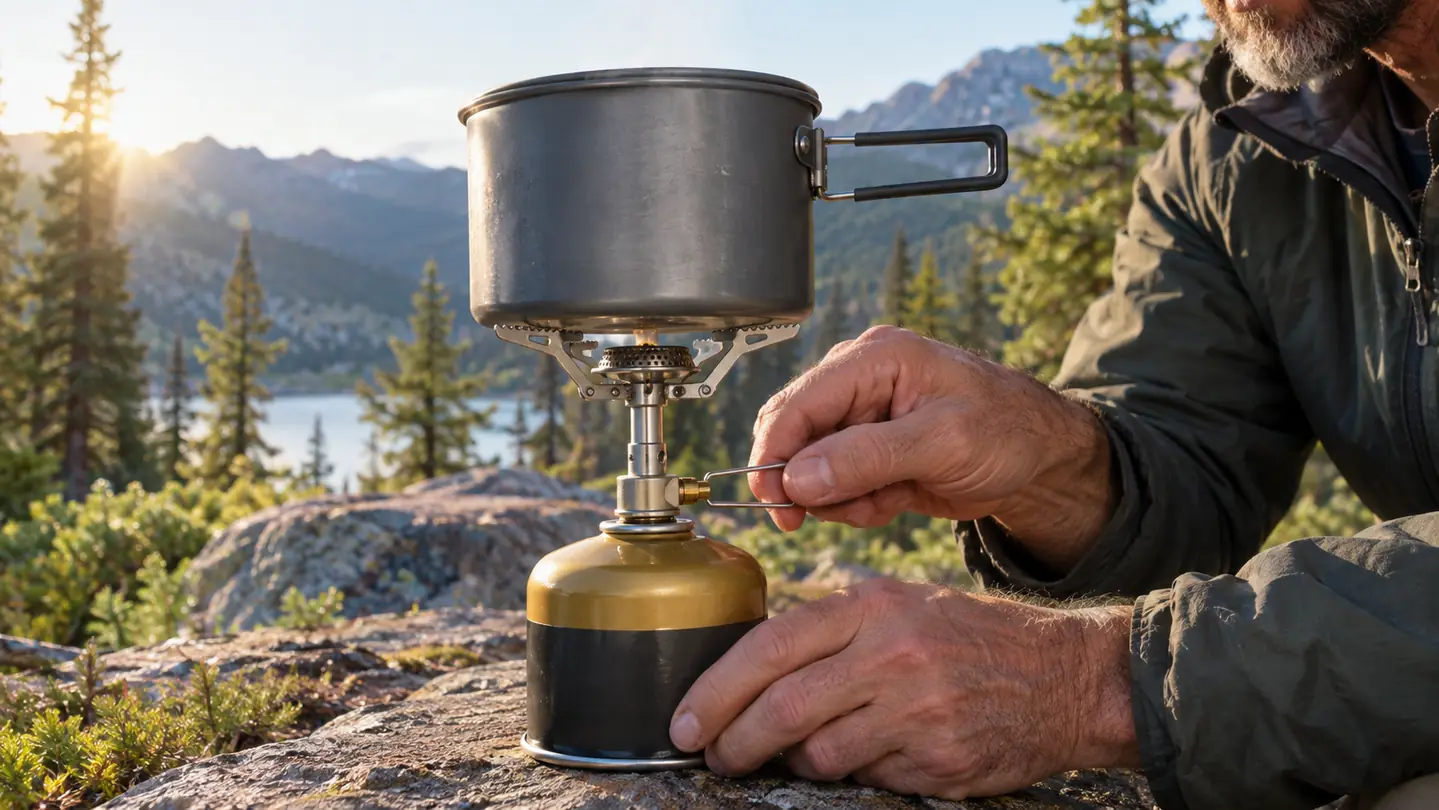
A canister stove is safe when you treat the canister with respect. Never use a stove inside a tent, even a vestibule. The flame is obvious, but the carbon monoxide is not, and a tent is exactly the wrong place to learn that lesson. Keep the canister upright, keep the valve closed when the stove is packed, and if a flame flares or the canister feels hot to the touch, step back and let it cool. In my search and rescue years I saw more stove incidents from hurry than from anything else. The meal can wait ten minutes. The mountain will still be there.
What Else Helps
A few extras that cost little and save real hassle. A pot gripper, because the handle on a one-liter pot gets hot and a bandana is a poor man's potholder. A long-handled spoon, because eating directly from the pouch means you want the spoon to reach the bottom without your knuckles in the food. A small stuff sack for the whole stove system so the canister does not roll around the pack. And a lightweight trowel for the cathole that goes with dinner, which is not cooking gear but is part of the meal plan.
If you want the full story on this stove, I have written about it in detail. The long-term review covers how the MSR PocketRocket 2 has held up over seasons of use. The side-by-side comparison with the Jetboil Zip is worth reading if you are torn between a fast-boil stove and a full stove-and-pot system. And if you are still deciding whether a stove belongs in your kit at all, the case for carrying one is laid out plainly in my piece on the reasons a camp stove belongs in your backcountry kit.
One more thing: practice at home before the first trip. Set the stove up in the backyard, boil a liter, and cook one freeze-dried dinner on the kitchen counter. The first time you light a stove should not be at altitude in the wind with everyone hungry. That practice run is the best way to make the real trip feel easy.
It boils a liter in about three and a half minutes. That one number decides what you can cook, how much fuel you carry, and when you actually eat.
Planning a hot meal in the backcountry is not complicated. It is a sequence, and once you run it a few times it becomes automatic. The stove matters less than the plan, but a good stove makes the plan feel effortless. The MSR PocketRocket 2 has been that stove for me. It lights, it boils, and it packs small. It also means I actually eat the hot meal instead of talking myself out of cooking because it is raining and dark. Everything else is just the five steps above.
Plan the Meal. Let the Stove Do Its Job.
The MSR PocketRocket 2 is light enough to carry on every trip and fast enough that a hot meal is never a chore. It has more than 4,000 ratings and a 4.8-star average. If you want a stove you can set up in the dark and trust in the wind, this is the one.
Amazon Check Today's Price on Amazon →