
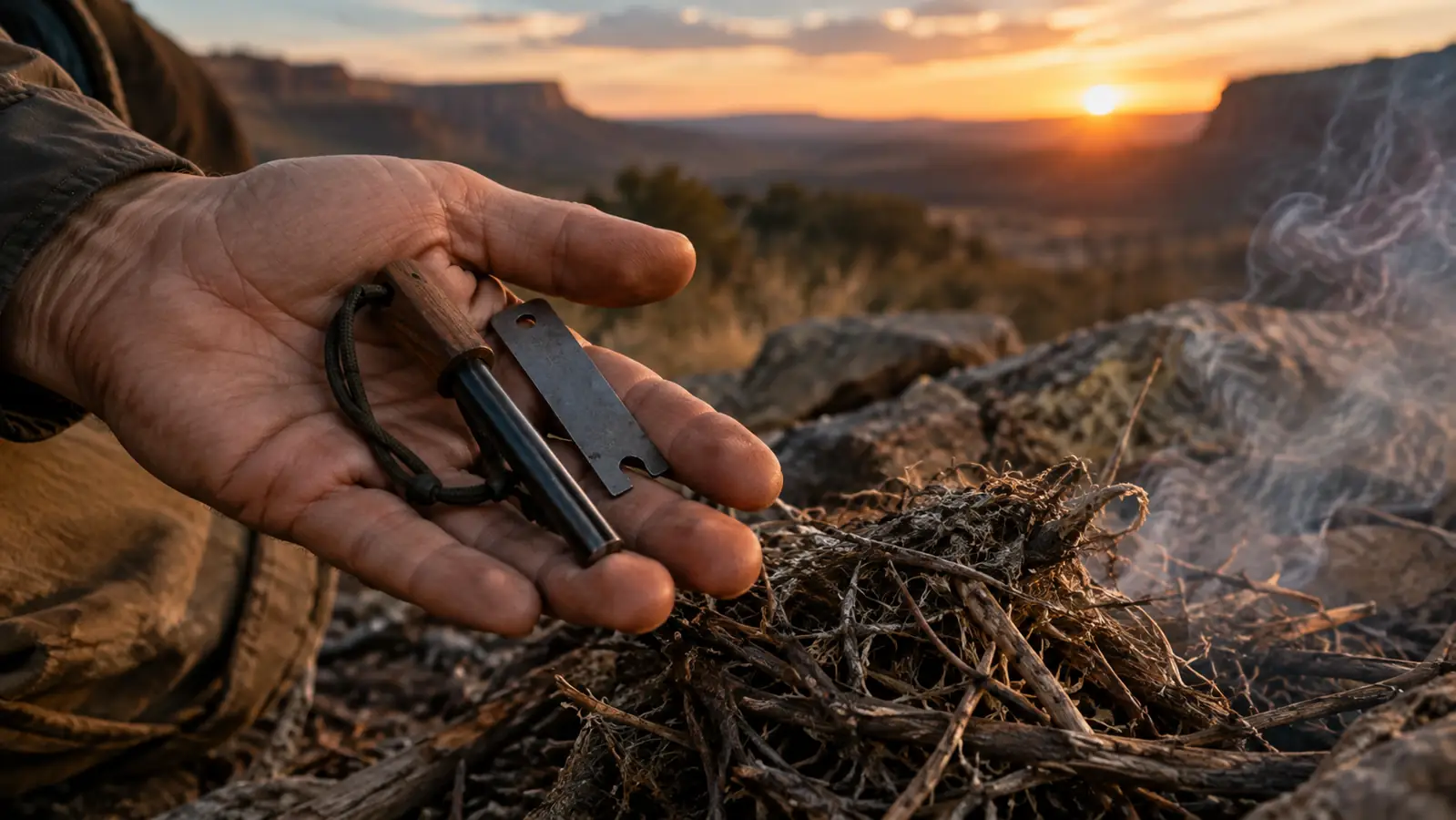
Most fire starters look better than they work. I learned that the slow way on a damp October evening in the Deschutes National Forest, standing over a pile of wet duff with a rod that threw weak orange sparks and a striker that kept slipping in my fingers. The bayite 4 inch ferro rod is not that rod. I ordered it after a fellow search-and-rescue volunteer mentioned it during a training weekend, and it has lived in my pack for about two years since.
This is the honest review I wish I had read before I bought it. Not the listing copy, not the five-star highlights. The part where the protective coating has to be scraped off first. The part where technique matters more than the tool. The part where a four inch rod is shorter than it sounds once your fingers are on it. If you already own one, some of this will make sense. If you are shopping, read this before you decide. And if you bought one, tried it once, and set it aside, come back to it. You probably stopped one scrape short of a working rod.
The Quick Verdict
A no-frills ferro rod that throws hot sparks, works wet, and takes real technique. The included striker is thin and the coating catches people out, but as a first fire steel it is hard to beat.
Amazon Check Today's Price →A fire starter that earns its pocket space
After two seasons of damp mornings and cold camps, the bayite 4 inch ferro rod is the one I still carry. Read the rest of this review first, then check today's price on Amazon.
Amazon Check Today's Price on Amazon →How I've Used It
I am Cal Hendricks. I coordinated county search-and-rescue for close to twenty years, and I still spend a few weekends a month in the Cascades and the high desert outside Bend, Oregon. The rod rides in my pack for overnights and in the door pocket of my older Toyota 4Runner for vehicle trips. Two places, one rod, no excuses. It has also lived in the garage bin I keep stocked for winter storms and wildfire-season power outages, because the grid goes down here more often than people expect.
I have used it to light camp stoves, to start fires after spring rain, to relight a fire that died overnight, and to teach a handful of SAR trainees how to use a ferro rod. I have also tried to make it fail. Soaked tinder. Wind. Cold hands. Gloves on. A striker dropped in the dirt. I even left it out in the rain overnight by accident. That deliberate testing is where the honest notes come from, and most of them are about me, not the rod.
The short version of my conclusion: the bayite rod does its one job as well as any fire starter I have carried in thirty years of camping, and the failures people blame on it are almost always technique failures. But there are real limitations too, and the rest of this review walks through both sides.
What the Listing Gets Right and What It Skips
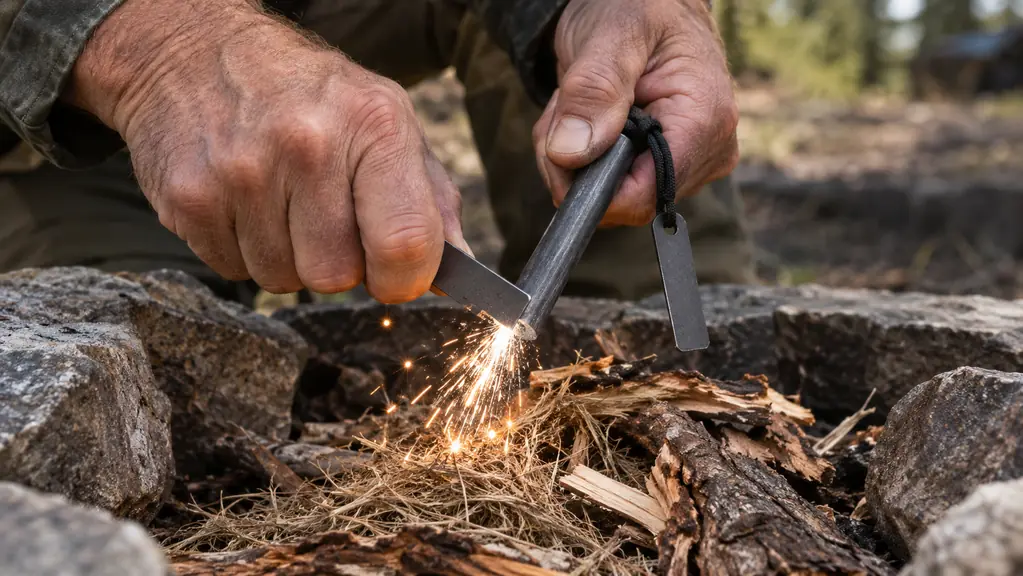
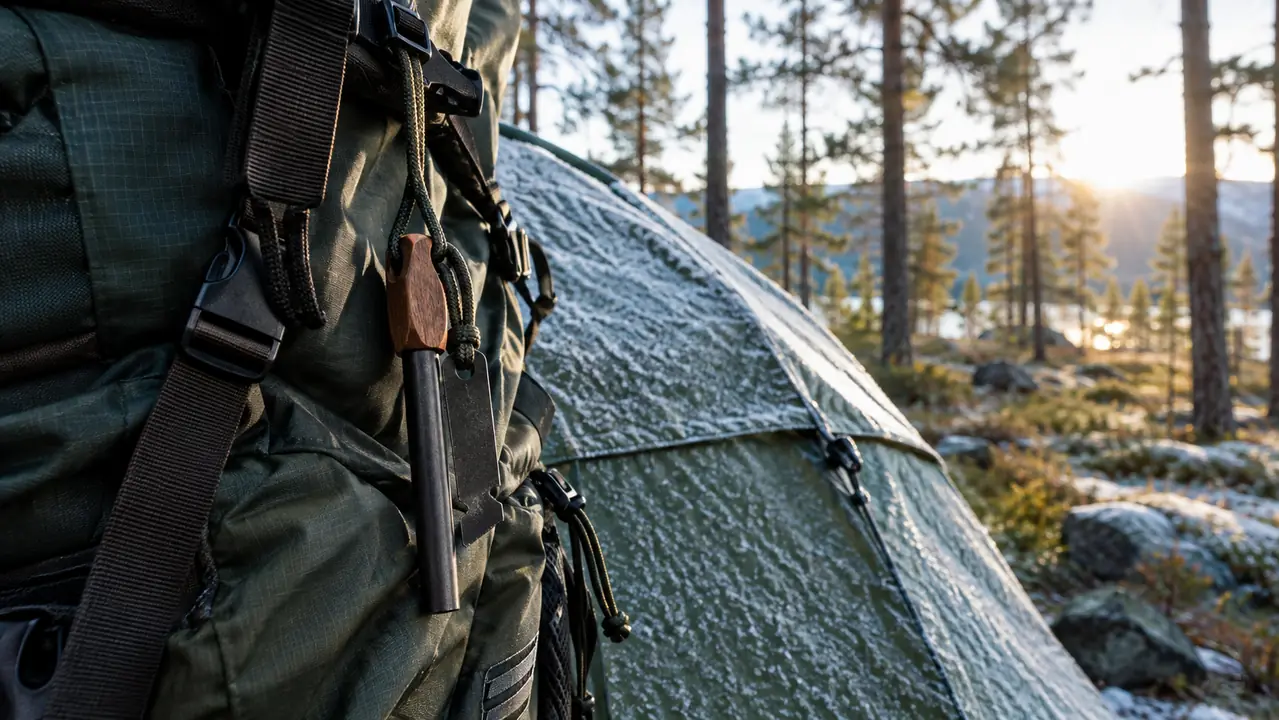
The listing calls it a drilled flint fire starter. Two corrections. It is not flint. It is ferrocerium, a synthetic alloy that throws sparks far hotter than natural flint, which is good news for anyone trying to light wet tinder. And the drilled hole is not decoration. It is the feature that sold me. I ran a cord through it so the rod hangs off a pack strap or around my neck and cannot be lost in the dark. I have dropped plenty of gear in my life. I have never dropped this rod, because it is always attached to something.
The kit is simple. A four inch rod, a striker, and not much else. That is the whole product, and that is mostly fine, because there is not a lot that can break. The part the listing skips is the coating. Like most ferro rods, this one ships with a protective coating over the alloy. Your first few strikes scrape that off and throw almost nothing. A lot of people try it once, decide it is defective, and put it in a drawer. It is not defective. You are scraping paint. Give it a dozen solid scrapes before you judge it.
The other thing the listing skips is the striker. It works, and I have used it for two seasons, but it is light. If you are hard on gear, plan on replacing it eventually or carry a backup. A ferro rod is only as good as the steel you scrape it with, and the steel in this kit is adequate rather than excellent. That is the honest tradeoff you accept with a simple kit.
The drilled hole makes the rod easy to set up the way you want it. Some people add a split ring and clip it to a zipper pull. I use a longer cord so the rod hangs at chest height when it is around my neck. That way it is always in reach, never in the way. You can also leave it bare and carry it loose in a pocket. The hole is the difference between a rod you have to dig for and a rod that is already in your hand.
What Works: Two Seasons of Sparks
The rod throws a dense shower of sparks. Not the weak orange sprinkle you get from a bad rod. A hot white spray that carries far enough to catch dry tinder. I have started fires with birch bark, cedar shavings, dry grass, jute twine, cotton balls, and the frayed end of a piece of rope. Every one caught on the first or second scrape once the coating was off. The consistency is the thing. Some fire starters work when they feel like it. This one works every time I use the technique properly.
It works wet. That is the real reason I carry it instead of a lighter. I have used it in drizzle, after dropping it in a creek, and on a morning when everything in camp was damp. The rod does not care. The sparks are hot enough to overcome a little surface moisture, as long as the tinder underneath is dry. A butane lighter struggles in the same conditions. A ferro rod does not. That one difference is why this tool has a permanent place in my kit.
Durability has been a non-issue. Two seasons, maybe two hundred strikes, and the rod still throws a full shower. The cord I added is showing wear before the rod is. The rod has a faint groove where the striker rides, which is normal for ferrocerium and does not affect performance. For a tool that lives in a vehicle emergency kit, a backpack, and a garage bin, that is exactly the boring reliability I want.
The rod has also been a teaching tool. Every SAR trainee I have shown it to struggled at first, and every one of them got a fire going within ten minutes once they slowed down. Watching people go from frustration to a working flame is the best argument I know for carrying a ferro rod. It is a skill you can hand to someone else.
What Nobody Tells You Before You Buy
First, the learning curve is real. A ferro rod is not a lighter. You do not flick it. You drag the striker across it slowly with firm pressure, letting a small pile of shavings build before they ignite. Fast scrapes throw tiny sparks that die before they reach the tinder. Almost everyone struggles the first few times. Once the motion clicks, it is as natural as striking a match. But nobody tells you that the first session will be frustrating, so a lot of people conclude the rod is the problem.
Second, four inches is shorter than it sounds. The rod measures four inches total, but you grip the back of it, so your fingers cover the last inch. Usable surface is closer to three. That is still plenty. Ferro rods last for thousands of strikes. Just adjust the picture if you were imagining a long dramatic rod, and remember that the shorter length is part of why it fits so easily in a pocket.
Third, tinder prep matters more than the rod. The sparks are hot but brief. If your tinder is too coarse, too damp, or piled too thick, the sparks burn out on top of it. I build a nest the size of a fist, fine material in the middle, coarser material around it, before I strike. The rod does the last ten percent. The other ninety is yours. People who complain that ferro rods are useless are almost always people who skipped the tinder step.
Fourth, the striker will show wear. Mine has developed surface rust after damp trips. A quick wipe handles it, but it is a reminder that the cheap piece of steel in the kit is the weak link, not the rod. Keep it dry or replace it. Neither is a big deal, but nobody tells you to expect it, so now you know. I keep a spare striker in my vehicle kit.
Field Notes: Wet, Cold, and Windy
My hardest test was a late-winter overnight in the high desert when the temperature sat below freezing and wind kept snatching at everything. I built a small nest of dry grass from the inside of a dead bunchgrass clump, cupped it against the wind with my body, and scraped the bayite rod slowly. It caught on the second strike. That is the honest version of the story. Not the first strike. The second, because my first scrape was too fast and too timid. The rod was ready before I was.
The wind is the real enemy, not the rod. Sparks get blown sideways. Tinder gets scattered. Cold fingers fumble the striker. My advice is to practice with gloves on before you need it in an emergency. The rod works fine through gloves. The striker is small and easy to drop when your hands are numb. I have also learned to face away from the wind and use my body and pack as a shield while the tinder catches.
Wet weather taught me the other lesson. The rod works when wet, but the tinder has to be dry, so the real skill is finding dry material in a wet forest. Dead standing wood, the inside of bark, the dry heart of a grass clump. I carry a small tin of dry tinder as insurance, but I have started fires without it using the bayite rod. It rewards patience more than any other fire tool I own.
Cold weather adds its own lesson. Ferrocerium throws sparks fine below freezing, but your hands do not. The first few strikes with numb fingers are clumsy, and clumsy strikes produce nothing. Warm your hands, brace the rod against something solid, and take your time. One more honest note: the sparks are hot enough to burn skin and clothing. A spark that lands on your forearm will leave a small mark. I have the scars to prove it. Hold the rod away from your body, keep your tinder below the strike point, and do not wear your favorite fleece while practicing.
What I Liked
- Hot, dense sparks that catch dry tinder on the first or second scrape
- Works wet, even after a dunk in a creek
- Drilled hole takes a cord or lanyard, so it is hard to lose
- Simple kit with nothing to break
- Two seasons of use with no real wear
Where It Falls Short
- Protective coating confuses first-time users, initial strikes throw almost nothing
- Included striker is light and shows rust if left damp
- Learning curve is real and technique matters
- Usable length is closer to three inches once you grip it
It caught on the second strike, because my first scrape was too fast and too timid. The rod was ready before I was.
Who This Is For
If you want a fire starter that does not run out of fuel, works in the rain, and fits in a coat pocket, the bayite rod is for you. It suits campers who already know how to build a fire and want a reliable backup. It suits backpackers who count ounces. It suits anyone building a vehicle emergency kit. And it suits people who want to learn the skill, because the rod is forgiving. The technique is the part you practice.
The people who get the most from this rod are the ones who treat it as a skill, not a gadget. Practice a dozen strikes in the driveway on a Saturday. Build a tinder nest from your own yard. Learn how the rod behaves when the coating is fresh, when it is wet, and when your hands are cold. That hour of practice is worth more than any feature on any listing.
The rod earned its keep at home too. When a winter storm knocked out power for two days, I used it to light the camp stove in the garage and to start the fireplace. The home emergency kit in my garage has had the same rod in it for a year. In an outage you do not want to be learning a new tool by candlelight. You want the tool you practiced with in daylight.
Who Should Skip It
If you want a fire with zero practice and zero fuss, buy a lighter and carry a few in different pockets. Ferro rods are a skill tool, not a shortcut. If you have limited hand strength, the scraping motion may frustrate you, and a butane lighter is the kinder tool. And if you expect the included striker to last forever, you will be disappointed. Budget for a backup striker or a different kit.
This is also not the rod for someone who wants a bigger handle or a heavier striker out of the box. If you know you want a fatter rod you can grip like a knife handle, or a striker with a finger guard, look at other kits and keep this one as a backup. For me, the bayite rod is the backup that became the main. Your hands may prefer something else.
The bayite rod is the one that stays in my pack
Two seasons. Wet mornings. Cold camps. It still throws a shower of sparks on demand. See today's price on Amazon and decide for yourself.
Amazon Check Today's Price on Amazon →