
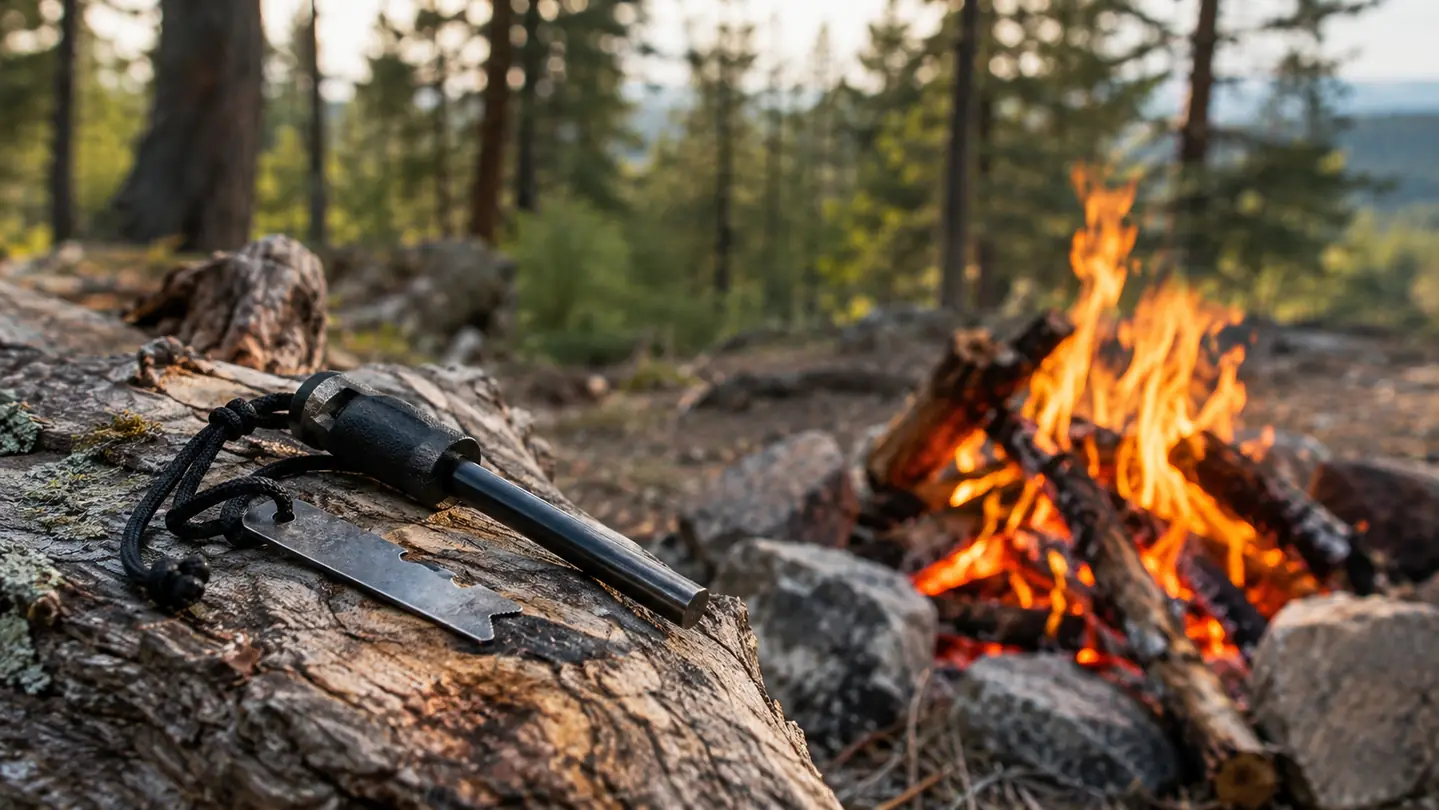
I have started fires with a lot of tools over the years. Matches, lighters, a magnesium block, a few fancy ferro rods that cost three times as much as this one. When I retired from coordinating search and rescue for our county, I kept a simple rule from the field: if a piece of gear cannot do its job when my hands are cold, wet, and tired, it does not stay in my kit. The bayite 4 inch ferro rod has been in that kit for two years now, through every season of camping in the Cascades and the high desert, and it is still the first fire starter I reach for.
This is not a lab test. This is a long-term field review from a guy who has used the same bayite ferro rod on dozens of trips, in the rain, in the wind, in the snow, and after a few too many cups of coffee. I paid for it myself, I have no reason to oversell it, and I will tell you exactly where it falls short.
The Quick Verdict
The bayite 4 inch ferro rod is the best value in fire starters I have tested. It throws a hot, reliable shower of sparks, the bare drilled rod has nothing on it to break, and the included striker and lanyard mean you can use it right out of the package. It is not the biggest rod on the market and the included striker is basic, but for most campers and hikers it is more than enough.
Amazon Check Today's Price →The fire starter that has earned a permanent spot in my kit
After two years of real use in wet Pacific Northwest weather, the bayite 4 inch ferro rod still starts a fire on the first or second strike. It is cheap enough to keep one in every pack and tough enough to trust when it matters.
Amazon Check Today's Price on Amazon →How I've Used It
I bought the bayite ferro rod in the spring, right before the first camping trip of the season. My usual routine is to head into the Deschutes National Forest for a weekend, set up camp, and test whatever fire starter I am carrying by using it for every fire that weekend. No lighters, no matches, no shortcuts. If the rod cannot get a fire going, I want to know that before I need it in an emergency.
Over the last two years, I have used this rod to start fires in dry pine duff, wet grass, damp bark, and once on a snowy ridgeline where the only tinder was a handful of dead twigs I had to shave with my knife. I have used it with the included striker, with the back of my knife, and with a chunk of quartz I found on the ground. I have dropped it on rocks, left it in a hot truck, and carried it in a pocket with keys and coins. It has been rained on, snowed on, and once accidentally left outside overnight in a frost. It still works.
The rod is 4 inches long and about half an inch thick, which is a good middle ground. It is big enough to grip firmly even with thick gloves on, but small enough to carry in a pocket or a small pouch. The drilled hole at the top means I can thread a lanyard through it, and I have done exactly that. The rod hangs on a carabiner inside my day pack, and the striker lives in the same pouch.
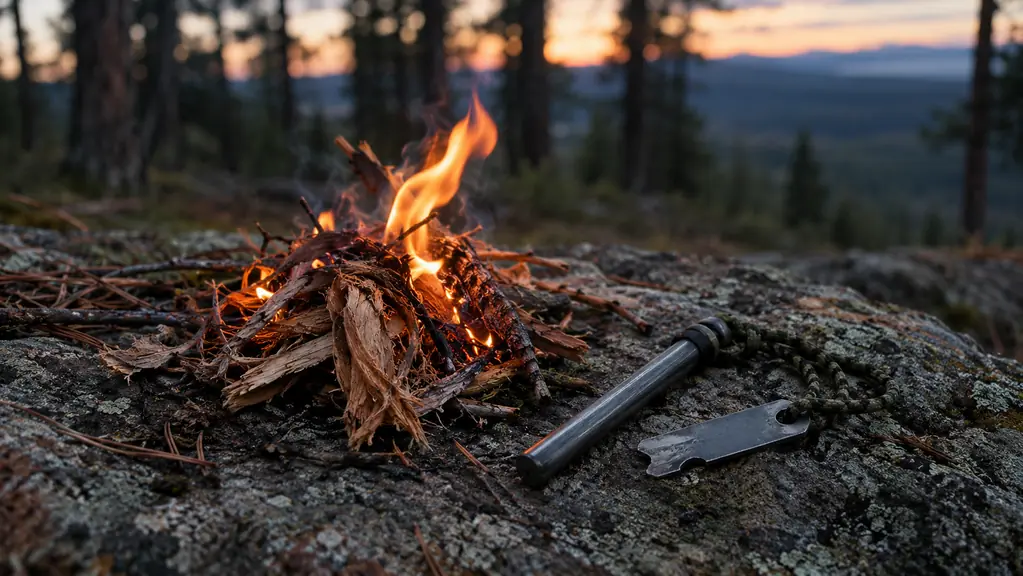
The first real test came on that first trip, a cold May overnight near Elk Lake. The forecast said clear, and by dusk it was spitting sleet. My lighter was in the bottom of a stuff sack and my fingers were stiff. I pulled the rod off the carabiner, scraped a pile of cedar bark into a nest, and had a flame on the third pull. Three pulls is not impressive by itself. What mattered was that I never had to think about it, which is exactly what you want from the one tool in the kit that turns a bad night into a manageable one.
What the bayite Ferro Rod Does Well
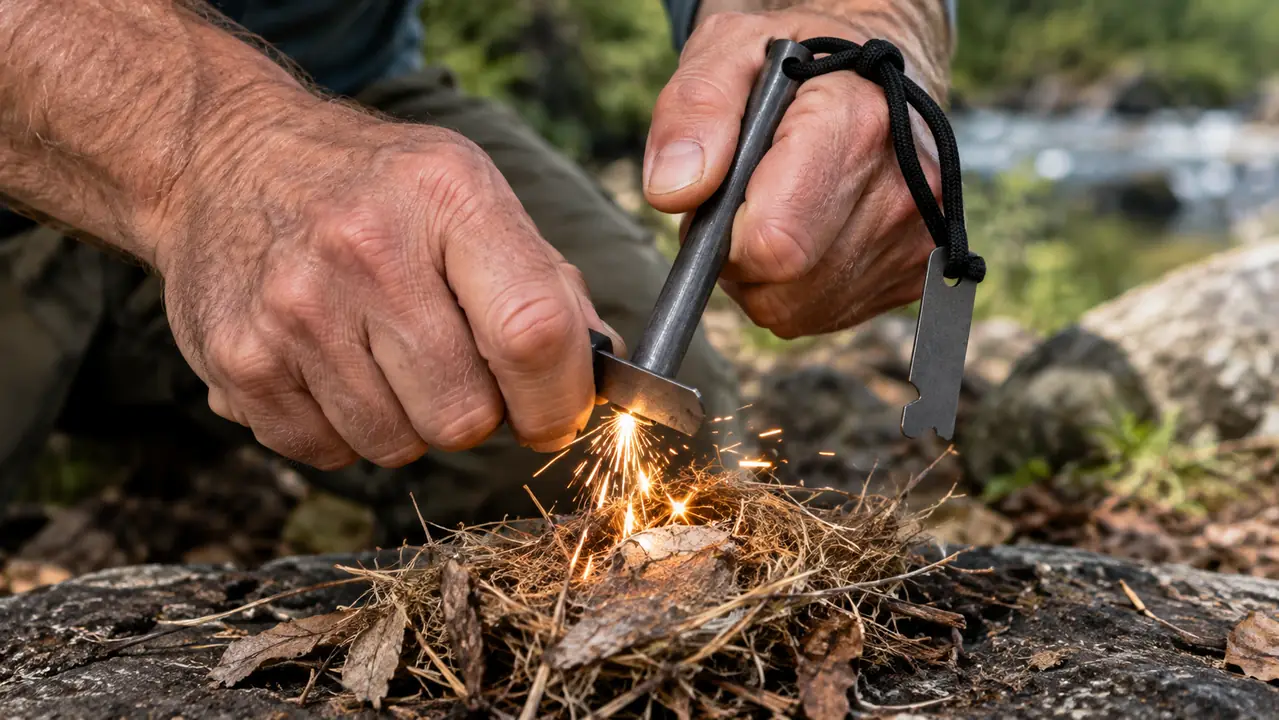
The first thing you notice is the spark. The bayite rod throws a thick, bright shower of sparks that carries a surprising distance. On a dry day, one firm scrape is enough to light a pile of fine tinder. On a damp day, it takes two or three scrapes, but the sparks are hot enough that they keep burning even when they land on slightly wet material. That is the difference between a fire starter that works and one that just looks good in a gear closet.
The rod is made of ferrocerium, which is the standard alloy for this kind of tool. It is softer than steel, which is why scraping it with a hard edge produces sparks. The bayite rod is not the hardest ferro rod I have used, and that is a good thing. It throws sparks easily, even when my hands are cold and my aim is off. I have used rods that were so hard they required a lot of pressure to get a good shower of sparks. This one does not.
Here is a practical number for you. On dry pine needles and cotton balls with a little petroleum jelly worked in, I get a flame on the first or second pull almost every time. On damp cedar bark that I have shredded by hand, it usually takes three to five pulls. On wet grass alone it rarely works at all, and that is not the rod's fault. No spark will light tinder that is actually wet. The rod gives you heat. You still have to find or make something dry enough to catch it, which is why I carry a small bag of prepared tinder in the same pouch.
There is no handle. The bayite is a bare drilled rod, and I have come to like that. A handle is one more thing to crack or come loose, and a bare rod lets me choke up or back off depending on how much rod I want to use on a strike. The trade-off is that it is slicker in a wet glove than a rod with a molded grip, so I hold it hard against the tinder and pull the striker back instead of pushing the rod forward. The included striker is a small piece of hardened steel with a notch cut into it, tied to the rod with a short paracord lanyard. It is basic, but it works. I have also used the back of my knife and a piece of quartz, and the rod throws sparks with all of them.
How It Holds Up Over Time
After two years of regular use, the bayite rod has worn down maybe a quarter of an inch. That is normal for a ferro rod. The surface is covered in the grayish scrapes and gouges that come from repeated strikes, but the rod still throws sparks as well as it did on day one. I have not noticed any degradation in performance, which is the most important thing you can say about a fire starter.
I keep a rough log of my trips in a notebook, and when I counted last winter, the rod had lit somewhere around sixty fires, plus a few dozen practice strikes in the driveway when I was showing my son how to do it. At that pace I expect it to last several more years before it gets too short to hold comfortably. When that day comes I will buy another one, because at this price it is cheaper than a couple of cups of coffee in town, and I will move the old stub to the glove box as a backup.
The paracord lanyard has held up well. It has faded from sitting in the 4Runner through two summers, but it has not frayed through, and the knot has never slipped. The drilled hole is still clean and the rod has not chipped or broken despite being dropped on rocks more than once. The included striker has developed a slight burr on the edge, but that is cosmetic and does not affect its function.
One thing I appreciate is that the rod does not seem to be affected by moisture. I have used it in steady rain, and the sparks still flew. I have left it out overnight in a frost, and it worked the next morning. Ferro rods are generally waterproof, but I have used some that seemed to throw weaker sparks when they were cold and wet. The bayite rod has not shown that problem.
After two years and dozens of fires, the bayite rod still throws sparks as well as it did on day one. That is the most important thing you can say about a fire starter.
Where It Falls Short
The bayite 4 inch ferro rod is not perfect, and I would not trust anyone who says it is. The biggest limitation is the included striker. It works, but it is small and a little awkward to grip, especially with gloves on. I replaced it with a larger striker from another brand after the first season, and I recommend doing the same if you plan to use the rod in cold weather.
The rod is also not the biggest option out there. If you are looking for a rod that will last through years of heavy daily use, you might want something longer and thicker. The 4 inch size is a good balance for most people, but it is not a lifetime supply of ferrocerium. I have used mine regularly for two years and it has worn down about a quarter of an inch, so I expect to get several more years of use out of it, but it will eventually need to be replaced.
I also want to be clear about technique, because a lot of bad reviews of cheap ferro rods are really reviews of bad technique. If you hold the striker still and push the rod, you will scrape a few weak sparks off the edge. If you pin the rod tip into the tinder and pull the striker back along it with firm pressure at a shallow angle, you get a thick, hot shower that lands right where you need it. It took me a weekend of practice in the driveway to get consistent. Do that practice before you need it, not on a wet ridge at dark.
Finally, the rod does not come with a storage tube or a protective case. The included lanyard is fine, but if you carry the rod loose in a pocket, the striker can scratch other gear. I keep mine in a small zippered pouch, which solves the problem, but it would be nice if the package included a simple tube.
What I Liked
- Throws a thick, hot shower of sparks even when wet
- Bare drilled rod with nothing to crack, break or come loose
- Includes a striker and lanyard, ready to use out of the package
- Drilled hole for a lanyard or carabiner
- Cheap enough to keep one in every pack and vehicle
- Consistent performance over two years of regular use
Where It Falls Short
- Included striker is small and awkward with gloves
- No handle, so it is slicker in a wet glove than a molded grip
- No storage tube or protective case included
- 4 inch size will eventually wear out with heavy daily use
Who This Is For
The bayite 4 inch ferro rod is for anyone who wants a reliable fire starter without spending a lot of money. It is perfect for car campers, hikers, backpackers, and anyone who keeps an emergency kit in their vehicle or home. It is also a great choice for people who are new to ferro rods and want to learn how to use one without investing in an expensive tool.
If you are the kind of person who wants to be prepared without carrying a lot of extra weight, this rod fits the bill. It is small enough to live in a day pack, light enough to forget it is there, and reliable enough to trust when you need it. I keep one in my vehicle emergency kit year round, and I have a second one in my home emergency kit for winter storms and wildfire-season power outages.
Joanne carries one too, in the glove box of her car next to a small first aid kit. She has never had to use it for real, and I hope she never does. But she has practiced with it twice in our fire pit, and she can get a flame in under a minute. That is the bar I think every adult in a household should clear with whatever fire starter they keep, and this rod makes that bar easy to reach.
Who Should Skip It
If you are looking for a fire starter that will last through a decade of heavy daily use, you might want a longer, thicker rod. The 4 inch size is a great balance for most people, but it is not a lifetime tool. If you plan to use a ferro rod every single day, a larger rod will give you more material to work with.
You should also skip it if you want a complete kit with a storage tube, a larger striker, and a whistle or other extras. The bayite rod is a bare-bones tool. It does the job, but it does not come with a lot of accessories. If you want those extras, you will need to buy them separately.
A fire starter that has proven itself in real conditions
The bayite 4 inch ferro rod has been in my kit for two years and it has never let me down. If you want a reliable, affordable fire starter that works when you need it, this is the one to get.
Amazon Check Today's Price on Amazon →